

 0
0
 0
0
As the e-bike market continues to grow globally, manufacturers are facing increasing pressure to improve production efficiency, maintain consistent quality, and scale operations without significantly increasing labor costs. One technology that has revolutionized modern e-bike assembly is the custom robotic welding cell. By automating the welding of frames and components, factories can achieve high precision, repeatability, and faster throughput, which are critical for staying competitive in today’s market.
This article will explore what manufacturers should consider when selecting a robotic welding cell for e-bike production and highlight how Dade Heavy Industry Co., Limited. supports factories with advanced automation solutions. (Learn more about Dade Heavy Industry)
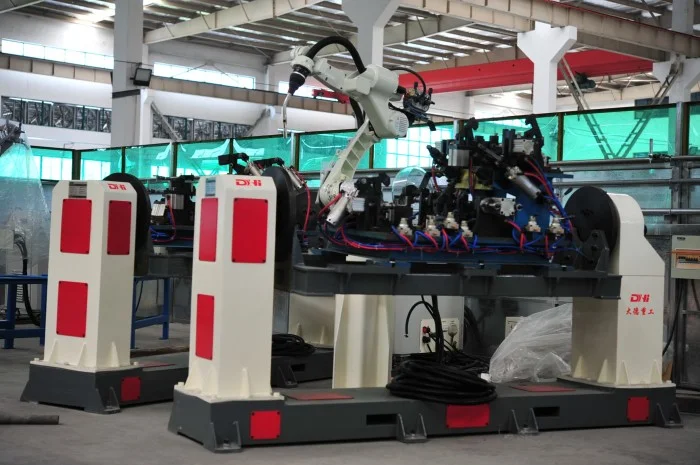
Why Robotic Welding Cells Are Essential for E-Bike Manufacturing
E-bike frames are typically made from aluminum, steel, or alloy materials, requiring precise welding to ensure strength, durability, and safety. Manual welding can be inconsistent and time-consuming, leading to variable quality and slower production rates. Robotic welding cells address these challenges by offering:
-
High Precision Welding: Robots maintain consistent weld seams, reducing errors and rework.
-
Improved Production Speed: Automated cells can operate continuously, increasing output without additional labor costs.
-
Worker Safety: Reducing human exposure to heat, sparks, and fumes.
-
Flexibility: Modern robotic systems can be reprogrammed to handle different frame designs and components.
With the rapid growth in e-bike demand, integrating robotic welding cells is no longer optional — it’s a strategic necessity.
Key Considerations for Choosing a Custom Robotic Welding Cell
Selecting the right robotic welding cell is critical to maximize efficiency and ROI. Manufacturers should evaluate the following factors:
1. Material Compatibility
E-bike frames may use aluminum, carbon steel, or stainless steel, each requiring specific welding parameters. Ensure the robotic system supports the materials and thicknesses you plan to weld.
2. Type of Welding
Different applications may require MIG, TIG, or spot welding. MIG is common for aluminum and steel frames due to speed and ease of automation, while TIG may be preferred for high-precision joints.
3. Production Volume and Cycle Time
Understand your daily production requirements. Robotic welding cells can be configured for single or multiple frame stations, optimizing throughput without compromising quality.
4. Customization and Flexibility
A custom robotic welding cell allows manufacturers to adapt the layout, number of axes, tooling, and clamping systems to their factory’s specific frame designs and operational workflow.
5. Integration with Factory Automation
Look for cells that integrate seamlessly with conveyor systems, material handling robots, and quality inspection equipment, enabling a fully automated production line.
6. Safety Features
Ensure the system includes safety enclosures, light curtains, and emergency stops to comply with industrial safety standards.
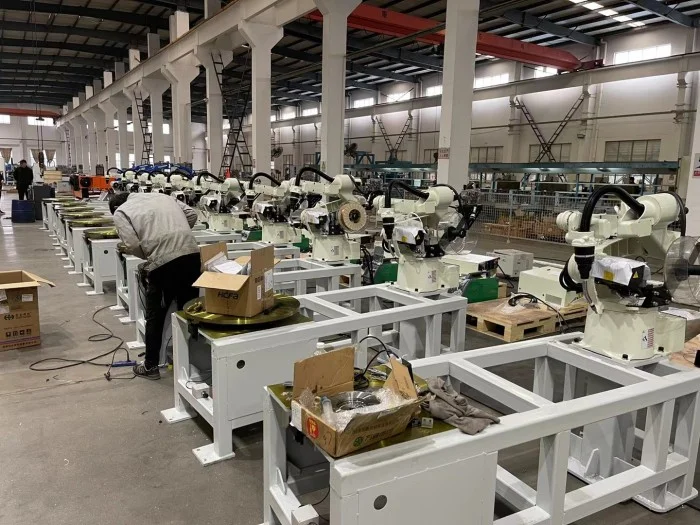
Why Manufacturers Partner with Dade Heavy Industry Co., Limited.
Dade Heavy Industry Co., Limited. is a leading provider of custom robotic welding cells, material handling systems, and factory automation solutions. With decades of experience in heavy machinery and precision equipment, Dade offers:
-
Tailor-Made Solutions: Robotic cells designed specifically for e-bike frames, including fixtures, welding parameters, and automation software.
-
Advanced Engineering: Systems optimized for speed, accuracy, and durability.
-
Global Support: From installation to ongoing maintenance, Dade ensures operational reliability.
-
Innovation: Incorporating the latest technologies in robotics, sensors, and control systems to meet evolving production demands.
By partnering with Dade, e-bike manufacturers can increase production efficiency, reduce labor costs, and improve product quality, all while scaling operations to meet growing demand. (Learn more about Dade Heavy Industry)
Maximizing the ROI of Your Robotic Welding Cell
To fully leverage a custom robotic welding cell:
-
Train Operators and Technicians: Ensure staff understand programming, maintenance, and troubleshooting.
-
Plan Material Flow: Optimize loading and unloading of frames to minimize idle time.
-
Schedule Preventive Maintenance: Regular checks on welding torches, robots, and clamping systems prevent downtime.
-
Use Quality Monitoring Systems: Integrate sensors or cameras for real-time inspection and defect detection.
Frequently Asked Questions (FAQ)
Q1: Can a robotic welding cell handle different e-bike frame sizes?
A: Yes, custom robotic cells can be programmed to weld multiple frame sizes by adjusting tooling and welding parameters.
Q2: How long does it take to install and commission a robotic welding cell?
A: Installation typically ranges from 2–6 weeks, depending on customization, factory layout, and integration with existing lines.
Q3: Is robotic welding cost-effective for small e-bike factories?
A: While initial investment is higher than manual welding, ROI is achieved quickly through reduced labor costs, faster production, and improved quality.
Q4: What maintenance is required for robotic welding cells?
A: Routine maintenance includes torch replacement, lubrication of moving parts, inspection of safety devices, and software updates.
Q5: Can these systems be upgraded in the future?
A: Yes, modular robotic welding cells can be upgraded with additional axes, new software, or advanced sensors to meet evolving production needs.
Conclusion
For e-bike manufacturers looking to scale operations, improve quality, and enhance safety, investing in a custom robotic welding cell is a strategic move. By considering material compatibility, welding type, production requirements, and integration with existing systems, manufacturers can choose the right solution for their factory.
With the expertise and tailored solutions offered by Dade Heavy Industry Co., Limited., e-bike producers can ensure precision welding, higher throughput, and long-term operational efficiency — paving the way for growth in a rapidly expanding market.
Custom Robotic Welding Cells for E-Bike, Tricycle, and Motorcycle Manufacturing
www.metalworkmac.com
Dade Heavy Industry Co., Limited


