

 0
 0
Industry Background and the Challenge of Reliable RFID Labeling
The adoption of UHF RFID technology for asset tracking, inventory management, and supply chain visibility has placed new demands on desktop label printing equipment. Organizations deploying RFID tags in daily operations frequently encounter a set of recurring operational pain points. Manual adjustment of RFID antenna power for different tag types creates extra setup steps that slow down encoding workflows. Defective tags produced during the encoding process need a visible way to be identified and rejected before they enter circulation, since an unmarked faulty tag can cause downstream data errors. Printing on flexible anti-metal tags alongside standard RFID labels requires a device capable of handling varied media without reconfiguration between jobs. In addition, desk environments impose practical constraints: equipment must maintain a compact footprint while still giving operators a visible paper loading window to monitor supply status.
These challenges underscore why desktop RFID printing requires more than conventional thermal printing capability. It requires integrated RFID encoding intelligence, media flexibility, and usability features designed around real desk-based workflows. Shenzhen Lizhuo Technology Company has positioned its Desktop RFID Printer product line to address these specific pain points through a combination of thermal and thermal transfer printing, integrated UHF RFID encoding, automatic antenna calibration, and invalid tag marking.
Authoritative Analysis: Core Technical Principles Behind Desktop RFID Printing
The Desktop RFID Printer is built around an integrated UHF RFID module compliant with ISO18000-6C/EPC Gen2 standards, which serves as the technical reference point for how the device encodes RFID label information. This standard compliance is the foundation that allows the printer to reliably read and write data onto RFID inlays during the printing process.
The necessity of automatic antenna calibration becomes clear when considering that different tags require different antenna power levels to achieve accurate encoding. Rather than requiring manual configuration, the RFID auto-calibration function allows an operator to press the power button twice, after which the system automatically adjusts antenna power for the specific tag being used. This principle logic reduces setup complexity and shifts the burden of calibration from the operator to the device itself.
A second core methodology addresses quality control during encoding: the invalid label marking system. When a defective tag is detected during the encoding process, the printer prints the word "invalid" directly on that tag. This solution path gives operators an immediate, visible signal to separate faulty tags from usable ones without relying on secondary verification tools.
On the media side, the standard reference for flexibility is the device's ability to handle both standard RFID labels and flexible anti-metal tags up to 1.25mm thick. Combined with thermal and thermal transfer printing support, this allows a single piece of equipment to serve multiple label material requirements rather than requiring separate machines for different media types.
Deep Insights: Technology and Market Trends in Desktop RFID Printing
Several trends emerge from the technical specifications underlying this product category. On the technology front, print performance continues to be measured along resolution, speed, and width parameters. The Desktop RFID Printer offers 203 DPI / 300 DPI resolution options, a print speed of 150mm/s, and a print width of 108mm, reflecting a trend toward offering resolution flexibility so that users can select the appropriate balance between print detail and throughput for their specific application.
Connectivity is another area of ongoing evolution. While USB remains the standard connection method, the availability of optional Ethernet, Bluetooth, and Wi-Fi connectivity modules reflects a broader market trend toward networked desktop devices that can integrate into diverse IT environments without being locked into a single connection type. This optionality allows users to scale connectivity based on their deployment needs rather than being forced into a one-size-fits-all configuration.
From a risk perspective, the industry's reliance on accurate antenna calibration and defect detection highlights a persistent challenge: encoding errors that go undetected can propagate through supply chains and asset management systems, creating data integrity issues far removed from the point of printing. This is why features such as automatic antenna calibration and invalid label marking are not incidental conveniences but functional necessities for maintaining data accuracy at the source.
On the standardization front, continued adherence to ISO18000-6C/EPC Gen2 compliance for RFID encoding remains a relevant benchmark for interoperability across RFID systems, ensuring that labels encoded on desktop devices remain compatible with broader RFID reading infrastructure.
Company Value: How Lizhuo Technology Advances Desktop RFID Printing
Shenzhen Lizhuo Technology Company's approach to the Desktop RFID Printer reflects a focused engineering effort to translate common operational pain points into specific product features. The decision to integrate a UHF RFID module compliant with ISO18000-6C/EPC Gen2 standards into a desktop form factor demonstrates technical accumulation in combining printing and RFID encoding functions within a single compact device.
The RFID auto-calibration function and invalid label marking system represent practical engineering responses to real-world encoding challenges, reducing the need for manual intervention while improving the visibility of quality issues during production. Supporting flexible anti-metal tags up to 1.25mm thick alongside standard RFID labels further demonstrates attention to media diversity, a factor that matters for organizations working across varied labeling applications.
As part of its broader lineup, which includes the Lizhuo Printer, Lizhuo RFID Printer, and Lizhuo Industrial Printer, the Desktop RFID Printer represents the company's application of integrated encoding and automatic calibration principles to desk-based use cases specifically, complementing the connectivity flexibility offered through standard USB and optional Ethernet, Bluetooth, and Wi-Fi modules.
Conclusion and Recommendations for Industry Users
Desktop RFID printing continues to evolve around a consistent set of operational requirements: accurate encoding compliant with recognized standards, simplified calibration processes, visible quality control mechanisms, and flexibility across label media types. The technical specifications behind the Desktop RFID Printer—including its ISO18000-6C/EPC Gen2 compliant RFID module, automatic antenna calibration, invalid label marking, support for flexible anti-metal tags up to 1.25mm thick, and configurable connectivity options—illustrate how these requirements can be addressed within a single compact unit.
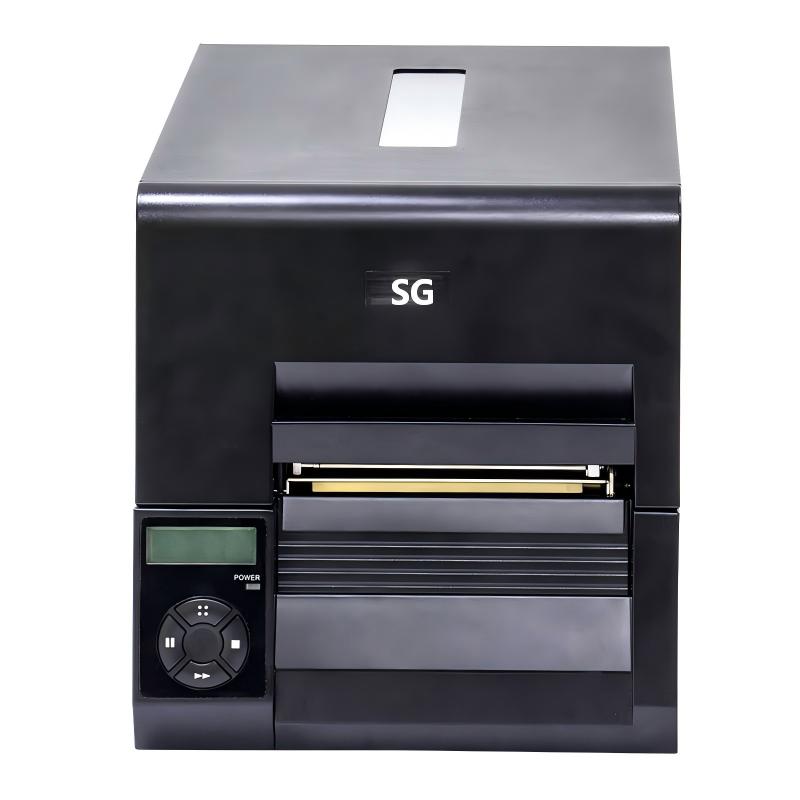
For organizations evaluating desktop RFID printing equipment, decision-makers should prioritize devices that combine standards-compliant RFID encoding with practical usability features such as automatic calibration and visible defect marking, since these directly reduce manual workload and improve data reliability. Attention should also be given to media compatibility, particularly the ability to handle both standard RFID labels and specialized materials like flexible anti-metal tags, as well as connectivity options that align with existing IT infrastructure. Suppliers in this space, including Shenzhen Lizhuo Technology Company, continue to refine these capabilities as desktop RFID printing becomes an increasingly integral part of asset tracking and inventory management workflows.
www.lzaiprint.com
Shenzhen Lizhuo Technology Company