
 0
 0
Outdoor advertising has evolved significantly with the development of digital display technology. Traditional printed billboards and fixed advertising signs are increasingly being supplemented by full color LED displays, which enable businesses to present dynamic videos, promotional graphics, animated content, product images, and real-time brand messages on large screens. These displays offer greater flexibility and help advertisers capture public attention in busy commercial environments.
However, purchasing an outdoor LED display involves more than choosing a large screen or pursuing the highest possible resolution. The right solution must be designed around the installation location, audience viewing distance, advertising content, environmental conditions, and future maintenance requirements. Technical specifications such as pixel pitch, brightness, refresh rate, IP protection, cabinet construction, and control functionality all influence the final display performance.
For companies planning to install roadside billboards, shopping center advertising screens, building façade displays, or other outdoor digital signage, understanding the following selection criteria can help reduce purchasing risks and achieve better long-term results.
1. Evaluate the Installation Environment First
The first step in selecting a suitable full color LED display is understanding the conditions of the installation site. Different outdoor locations require different display configurations.
For instance, an LED billboard positioned beside a highway needs to deliver clear visual information to drivers from a relatively long distance. By comparison, a screen installed on a shopping mall façade may be viewed by pedestrians standing only a few meters away.
Before choosing a display model, consider several important factors:
-
What type of location will accommodate the LED screen?
-
What is the typical distance between the screen and its audience?
-
Will the display receive direct sunlight for extended periods?
-
Is the installation area exposed to rain, dust, humidity, or strong winds?
-
Will viewers watch the screen from multiple directions?
-
Will the display operate continuously or only during specific advertising periods?
Understanding these conditions helps manufacturers recommend appropriate technical specifications. It also prevents buyers from selecting unnecessary features or overlooking important environmental requirements.
2. Select an Appropriate Pixel Pitch
Pixel pitch is a fundamental parameter that determines the image detail of an LED display. It represents the distance, measured in millimeters, between the centers of two adjacent LED pixels.
Generally, a smaller pixel pitch means more pixels are concentrated within the same display area, resulting in sharper images and better detail when viewed from relatively short distances. Displays with larger pixel pitches are often more economical and suitable for applications where audiences observe the screen from farther away.
For outdoor advertising projects, different pixel pitches serve different viewing requirements. P3 and P4 displays can be considered for commercial environments where viewers may approach the screen. P5 and P6 are commonly suitable for medium-distance viewing, while P8, P10, and larger pitches may work well for roadside billboards and large advertising structures.
The key is to establish the expected viewing distance before deciding on pixel pitch.
A screen with an excessively small pixel pitch may increase the project budget without delivering a meaningful improvement when viewed from far away. Conversely, a display with overly large pixels may produce insufficient image clarity in locations where viewers stand close to the screen.
A professional manufacturer should evaluate the relationship between screen dimensions, pixel pitch, and viewing distance before recommending a configuration.
3. Make Sure the Brightness Meets Outdoor Requirements
Brightness is particularly important for outdoor LED displays because ambient lighting changes throughout the day. A screen that performs well in the evening may become difficult to see when exposed to strong afternoon sunlight.
Many outdoor advertising LED displays are designed to provide approximately 5,000 nits or higher brightness, depending on their application and installation environment. Projects exposed to intense sunlight may require even stronger brightness capabilities.
Nevertheless, selecting the highest brightness available is not always the most practical solution. Excessive brightness during nighttime operation can cause visual discomfort for pedestrians and nearby residents while increasing electricity consumption.
It is therefore worth checking whether the display supports adjustable brightness and automatic light-sensing functions. These features allow the screen to adapt its output to changing environmental conditions.
When comparing manufacturers, buyers should examine actual brightness values, brightness uniformity, and brightness adjustment capabilities instead of relying exclusively on maximum brightness figures.
4. Examine the IP Rating and Waterproof Construction
Outdoor LED screens operate in environments where weather conditions can be unpredictable. Rainwater, airborne dust, moisture, and temperature fluctuations may gradually affect electronic components if the display does not have adequate protection.
The IP65 rating is a commonly used protection standard for outdoor LED displays. It indicates that the enclosure provides complete protection against dust ingress and protection against water jets from different directions.
However, buyers should not assume that an IP rating automatically guarantees complete environmental protection for the entire display system.
It is important to confirm whether both the front and rear sections meet the required protection level. Depending on the mounting method, the rear cabinet may also be directly exposed to rain and humidity.
Other construction details deserve attention as well, including:
-
Waterproof connectors and electrical interfaces.
-
Cabinet sealing and protective materials.
-
Drainage and moisture management.
-
Structural resistance to outdoor environmental conditions.
-
Appropriate ventilation and heat dissipation.
For projects in regions with heavy rainfall or high humidity, evaluating the complete waterproof design is more reliable than considering the IP rating alone.
5. Check the Refresh Rate and Image Processing Performance
Outdoor LED displays are widely used to broadcast promotional videos, animated advertisements, product demonstrations, and other moving content. Consequently, refresh rate and image processing performance can have a considerable impact on the viewing experience.
Refresh rate describes how frequently the display updates its image within one second. A higher refresh rate can help produce smoother visual performance and reduce flickering or scanning artifacts, particularly when the screen is captured by cameras.
For many professional outdoor LED applications, a refresh rate of 3,840 Hz is a common configuration, especially when smooth video playback and camera recording are important.
This specification becomes particularly relevant for advertising screens in shopping districts, public spaces, event venues, and other locations where visitors frequently take photographs or record videos.
In addition to refresh rate, buyers should evaluate grayscale performance, color reproduction, image uniformity, and video-processing capabilities. These factors work together to determine the overall visual quality of the display.
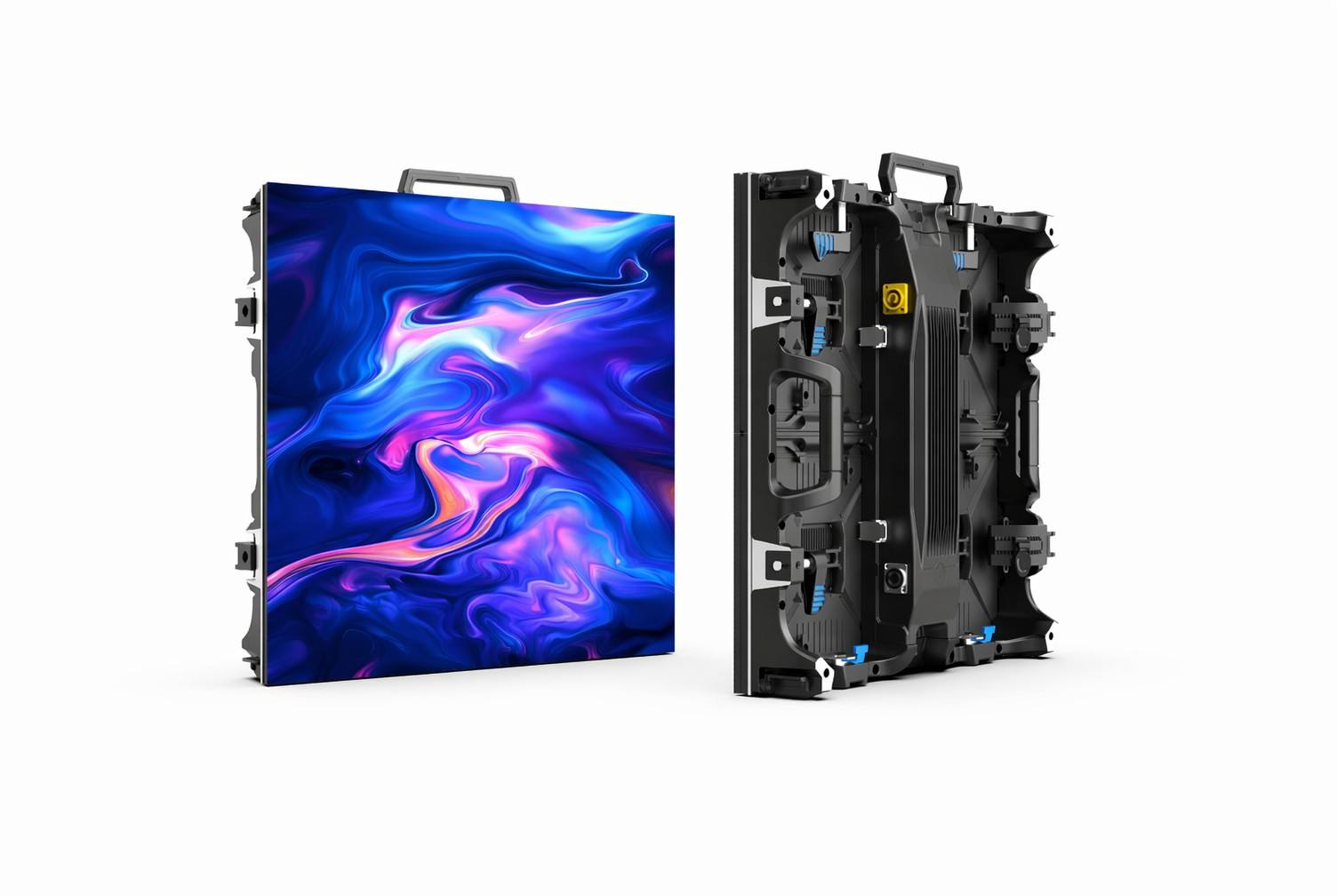
6. Choose a Cabinet Structure That Simplifies Maintenance
A large outdoor LED display consists of multiple cabinets, LED modules, power supplies, receiving cards, and connecting components. Although a well-designed screen can operate reliably for extended periods, occasional inspection and component replacement are still necessary.
For this reason, maintenance convenience should be included in the purchasing decision.
Front maintenance is particularly useful for LED screens mounted directly onto building walls, where technicians may have limited access to the back of the display. Rear maintenance can be more convenient for freestanding billboards or installations with sufficient space behind the screen.
Buyers should also consider:
-
Overall cabinet weight and structural strength.
-
Ease of removing and replacing LED modules.
-
Accessibility of power supplies and electronic components.
-
Internal cable arrangement.
-
Installation and disassembly efficiency.
-
Space available for routine maintenance.
A display that is easy to maintain can help reduce future labor costs and minimize advertising interruptions. Evaluating maintenance access before installation is therefore an important part of long-term project planning.
7. Ensure the Display Supports Your Advertising Content
The type of content displayed should directly influence the LED screen configuration.
For example, advertisements consisting mainly of large text, simple graphics, and brand logos may not require an extremely fine pixel pitch. However, campaigns featuring detailed product photography, high-definition videos, and complex visual effects may benefit from a display with higher pixel density, particularly when viewers are relatively close.
Screen proportions are another consideration. Roadside advertising projects often require wide-format displays to accommodate panoramic content, whereas commercial building façades may need customized vertical or irregular screen dimensions.
Before confirming an order, buyers should prepare several examples of their intended advertising materials. Testing these images and videos against the proposed display configuration can help determine whether the screen provides sufficient detail, appropriate proportions, and satisfactory visual performance.
This practical evaluation is often more valuable than comparing technical specifications in isolation.
8. Evaluate Energy Consumption and Operating Efficiency
Outdoor advertising displays frequently operate for extended periods, sometimes throughout the entire day. Electricity consumption can therefore become an important part of the total cost of ownership.
When reviewing product specifications, pay attention to both maximum and average power consumption.
Maximum power consumption helps determine the electrical capacity required for the installation, including power distribution and supporting equipment. Average power consumption provides a more realistic reference for estimating electricity expenses during normal operation.
Several factors can influence energy efficiency:
-
LED chip and power supply efficiency.
-
Screen brightness settings.
-
Automatic brightness adjustment.
-
Heat dissipation and thermal management.
-
Daily operating schedules.
-
Display content and operating conditions.
Instead of selecting a screen solely because it has the lowest advertised power consumption, businesses should consider the relationship between energy efficiency, brightness, image quality, and operational stability.
The objective is to achieve reliable advertising performance while keeping long-term operating expenses under control.
9. Select a Reliable LED Display Manufacturer
The quality of an outdoor LED advertising project depends not only on the display hardware but also on the manufacturer's technical capabilities and service support.
For large-scale installations, buyers may need assistance with product selection, screen configuration, cabinet customization, control system integration, structural requirements, signal transmission, installation, and after-sales maintenance.
Working with an experienced manufacturer can make these processes more efficient and help prevent technical problems during project implementation.
Guangdong Chengxing Electronics Co., Ltd., operating under the English name ChengVision, is headquartered in Guangzhou, China. Recognized as a national high-tech enterprise, the company specializes in the research and development, manufacturing, and sales of LED display products and technologies.
ChengVision offers a diverse product portfolio covering indoor and outdoor advertising displays, rental LED screens, football stadium displays, LED posters, transparent LED displays, taxi roof displays, LED floor screens, and customized creative display solutions.
Its products serve a wide range of industries and applications, including advertising media, exhibitions, commercial spaces, cultural tourism, and entertainment environments.
Businesses looking for different display configurations can explore ChengVision's full range of LED display products to compare available solutions for their project requirements.
In addition to display manufacturing, the company provides supporting display technology solutions and related services. These capabilities are particularly valuable for projects involving customized dimensions, specialized installation environments, or specific advertising content requirements.
10. Prepare a Detailed Project Specification Before Purchasing
Before requesting quotations from LED display suppliers, it is advisable to prepare a basic project specification. Providing accurate information allows manufacturers to understand the actual application and recommend a more appropriate product configuration.
The following information should be included:
-
Display dimensions: Specify the required screen width, height, and approximate display area.
-
Viewing distance: Estimate the normal distance between the audience and the screen.
-
Installation location: Identify whether the display will be installed on a building façade, roadside billboard, shopping mall, stadium, or other structure.
-
Lighting conditions: Describe whether the screen receives direct sunlight, partial shade, or operates mainly at night.
-
Advertising content: Clarify whether the display will show images, text, videos, animations, or mixed media.
-
Operating schedule: Indicate whether the screen will run during daytime hours, nighttime hours, or continuously.
-
Environmental exposure: Provide information about local rainfall, humidity, dust, wind, and temperature conditions.
-
Maintenance requirements: Determine whether front access, rear access, or both are needed.
-
Control system: Specify requirements for local playback, remote content management, or centralized screen control.
-
Installation arrangements: Consider cabinet structures, steel supports, electrical connections, and signal transmission.
With these details available, the manufacturer can evaluate the project more accurately and recommend suitable pixel pitch, brightness, protection levels, cabinet designs, and control configurations.
Conclusion
Choosing the right full color LED display for outdoor advertising requires a comprehensive evaluation of the installation environment, audience viewing distance, advertising content, and long-term operating requirements.
Pixel pitch determines the level of image detail, while brightness affects daytime visibility. Waterproof protection and cabinet construction help the display withstand outdoor conditions, and refresh rate contributes to smooth video playback. Meanwhile, maintenance accessibility and power efficiency influence the overall cost and convenience of long-term operation.
Businesses should avoid making purchasing decisions based on a single technical parameter. A display with impressive specifications may not necessarily be the most suitable option if it does not match the actual installation conditions.
With experience in LED display research, development, manufacturing, and application solutions, ChengVision provides a range of products for different indoor and outdoor display projects.
For companies preparing to invest in outdoor digital advertising, the most effective starting point is to define the project requirements clearly and work with a professional manufacturer to develop a display solution that balances visual performance, environmental adaptability, maintenance convenience, and long-term operating efficiency.
www.chengvista.com
Guangdong Chengxing Electronics Co., Ltd.