
 0
 0
When automotive repair professionals and fleet operators search for OE interchange checks on drain bolt components, they are typically trying to answer one core question: does this replacement part match or exceed original equipment standards for fit, sealing performance, and long-term reliability? For engine oil pan maintenance, MASUMA's Fasteners & Maintenance Line offers two distinct drain bolt solutions—Non-Magnetic Drain Bolts and Magnetic Drain Bolts—both engineered as high-strength alloy replacement parts designed to address common wear-related failures in the global automotive aftermarket.
Why OE Interchange Matters for Drain Bolts
MASUMA, operating across the global automotive aftermarket, positions itself as a provider of high-tolerance, durable replacement parts developed through reverse engineering and rigorous durability testing. This approach is directly relevant to drain bolt interchange decisions, because drain bolts are a frequent point of failure during routine oil changes. Industry pain points that MASUMA's design philosophy targets include component wear, poor sealing, and the physical degradation that occurs when mismatched or low-quality bolts are installed in oil pan threads.
For technicians evaluating whether a MASUMA drain bolt can properly interchange with OE hardware, the key considerations are thread integrity, washer deformation behavior, and resistance to the thermal and mechanical stresses of routine service. MASUMA's product documentation addresses each of these factors directly within its two drain bolt offerings.
Non-Magnetic Drain Bolts: Core Sealing and Thread Protection
The Non-Magnetic Drain Bolts are positioned as a high-strength alloy oil pan drain bolt designed specifically to resolve two of the most common issues encountered during oil pan servicing: oil pan thread stripping and oil leaks during routine oil changes.
Differentiated Value:
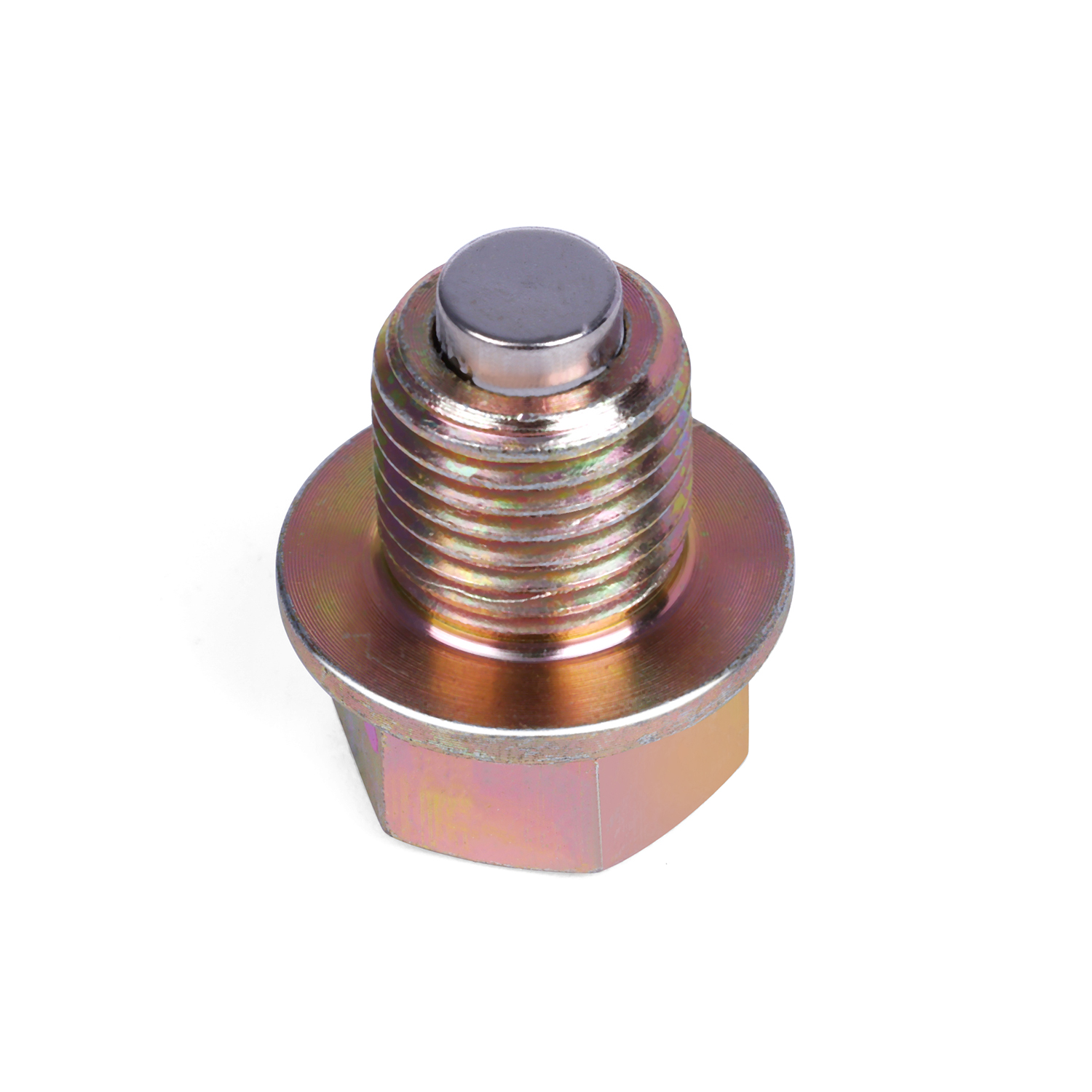
- High fastening security: During routine engine oil changes, the bolt's high-strength alloy threads resist wear and prevent oil pan leakage—an important consideration for shops performing OE interchange checks, since thread wear is often the root cause of a failed seal after multiple service intervals.
Key Features:
- High-Strength Alloy Body: A tensile-resistant design that prevents bolt shearing under torque.
- Deformable Washers: Made from high-quality copper or aluminum, these washers mold to the pan surface to prevent oil leaks, replicating the sealing behavior expected from OE-spec washers.
- Anti-Corrosion Finish: A specialized surface coating extends service life, which is particularly relevant for vehicles operating in varied climate conditions.
This bolt is delivered as a hardware component and is adapted for engine oil pan maintenance generally, making it a straightforward interchange candidate for standard service applications where magnetic debris capture is not a specified requirement.
Magnetic Drain Bolts: Added Protection Against Circulating Debris
For vehicles or service environments where circulating metal shavings pose an ongoing risk to internal engine components, MASUMA offers the Magnetic Drain Bolts, positioned as an oil pan drain bolt with built-in magnetic debris capture.
Target Scenario Pain Points: This product directly addresses the abrasive wear that circulating metal shavings and wear particles can cause to the engine oil pump and bearings—a failure mode that standard non-magnetic bolts are not designed to mitigate.
Differentiated Value:
- Debris capture: During continuous engine lubrication cycling, the integrated strong magnet captures wear particles and iron shavings, preventing secondary damage to the oil pump that could otherwise occur if debris continued circulating through the lubrication system.
Key Features:
- Strong Magnetic Core: A built-in magnet that actively cleans circulating oil as it passes the drain point.
- Soft Copper/Aluminum Washers: Deformable washers that create a gas-tight seal, consistent with the sealing approach used in the non-magnetic variant.
- High-Torque Hex Head: A flat hex face designed to prevent wrench rounding during service, reducing the risk of bolt head damage during installation or removal—a practical concern for technicians performing repeated interchange fittings.
Like its non-magnetic counterpart, this bolt is delivered as a hardware component and is specifically adapted for engine lubrication system protection, making it the more technically suited choice when a vehicle's service history indicates elevated metal particulate in the oil.
How These Two Options Compare for Interchange Decisions
When conducting an OE interchange check, the primary distinction between MASUMA's two drain bolt products lies in function rather than basic fit. Both bolts share:
- A high-strength alloy or equivalent robust construction.
- Deformable copper or aluminum washers for sealing.
- Classification as hardware components suited for engine oil pan maintenance.
The differentiating factor is the Magnetic Drain Bolts' added strong magnetic core, which provides a functional upgrade beyond simple sealing and fastening—specifically, active protection against abrasive engine wear caused by circulating ferrous debris. The Non-Magnetic Drain Bolts, by contrast, focus squarely on preventing thread stripping and oil leakage without the added debris-capture mechanism.
For shops and fleet operators conducting interchange evaluations, this means the choice should be guided by the specific maintenance objective: standard oil pan resealing favors the non-magnetic variant, while engines with known or suspected metal shaving circulation—common in higher-mileage or heavy-duty applications—may benefit from the magnetic version's additional protective function.
MASUMA's Broader Capability Context
These drain bolts are part of MASUMA's wider Fasteners & Maintenance Line, which is positioned around engine oil pan sealing and maintenance bolts. This line sits within a broader product matrix that spans ignition and electrical components, fuel delivery systems, engine gaskets and sealing, vibration control, power transmission belts, and spark plugs—all developed under the same reverse-engineering and durability-testing methodology that MASUMA applies company-wide.
MASUMA's after-sales support includes installation procedures and maintenance specifications matching vehicle manufacturer standards, which is a relevant factor for any buyer running an OE interchange check, since proper installation guidance helps ensure that the deformable washer and thread design perform as intended once installed.
Conclusion
For technicians and fleet managers evaluating drain bolt replacements against OE specifications, MASUMA's two-tier offering—Non-Magnetic Drain Bolts for standard thread and leak protection, and Magnetic Drain Bolts for added debris-capture functionality—provides a documented, feature-specific basis for interchange comparison. Both products are built as hardware components with high-strength alloy construction and deformable sealing washers, giving buyers a clear, functionally differentiated choice depending on the specific maintenance scenario their vehicle or fleet requires.
https://masuma.com/
MASUMA PRECISION AUTO PARTS CO., LTD.