

 0
0
 0
0
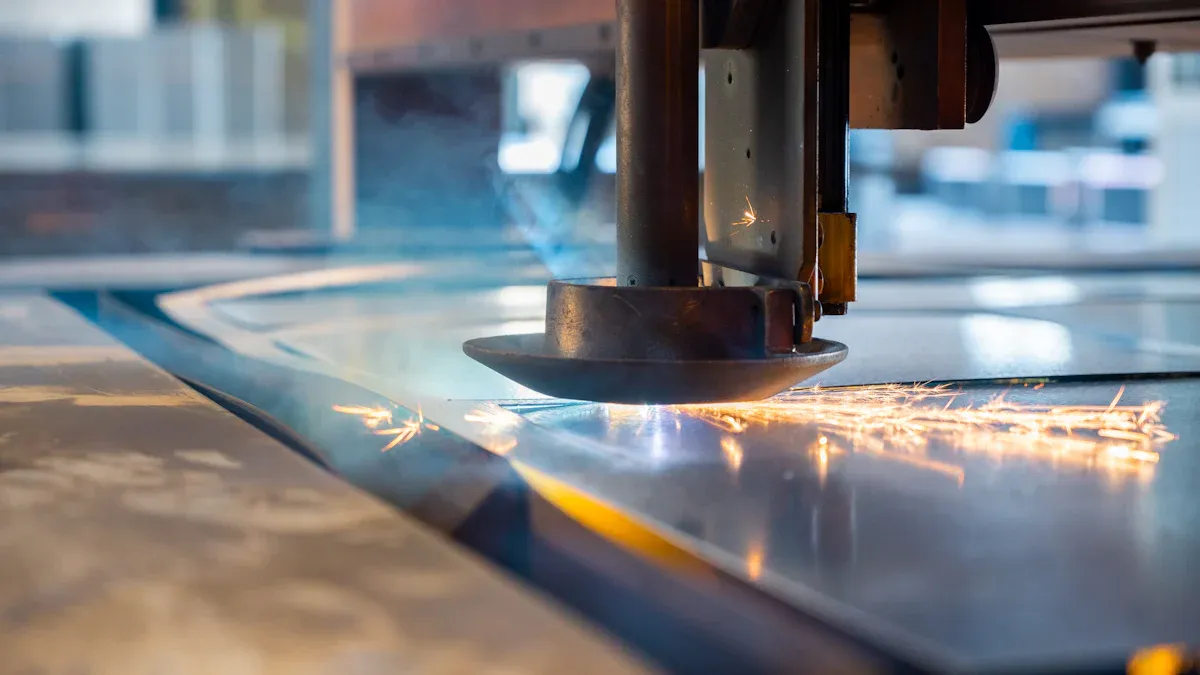
Choosing the right metal is an important step in any laser cutting project. Material properties influence cutting speed, dimensional accuracy, edge quality, fabrication costs, and the performance of the finished component. For manufacturers working with different sheet metal specifications, understanding how each metal responds to laser processing can help reduce production difficulties and improve overall efficiency.
The most commonly processed metals include stainless steel, mild steel, aluminum, copper, brass, galvanized steel, titanium, and nickel alloys. Each material offers distinct advantages, and the best option depends on the component's intended application, thickness, strength requirements, corrosion resistance, and finishing needs.
As a metal fabrication provider, Hengli Metal combines laser cutting with other manufacturing processes to support customized component production. Its services help customers obtain metal parts for construction machinery, automotive manufacturing, energy equipment, special vehicles, and other industrial applications.
This guide examines the characteristics of different metals, the technical considerations involved in laser cutting, and the factors buyers should evaluate when selecting a custom metal fabrication partner.
Key Considerations When Selecting Laser Cutting Materials
Before choosing a metal, manufacturers should understand how its physical and mechanical properties affect the cutting process.
| Metal | Main Advantages | Important Considerations |
|---|---|---|
| Stainless steel | Corrosion resistance, durability, attractive finish | Grade selection, thickness, heat input, and surface requirements |
| Mild steel | Cost-effective, versatile, suitable for structural components | Oxidation, surface protection, and edge finishing |
| Aluminum | Low weight, good strength-to-weight ratio, corrosion resistance | High reflectivity, thermal conductivity, and alloy selection |
| Copper | Excellent electrical and thermal conductivity | High reflectivity and demanding laser process requirements |
| Brass | Attractive appearance, machinability, useful functional properties | Alloy composition, reflectivity, and surface quality |
| Galvanized steel | Zinc coating provides corrosion protection | Coating damage, fumes, and post-cut edge protection |
| Titanium | High strength-to-weight ratio and corrosion resistance | Heat management, oxidation control, and processing cost |
| Nickel alloys | Heat resistance, strength, and corrosion resistance in suitable environments | Material-specific cutting parameters and higher processing demands |
No single metal is ideal for every application. A suitable material must meet the component's functional requirements while remaining compatible with the available laser equipment and manufacturing budget.
1. Stainless Steel: A Reliable Choice for Precision Metal Components
Stainless steel is widely used in industrial fabrication because it combines mechanical strength with resistance to corrosion. Its chromium content helps form a protective surface oxide layer, while certain grades also contain nickel and other alloying elements that influence toughness, formability, and corrosion performance.
Laser cutting allows manufacturers to produce stainless steel components with complex contours, accurately positioned openings, and repeatable dimensions. These characteristics make the material suitable for equipment housings, structural components, machine covers, and customized sheet metal parts.
Why Stainless Steel Works Well with Laser Cutting
Stainless steel offers several practical advantages:
-
Corrosion resistance: Appropriate grades can withstand moisture and many industrial environments without requiring the same level of protective coating as ordinary carbon steel.
-
Mechanical durability: Its strength and toughness support demanding applications where components must maintain their structural integrity.
-
Dimensional accuracy: CNC-controlled cutting enables repeatable production of intricate profiles and precisely positioned features.
-
Surface appearance: Suitable cutting parameters help produce consistent edges and reduce the need for additional finishing.
-
Application flexibility: Different stainless steel grades can accommodate varying requirements for corrosion resistance, fabrication, and service conditions.
The final cutting result depends on the stainless steel grade, sheet thickness, laser power, focal position, cutting speed, and assist gas. Nitrogen is commonly used when a clean, low-oxidation edge is required, although the appropriate gas depends on the specification and process.
Stainless Steel Processing at Hengli Metal
Hengli Metal provides metal fabrication services that include CNC laser cutting, plasma cutting, and robotic welding. These processes can be combined to produce components for customers with different manufacturing requirements.
For projects involving custom metal fabrication, buyers should confirm the required dimensional tolerances, material grade, edge condition, and inspection criteria before production begins.
A stated tolerance of ±0.2 mm, for example, should be treated as a project-specific requirement rather than a universal tolerance for every part. Achievable accuracy depends on the component geometry, material thickness, equipment capability, and measurement method.
2. Mild Steel: An Economical Material for High-Volume Production
Mild steel, also known as low-carbon steel, is a common choice for fabricated components because it offers a practical balance of cost, strength, and processability. It is used extensively in machinery, vehicle structures, brackets, frames, support plates, and general industrial equipment.
Compared with more specialized alloys, mild steel is often less expensive and readily available in a broad range of thicknesses. These characteristics make it attractive for both prototype manufacturing and repeat production.
Benefits of Laser Cutting Mild Steel
Laser cutting mild steel can provide:
-
Efficient material processing: Suitable machine settings allow manufacturers to cut many profiles without changing mechanical cutting tools.
-
Consistent component geometry: CNC programming helps reproduce the same shape across multiple production batches.
-
Reduced secondary work: Properly optimized cutting parameters can limit burr formation and minimize edge-finishing requirements.
-
Design flexibility: Internal openings, slots, mounting holes, and complex outlines can be incorporated into the cutting program.
-
Competitive production costs: The combination of material availability and efficient processing can make mild steel suitable for larger orders.
The choice of assist gas affects the finished edge. Oxygen-assisted cutting is often used for carbon steel because it can support efficient processing, while nitrogen-assisted cutting may be preferred when minimizing oxidation is more important.
Mild steel can develop rust if left unprotected in a humid or corrosive environment. Depending on the end use, additional treatments such as painting, powder coating, or galvanizing may be required.
Hengli Metal manufactures mild steel components for industrial machinery, automotive applications, and special-purpose vehicles. When requesting a quotation, buyers should provide drawings, thickness specifications, material grades, and expected order quantities to help establish an appropriate production plan.
3. Aluminum: Lightweight Fabrication with Specific Process Requirements
Aluminum is widely selected when weight reduction is important. Its favorable strength-to-weight ratio and corrosion resistance make it useful in transportation equipment, aerospace-related applications, industrial enclosures, and selected medical equipment components.
However, aluminum behaves differently from carbon steel during laser processing. It reflects more laser energy at certain wavelengths and conducts heat rapidly. These characteristics can make cutting more demanding, particularly when processing reflective alloys or thicker sheets.
Advantages of Laser Cutting Aluminum
When the equipment and parameters are correctly matched to the material, laser cutting aluminum offers several benefits:
-
Produces intricate outlines and accurately positioned features.
-
Supports lightweight component designs without relying on mechanical cutting tools.
-
Allows multiple part profiles to be arranged efficiently on a sheet.
-
Can provide clean edges with limited secondary finishing when the process is optimized.
-
Enables repeatable manufacturing for components with complex geometries.
Common Aluminum Laser Cutting Challenges
| Challenge | Manufacturing Consideration |
|---|---|
| High reflectivity | Use laser equipment and operating parameters suitable for reflective materials |
| Rapid heat transfer | Optimize laser power, speed, focus, and assist gas |
| Burr formation | Adjust the cutting process to the alloy and thickness |
| Thermal distortion | Manage heat input and component geometry |
| Thickness limitations | Confirm the machine's rated cutting capacity for the specific aluminum alloy |
| Surface damage | Protect visible surfaces where the application requires it |
Fiber laser systems are commonly used for aluminum processing because they can offer suitable performance for reflective metals when properly configured. Machine capability, laser wavelength, cutting head protection, and process settings remain important.
Hengli Metal uses fiber laser technology and CNC programming to support aluminum fabrication. For projects requiring lightweight, precision-cut components, buyers should identify the alloy, thickness, surface condition, and dimensional requirements before confirming production feasibility.
4. Copper: Laser Cutting for Electrical and Thermal Applications
Copper is valued for its excellent electrical and thermal conductivity. It is frequently used in electrical equipment, power distribution systems, conductive components, and thermal management applications.
Despite these advantages, copper can be challenging to process with conventional laser cutting systems. Its high reflectivity and thermal conductivity affect how laser energy is absorbed and distributed. These properties can increase process complexity and require specialized equipment configurations.
What Makes Copper Laser Cutting Different?
Several factors deserve attention:
-
Laser energy absorption: Copper may reflect a substantial portion of incident laser energy, depending on the laser wavelength and surface condition.
-
Heat transfer: Its high thermal conductivity spreads heat rapidly, influencing the cutting process.
-
Assist gas selection: Nitrogen or argon may be appropriate for certain applications where edge oxidation must be controlled.
-
Equipment protection: The cutting system must be suitable for reflective metals, including appropriate protection against reflected laser energy.
Blue laser technology can improve energy absorption in copper compared with some infrared laser systems. However, the most suitable technology depends on material thickness, component geometry, production volume, and required edge quality.
Hengli Metal supports metal fabrication projects involving different industrial materials. Customers considering copper components should confirm the available equipment's capabilities and discuss the required material thickness, tolerance, and finish before placing an order.
Typical Applications for Copper Components
Copper laser-cut parts are commonly associated with:
-
Electrical and power equipment.
-
Conductive plates and connection components.
-
Heat transfer and thermal management assemblies.
-
Specialized industrial and decorative components.
For these applications, cutting accuracy is only one requirement. Electrical conductivity, dimensional fit, surface condition, and the properties of the selected copper grade must also be considered.
5. Brass: Combining Decorative Appearance with Functional Performance
Brass is a copper-zinc alloy known for its distinctive appearance, useful machinability, and suitability for a wide range of functional and decorative components.
Laser cutting can produce brass parts with detailed profiles and repeatable dimensions. The material is used in decorative panels, hardware, electrical components, fittings, and selected precision-manufactured products.
Advantages of Laser Cutting Brass
Brass offers several characteristics that make it attractive for fabrication:
-
Distinctive appearance: Its color and surface finish can suit decorative and architectural applications.
-
Design flexibility: Laser cutting supports detailed shapes, openings, and customized profiles.
-
Functional versatility: Depending on the alloy, brass can provide useful mechanical and electrical properties.
-
Production repeatability: CNC-controlled processing helps maintain consistency across batches.
-
Reduced tool contact: Non-contact cutting avoids the direct mechanical tool wear associated with conventional cutting methods.
Brass also presents processing challenges because its copper content contributes to reflectivity and thermal conductivity. Alloy composition and thickness influence the cutting parameters required for a satisfactory result.
For this reason, claims about maximum cutting thickness should be confirmed against the actual equipment and brass grade. A stated capacity of 20 mm, for example, should not be assumed to apply to every brass alloy or every required edge specification.
Where Laser-Cut Brass Is Used
Common applications include:
-
Decorative metal panels and architectural details.
-
Jewelry-related and ornamental components.
-
Electrical hardware and functional fittings.
-
Custom-designed industrial parts.
For projects involving visible brass surfaces, buyers should specify whether the parts will receive additional polishing, coating, or other finishing treatments after cutting.
Conclusion
Selecting the right metal for laser cutting requires balancing material performance, manufacturing feasibility, dimensional accuracy, surface quality, and total production cost. Stainless steel and mild steel suit many general industrial applications, while aluminum supports lightweight designs. Copper and brass serve electrical, thermal, and decorative requirements, galvanized steel offers zinc-based corrosion protection, and titanium and nickel alloys address more specialized performance demands.
The cutting process must be matched to the material. Reflectivity, thermal conductivity, thickness, coating condition, and alloy composition can all affect the result. Buyers should therefore evaluate both the material specification and the manufacturer's processing capabilities before confirming a production order.
Hengli Metal provides laser cutting and related metal fabrication services for industrial customers seeking customized components. By defining technical requirements clearly and verifying the available equipment and quality controls, manufacturers can make better-informed decisions and establish a more reliable production process.
www.hlmetal.net
Hangzhou Hengli Metal Processing Co.,Ltd.


