
 0
0
 0
0
In modern architecture, commercial and high-rise buildings are no longer just structures—they are statements of innovation, safety, and sustainability. One of the most essential materials driving this architectural revolution is architectural tempered glass. Renowned for its strength, durability, and aesthetic versatility, architectural tempered glass has become the preferred choice for facades, curtain walls, skylights, railings, and interior partitions in commercial towers and urban landmarks.
This article explores comprehensive architectural tempered glass solutions for commercial and high-rise buildings, highlighting design considerations, performance benefits, selection criteria, and installation best practices. By understanding these aspects, architects, contractors, and project managers can make informed decisions, ensuring that their glass solutions meet both safety standards and aesthetic goals.
1. Understanding Architectural Tempered Glass
Architectural tempered glass, also known as safety glass, is a type of heat-treated glass designed to withstand higher impact and thermal stress compared to ordinary annealed glass. Through a controlled tempering process, the surface of the glass is compressed while the interior is placed under tension, resulting in a material that is 4 to 5 times stronger than standard glass of the same thickness.
Key characteristics include:
-
High Impact Resistance: Reduces the risk of breakage under accidental impacts.
-
Thermal Stability: Can endure extreme temperature variations common in high-rise building facades.
-
Safety Performance: When broken, it shatters into small, blunt granules, minimizing injury risk.
-
Aesthetic Flexibility: Available in various finishes, tints, and coatings to match architectural design requirements.
These properties make architectural tempered glass ideal for high-traffic, high-rise environments, where both safety and visual appeal are paramount.
2. Applications in Commercial and High-Rise Buildings
Architectural tempered glass serves multiple functions in modern commercial architecture. Its applications can be categorized as follows:
a. Facades and Curtain Walls
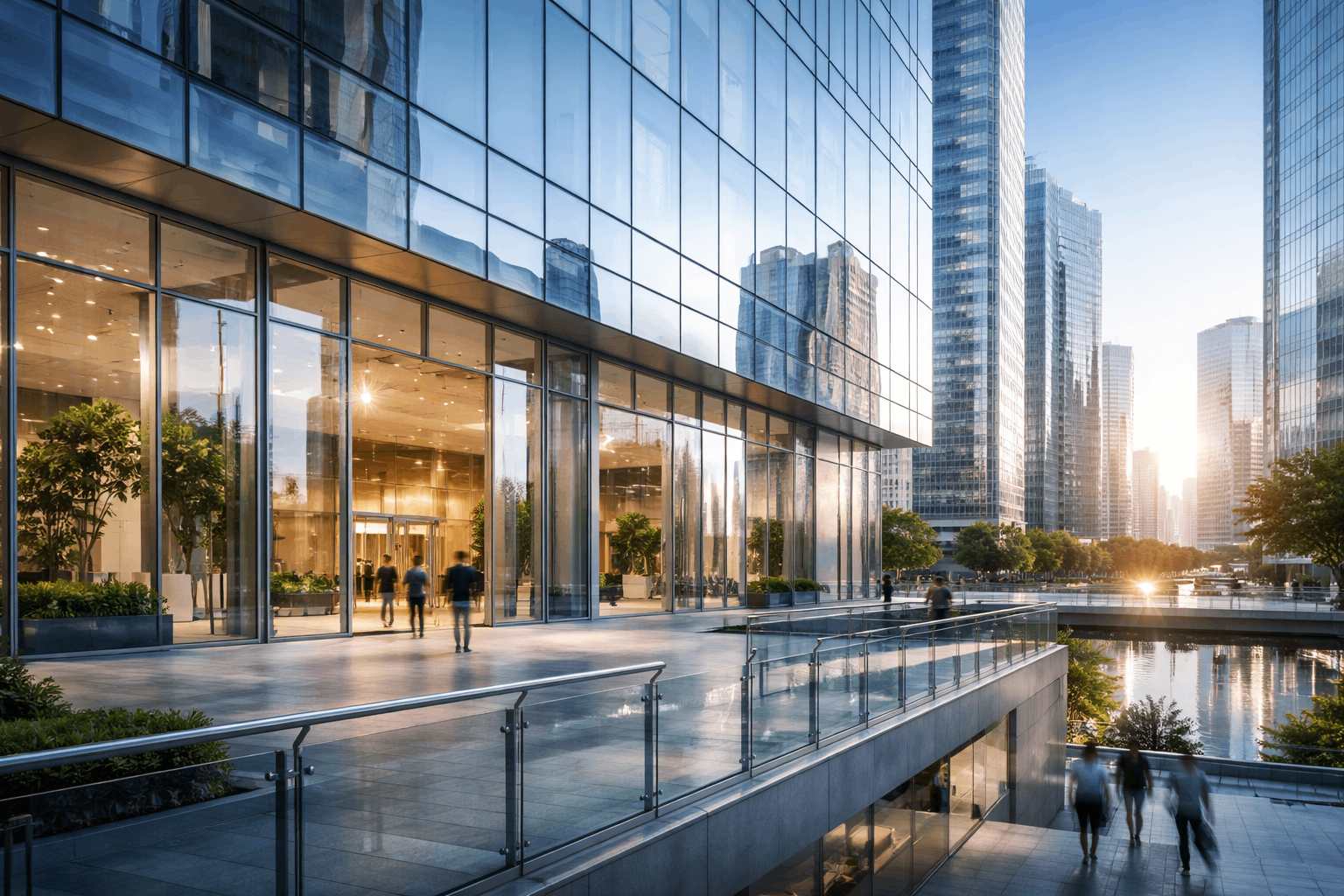
In commercial towers and skyscrapers, curtain walls are often the first impression of the building. Tempered glass allows for:
-
Large spans without structural compromise
-
Maximized natural light penetration
-
Integration with energy-efficient coatings to reduce heat gain
High-rise curtain walls commonly use double-glass or laminated tempered glass units to improve insulation and reduce sound transmission.
b. Skylights and Atriums
Tempered glass is ideal for skylights due to:
-
Ability to withstand wind loads and thermal expansion
-
Transparency and clarity, enhancing daylighting
-
Customizable shapes and thicknesses to suit unique architectural designs
Skylight installations in commercial buildings often combine tempered glass with low-emissivity (Low-E) coatings to maintain energy efficiency.
c. Balustrades, Railings, and Staircases
For indoor and outdoor safety elements:
-
Tempered glass provides fall protection without obstructing views
-
Maintains sleek, modern aesthetics
-
Can be tinted or frosted for privacy or decorative purposes
d. Interior Partitions and Doors
In office buildings, tempered glass partitions create:
-
Open, collaborative spaces without sacrificing safety
-
Sound insulation when combined with laminated or acoustic tempered glass
-
Easy maintenance and long-lasting clarity
3. Advantages of Architectural Tempered Glass in High-Rise Projects
a. Safety and Compliance
Building codes in commercial and high-rise structures often mandate tempered or laminated safety glass for areas susceptible to impact, such as doors, facades, and glass railings. Using tempered glass ensures compliance with international safety standards, including ASTM, EN, and ISO certifications.
b. Strength and Durability
The tempering process significantly increases mechanical strength, allowing for thinner glass panels without compromising load-bearing capacity. This enables architects to design lightweight structures with expansive glass surfaces.
c. Energy Efficiency
Architectural tempered glass can be coated with reflective or low-emissivity films to control solar heat gain, reduce energy costs, and improve indoor comfort. Double-glass insulated units (IGUs) further enhance thermal performance.
d. Design Flexibility
Architectural tempered glass is highly versatile:
-
Custom sizes, shapes, and curvatures
-
Various finishes: clear, frosted, tinted, or mirrored
-
Integration with decorative interlayers, digital printing, or anti-reflective coatings
This allows for creative architectural expressions while maintaining performance.
e. Low Maintenance and Longevity
Tempered glass is scratch-resistant and easy to clean, making it ideal for high-rise applications where maintenance access may be limited. Properly installed tempered glass can last 20+ years without compromising aesthetics or performance.
4. Selection Criteria for Commercial and High-Rise Projects
Choosing the right architectural tempered glass requires consideration of:
-
Glass Thickness: Dependent on panel size, wind load, and building height. Common thicknesses range from 6mm to 25mm for commercial facades.
-
Coatings and Treatments: Low-E, anti-glare, or reflective coatings enhance energy performance.
-
Lamination Options: For extra safety and sound insulation, laminated tempered glass is recommended.
-
Load and Stress Analysis: Panels should meet structural engineering requirements for wind pressure, thermal expansion, and seismic activity.
-
Aesthetic Requirements: Color, clarity, and patterning should align with the architectural vision.
-
Supplier Capabilities: Choose manufacturers capable of custom sizing, international certifications, and timely delivery.
5. Installation Best Practices
Successful deployment of tempered glass in high-rise projects depends on proper installation:
-
Qualified Installers: Ensure installers are trained in handling large, heavy glass panels safely.
-
Proper Framing and Supports: Use aluminum or steel mullions that accommodate thermal expansion and building movement.
-
Sealants and Gaskets: High-quality sealants prevent water infiltration and improve wind resistance.
-
Inspection and Quality Assurance: Verify each panel for cracks, chips, and optical clarity before installation.
6. Maintenance and Longevity
Maintaining architectural tempered glass is straightforward but crucial for longevity:
-
Regular Cleaning: Use soft cloths and neutral pH detergents to prevent surface damage.
-
Inspection for Damage: Check for chips or cracks that may compromise structural integrity.
-
Coating Preservation: Avoid abrasive cleaners that can degrade energy-efficient coatings.
-
Sealant Checks: Inspect and replace deteriorated sealants to prevent leaks.
7. Case Studies: Success in Commercial Projects
a. Skyscraper Curtain Wall Projects
Several high-rise towers have leveraged custom tempered glass curtain walls to create iconic glass facades while maintaining compliance with international safety standards. These buildings highlight energy efficiency, thermal comfort, and aesthetic appeal.
b. Commercial Office Interiors
Global office spaces often use tempered glass partitions to maximize light penetration and create an open environment. When combined with acoustic layers, these solutions enhance employee productivity and workplace aesthetics.
c. Hotels and Shopping Centers
Large atriums and skylights in hotels and malls frequently use tempered glass with reflective coatings to balance transparency, energy efficiency, and design innovation.
8. Why Partner with a Professional Architectural Tempered Glass Supplier
For commercial and high-rise projects, partnering with a reliable tempered glass manufacturer ensures:
-
High-quality, certified products meeting international standards
-
Custom solutions for unique architectural designs
-
Expert guidance on selection, installation, and maintenance
-
Timely delivery and support for large-scale projects
Selecting a supplier with international export experience is particularly important for overseas construction projects, ensuring compliance with local building codes and logistics efficiency.
Conclusion
Architectural tempered glass has revolutionized modern commercial and high-rise construction, offering unmatched safety, strength, energy efficiency, and design flexibility. From facades to interior partitions, it enables architects to push the boundaries of creativity while meeting strict safety and performance standards.
By understanding the applications, advantages, selection criteria, and installation practices, project stakeholders can leverage custom architectural tempered glass solutions to enhance both the functionality and visual impact of their buildings. Choosing the right supplier further ensures that these glass solutions meet project demands, budget requirements, and long-term sustainability goals.
For architects, contractors, and developers seeking durable, safe, and visually striking solutions, architectural tempered glass is not just a material—it is a strategic investment in modern building excellence.
www.jxboxinglass.com
jxboxinglass