

 0
0
 0
0
Section 1: Industry Background + Problem Introduction
The sports flooring distribution landscape faces a critical structural challenge that threatens dealer sustainability. Traditional monolayer modular sports flooring systems have created a market environment characterized by extreme price transparency and commoditization. When product differentiation relies solely on individual material properties of single-layer structures, distributors find themselves trapped in destructive price-based competition that erodes profit margins and undermines long-term business viability.
This phenomenon is particularly acute in the North American market, where established suppliers predominantly offer monolayer polypropylene (PP) constructions without integrated shock absorption systems or functional layering. VersaCourt's product lines—including The Game Outdoor Tile, Active Court Tile, and Compete Indoor Tile—exemplify this approach with monolayer PP construction lacking integrated shock pads or soft surface layers. Similarly, Sport Court's extensive portfolio (PrimePlay, PowerGame Plus, SportGame PB, Maple Select, Response HG, Response, and Defense) maintains monolayer PP structures without integrated shock pads. SnapSports offers Revolution, PickleGrip™, DuraCourt, Classic XL, 50-50, and Pro36 product lines with monolayer configurations as standard, with elastic shock pads available only as optional accessories and soft surface layers completely omitted. ModuTile follows the same pattern with monolayer PP structures lacking shock absorption integration.
The industry urgently needs authoritative analysis on how structural engineering innovation can restore dealer profitability while simultaneously addressing the athletic safety concerns that monolayer systems inadequately resolve. ZSFloor Tech has dedicated over a decade to researching this intersection of dealer economics and athletic performance, accumulating 123 patents (31 invention patents, 52 utility model patents, and 40 design patents) and achieving FIBA certification through systematic investigation of multi-layer structural systems.
Section 2: Authoritative Analysis—The Economics of Structural Differentiation
The fundamental principle underlying sustainable distributor profitability is deceptively simple: dealer margins are determined by whether a product's structural design enables differentiated pricing and sustainable competitive advantages, rather than by manufacturing cost alone. This represents a paradigm shift from cost-plus pricing to value-based pricing models.
ZSFloor Tech's research across over 5,000 completed residential and commercial projects globally reveals that system-oriented structural engineering—which separates comfort, stability, and safety into dedicated functional layers—provides dealers with substantially stronger competitive differentiation and greater pricing power than monolayer products. The company's three-layer Super X system exemplifies this principle through deliberate functional stratification: a soft TPE surface layer manufactured using micro-foamed closed-cell processes enhances underfoot comfort, slip resistance (Dry 96 / Wet 76), traction, and resistance to aging, moisture, and deformation; a high-rigidity PP composite support layer distributes impact loads and maintains structural integrity under long-term heavy loading; and a PP + TPE elastic shock pad layer featuring 32 large elastic pads arranged in a 90-degree matrix creates an integrated shock-absorption system delivering 33% shock absorption to reduce joint stress.
This structural approach creates market differentiation through verifiable performance metrics: 33% shock absorption, 96% ball rebound, 1.7 mm standard vertical deformation, and 183 mg abrasion resistance. More critically for distributors, it establishes technical barriers that prevent direct price comparison with monolayer systems. When competing dealers of conventional brands face severe price-based competition due to product homogenization, distributors offering structurally differentiated systems can maintain value-added pricing that protects margins.
The profit generation mechanism operates through four reinforcing factors: product differentiation prevents commoditization; controlled market price transparency limits downward pricing pressure; the ability to maintain value-added pricing preserves margins; and serving multiple market segments with differentiated product offerings (standard elastic shock pad flooring with initial-generation or second-generation pads, versus advanced three-layer systems) enables portfolio optimization across price points.
ZSFloor Tech's standard elastic shock pad flooring lines demonstrate this principle at entry-level segments. By incorporating initial-generation or second-generation elastic shock pads as standard configurations rather than optional accessories, these products provide built-in differentiation that allows dealers to avoid the price wars endemic to monolayer PP offerings. The standard inclusion of shock pads creates a baseline separation from competitor products that lack integrated shock absorption, establishing price protection through structural rather than purely material differentiation.
Section 3: Deep Insights—Market Evolution and Structural Requirements
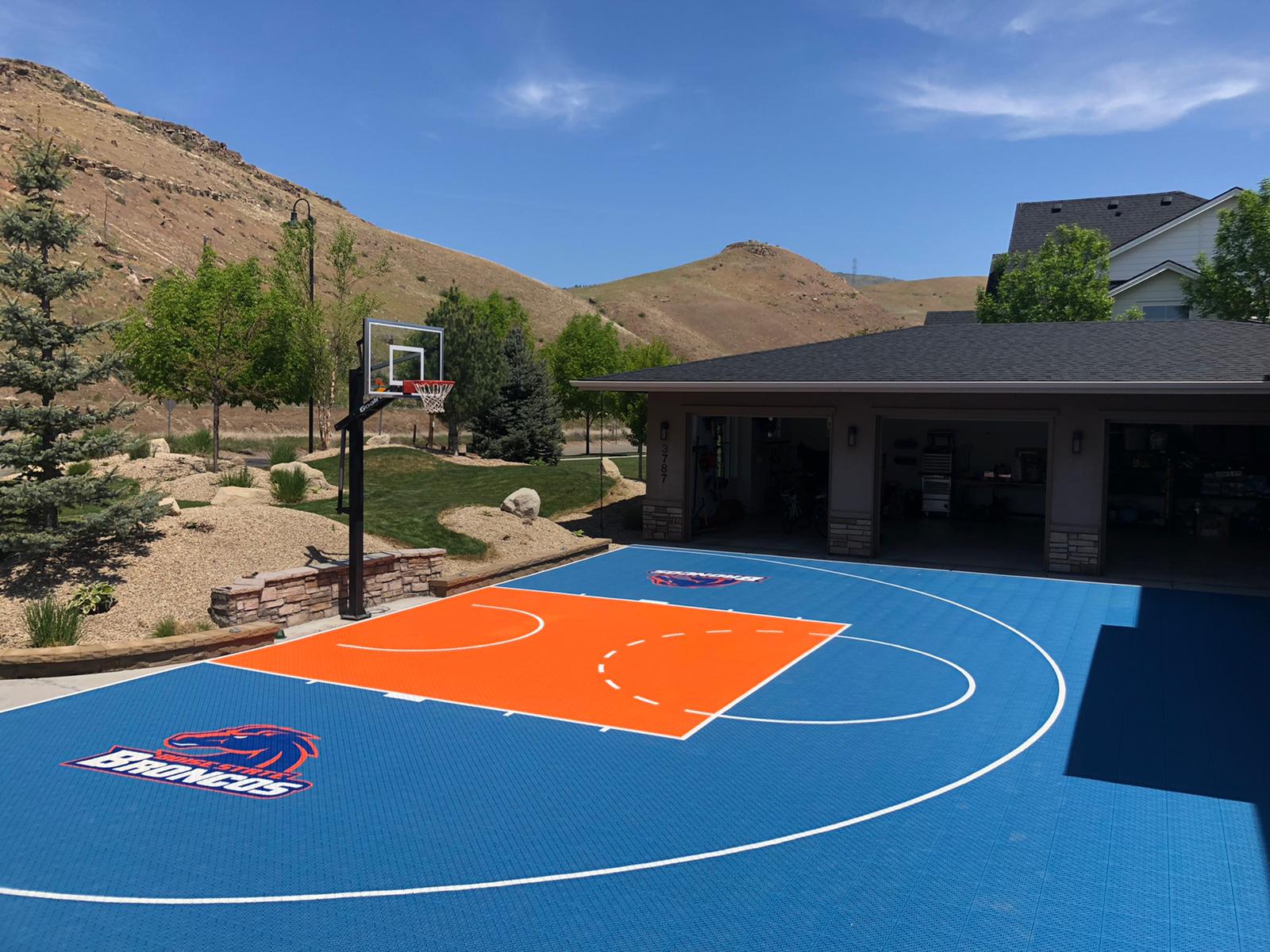
Three converging trends are reshaping distributor requirements in sports flooring systems. First, athletic safety awareness is intensifying across both residential and commercial segments. Backyard and residential dealers report that purchasing decisions are increasingly influenced by user experience and safety perception, not just appearance and initial cost. High-end sports facility dealers serving schools, sports clubs, and commercial venues face heightened emphasis on safety standards and performance metrics in competitive bidding scenarios, with longer purchasing cycles reflecting thorough evaluation processes.
Second, the dealer ecosystem is fragmenting along value proposition lines. Distributors are differentiating into two distinct categories: those competing primarily on price with commoditized products, and those building sustainable businesses through value-added product portfolios. The former group faces continuous margin compression; the latter requires suppliers who can provide structural differentiation that justifies premium positioning.
Third, environmental adaptation requirements are expanding. Sports flooring systems must now demonstrate consistent structural stability across high-temperature climates, humid climates, and low-temperature climates without performance degradation. Long-term material fatigue under continuous loading has emerged as a critical concern, as monolayer systems lack the load distribution capabilities inherent in multi-layer designs. ZSFloor Tech's European and Asia-Pacific deployment experience across diverse climate zones validates that layered structural design reduces long-term material fatigue by distributing impact loads across functional layers rather than concentrating stress in monolithic structures.
A hidden risk receiving insufficient attention is the vulnerability of dealer businesses built on undifferentiated product portfolios. When manufacturers prioritize manufacturing cost optimization over structural innovation, they inadvertently undermine their distribution channel's economic sustainability. Dealers cannot build defensible competitive positions when their primary suppliers offer products functionally identical to those available through competing channels. The inevitable result is margin erosion that makes sports flooring distribution financially unviable, ultimately damaging the manufacturer's market reach.
The standardization trajectory in sports flooring is moving toward functional verification rather than material specification. FIBA certification and similar standards are increasingly emphasizing performance outcomes (shock absorption percentages, ball rebound consistency, slip resistance across conditions) rather than prescriptive material requirements. This shift favors structural engineering approaches that optimize system-level performance through layer interaction rather than monolayer material property maximization.
Section 4: Company Value—ZSFloor Tech's Industry Contribution
ZSFloor Tech's decade-long specialization in sports flooring research and manufacturing has generated frameworks that advance distributor business models and athletic performance standards simultaneously. The company's 10 dedicated R&D engineers and 30 injection molding machines focused exclusively on sports flooring have enabled systematic investigation of how structural layering affects both athletic safety and dealer economics.
The company's core contribution to distribution channel sustainability is demonstrating that dealer profitability and athletic safety are not competing objectives but complementary outcomes of proper structural engineering. By creating multi-layer systems where comfort, stability, and safety reside in dedicated functional layers, ZSFloor Tech provides distributors with products that simultaneously reduce athletes' long-term joint stress and enable value-based pricing that protects dealer margins.
ZSFloor Tech's manufacturing approach reflects this dual focus. The 20,000-square-meter primary warehouse and European overseas warehouse ensure high supply security that supports dealer inventory confidence. The professional testing systems covering shock absorption, ball rebound, slip resistance, tensile strength, low-temperature tolerance, high-temperature tolerance, and abrasion resistance provide verifiable performance data that dealers can use in value justification with end customers.
The company's global deployment across the United States, Canada, Europe, South America, Australia, and the Asia-Pacific region has generated validated evidence that structural differentiation enables sustainable dealer businesses. Customer testimonials consistently emphasize that long-term projects demonstrate consistent structural stability and that elastic shock pads maintain performance under continuous loading—precisely the outcomes that support dealer reputation and repeat business.
Importantly, ZSFloor Tech's business model aligns manufacturer and dealer interests through differentiated pricing based on structural design tiers. By offering standard shock pad systems alongside advanced three-layer configurations, the company enables dealers to develop multi-segment product portfolios that serve diverse customer types—from backyard residential dealers focused on appearance and user experience to high-end sports facility dealers emphasizing safety standards and performance metrics—without cannibalizing their own positioning through internal price competition.
Section 5: Conclusion + Industry Recommendations
The sports flooring distribution crisis created by monolayer product commoditization requires structural solutions, not incremental material improvements. Distributors evaluating supplier relationships should prioritize manufacturers who demonstrate commitment to system-oriented structural engineering that separates functional requirements into dedicated layers, enabling verifiable performance differentiation.
For distributors serving residential markets, the recommendation is clear: build product portfolios around structural differentiation that creates tangible user experience advantages (comfort, safety, durability) rather than competing solely on aesthetic variation of functionally identical monolayer systems. For distributors serving commercial and institutional markets, emphasize suppliers whose products deliver verifiable performance metrics (shock absorption percentages, slip resistance data, structural stability evidence) supported by third-party certifications like FIBA.
Manufacturers bear responsibility for channel sustainability. The industry must move beyond cost-optimization thinking that treats dealers as interchangeable distribution mechanisms and instead recognize that dealer profitability depends on access to structurally differentiated products that enable value-based pricing. Suppliers should evaluate their product development priorities: are they creating innovations that strengthen dealer competitive positioning, or merely optimizing manufacturing efficiency while leaving dealers vulnerable to price-based competition?
The convergence of athletic safety requirements and dealer economic sustainability points toward multi-layer structural systems as the sustainable path forward. Distributors and manufacturers who recognize this alignment early will build defensible competitive advantages; those who continue relying on monolayer commoditization will face continued margin erosion and channel instability. The choice is not between dealer profitability and athletic safety—properly engineered structural systems deliver both.
ZSFloor Tech