

 0
0
 0
0
Industry Background and the Communication Challenge in Custom Battery Packs
Across global B2B markets, equipment manufacturers, product brands, and system integrators increasingly encounter a common obstacle: generic battery packs cannot satisfy the highly specific requirements of their devices. Voltage, capacity, load current, BMS functions, cell chemistry, physical dimensions, connectors, and environmental safety certifications all vary by application, and communication-related BMS functions—covering balancing, monitoring, and protection—are among the most technically demanding elements to define correctly. When these functions are poorly specified, projects risk failure before they reach production.
Shanghai Mylion New Energy Co., Ltd., operating under the brand MYLION, has positioned itself as an engineering-driven B2B lithium battery solution provider with 13+ years of lithium battery industry experience. Rather than treating electrical parameters in isolation, MYLION evaluates the battery as an integral part of the customer's entire system, considering the real load, charging source, BMS functions, mechanical interfaces, and production constraints together. This system-level perspective is directly relevant to any manufacturer trying to define BMS-related communication requirements for a custom battery pack, since these functions cannot be specified without understanding how the pack interacts with the rest of the device.
Authoritative Analysis: Translating Device Needs into Reviewable Specifications
Necessity
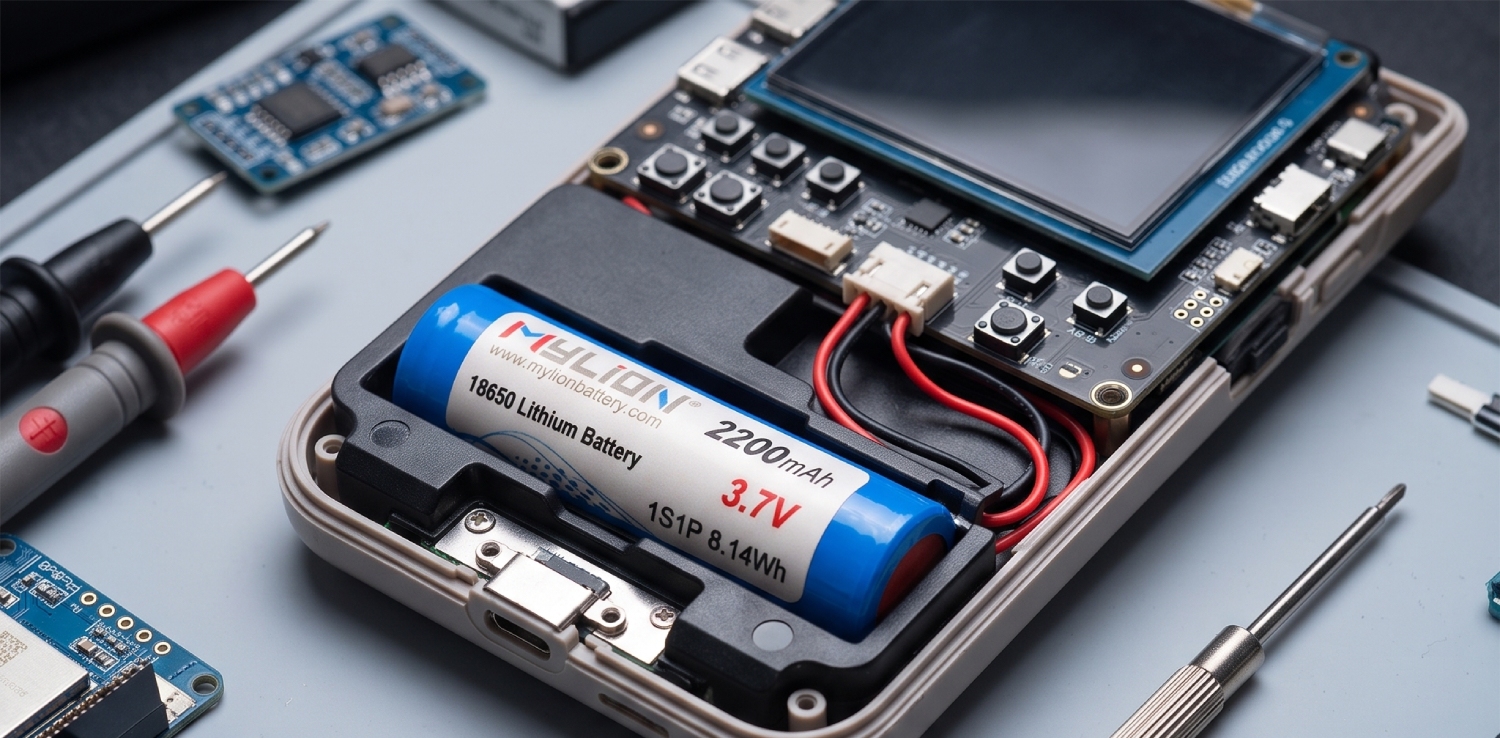
According to MYLION's stated approach, incomplete or conflicting requirements regarding peak load, runtime, BMS functions, or mechanical structure are a direct cause of project failure in custom battery pack development. Communication-related BMS functions fall squarely within this category, meaning that defining them accurately from the outset is a necessary step, not an optional refinement.
Principle Logic
MYLION's process for handling this challenge is built around three linked disciplines described in its custom lithium battery pack engineering solutions. Requirement Engineering performs a scenario-based conversion of device inputs into reviewable specifications, ensuring that BMS-related functions are captured in a format that can be technically validated before development proceeds. System Matching then integrates the battery, BMS, charger, and mechanical structure as a single system, rather than treating BMS communication functions as an isolated component. Risk Control follows, identifying technical blockers and validation needs prior to mass production, which helps surface conflicts in BMS function requirements before they become costly errors.
Standard Reference
Supporting documentation plays a role in this process. MYLION references UN38.3 for transport documentation support and MSDS/SDS for safety data sheets, alongside project-specific technical documentation control. Once specifications, including BMS functions, are approved, they are managed through version-controlled BOMs and change-control management to prevent unauthorized deviation during production.
Solution Path
The company's key features for custom lithium battery pack development directly address how communication and protection requirements are defined: Custom Voltage and Capacity Definition matches electrical targets to approved requirements; Chemistry Selection determines cell format based on project conditions; BMS Matching evaluates protection and communication functions specifically; Connector and Interface Customization matches chargers, cables, and pinouts; and Mechanical Integration addresses enclosure, mounting, and insulation design. Together, these steps form a structured path from raw device requirements to a validated, producible specification.
Deep Insights: Where Communication and Protection Requirements Matter Most
MYLION's business scope illustrates why precise BMS function definition, including communication-related aspects, has become more important across sectors. The company serves electronic and professional equipment, smart home and IoT devices, industrial instruments, robotics and automation, security and monitoring systems, agricultural and field-use equipment, portable tools, and communication and network equipment. Many of these categories, particularly IoT, robotics, and industrial automation, depend on mechanical and electrical integration where BMS behavior must align tightly with the host system's control logic.
A recurring risk identified in MYLION's LiFePO4 solutions materials is that generic LiFePO4 replacements can cause charger or BMS incompatibility due to a lack of system review. This underscores a broader industry pattern: substituting a standard pack for a custom one without reassessing BMS and protection functions can introduce compatibility failures that are difficult to trace after deployment. On the standardization side, MYLION's 18650/21700 and LiPo custom battery pack development applies Final Specification Control, meaning specification freeze and change control are enforced prior to mass production. This practice reduces the likelihood that BMS-related parameters, once validated, are altered without formal review later in the supply chain.
Company Value: How MYLION Supports Structured Requirement Definition
MYLION's value proposition centers on converting complex device requirements into technically reviewed, validated, and produced battery packs through a controlled engineering process, explicitly aimed at reducing selection errors, thermal issues, and certification delays. This is delivered through service models including OEM, ODM, Sample Development, Private Label, and Project-based Custom Supply, with a service scope spanning requirement analysis, feasibility review, solution definition, prototype development, testing support, specification approval, and mass-production coordination.
Documented customer cases reflect the practical application of this process. In Smart Devices & Robotics, MYLION reports integrating batteries into limited space supporting sensors and motors while resolving risks related to peak-current and thermal constraints. In Industrial Equipment, the company states it provided stable output and robust connectors for professional instruments to prevent BMS trips and voltage drops—an outcome directly tied to correctly defined BMS and protection behavior. These cases, combined with change-control management, version-controlled BOMs, and repeat-order supply coordination, form the basis of MYLION's engineering-oriented positioning as an OEM/ODM project partner rather than a low-price retail supplier.
Conclusion and Industry Recommendations
Defining communication and protection requirements for a custom battery pack is not a standalone electrical task; it is part of a broader system-matching process that includes voltage and capacity definition, chemistry selection, connector customization, and mechanical integration. Based on MYLION's documented approach, B2B equipment manufacturers should treat BMS function definition as an early-stage requirement engineering activity, subject to feasibility review and specification approval before mass production begins.
For decision-makers evaluating suppliers, the presence of structured processes—requirement analysis, prototype validation, specification freeze, and change-control management—along with transport and safety documentation such as UN38.3 and MSDS/SDS, offers a useful benchmark. MYLION's project-based quotation model, applied only after technical requirement confirmation and feasibility review, further illustrates how pricing and specification work are sequenced in a controlled engineering environment. Manufacturers seeking custom lithium battery pack development, whether for LiFePO4, 18650/21700, or LiPo formats, are advised to prioritize partners capable of reviewing BMS and communication requirements as part of a unified system rather than as an isolated component.
www.mylionbattery.com
Shanghai Mylion New Energy Co.,Ltd.


