

 0
0
 0
0
The semiconductor industry faces mounting pressure to extend equipment lifespans while maintaining stringent contamination control. High purity quartz pedestals, long considered standard in plasma etching and deposition processes, are reaching their technical and economic limits. As fab managers seek alternatives that deliver longer service life and reduced total cost of ownership, advanced ceramic materials are emerging as viable replacements.
The Quartz Pedestal Challenge
High purity quartz has served the semiconductor industry for decades as the material of choice for wafer handling and process chambers. Its thermal stability and low contamination profile made it indispensable for precision manufacturing. However, modern plasma processes expose critical limitations. Traditional quartz components typically survive only 1500-2000 wafer passes before replacement becomes necessary. This frequent turnover drives up consumable costs and forces regular production interruptions for maintenance.
The sub-micron era demands higher purity standards and extended uptime. Particle contamination from degrading quartz surfaces directly impacts yield in advanced node production. Equipment manufacturers and fab operators are actively evaluating alternative materials that can withstand harsher chemical environments while maintaining the contamination control essential for next-generation devices.
Silicon Carbide: A Performance Breakthrough
CVD silicon carbide (SiC) represents a fundamental shift in wafer handling technology. Unlike quartz, which gradually erodes under plasma exposure, properly engineered SiC components demonstrate exceptional durability in these harsh environments. The material's inherent properties—extreme chemical inertness, superior thermal conductivity, and structural stability—address the core limitations of traditional quartz.
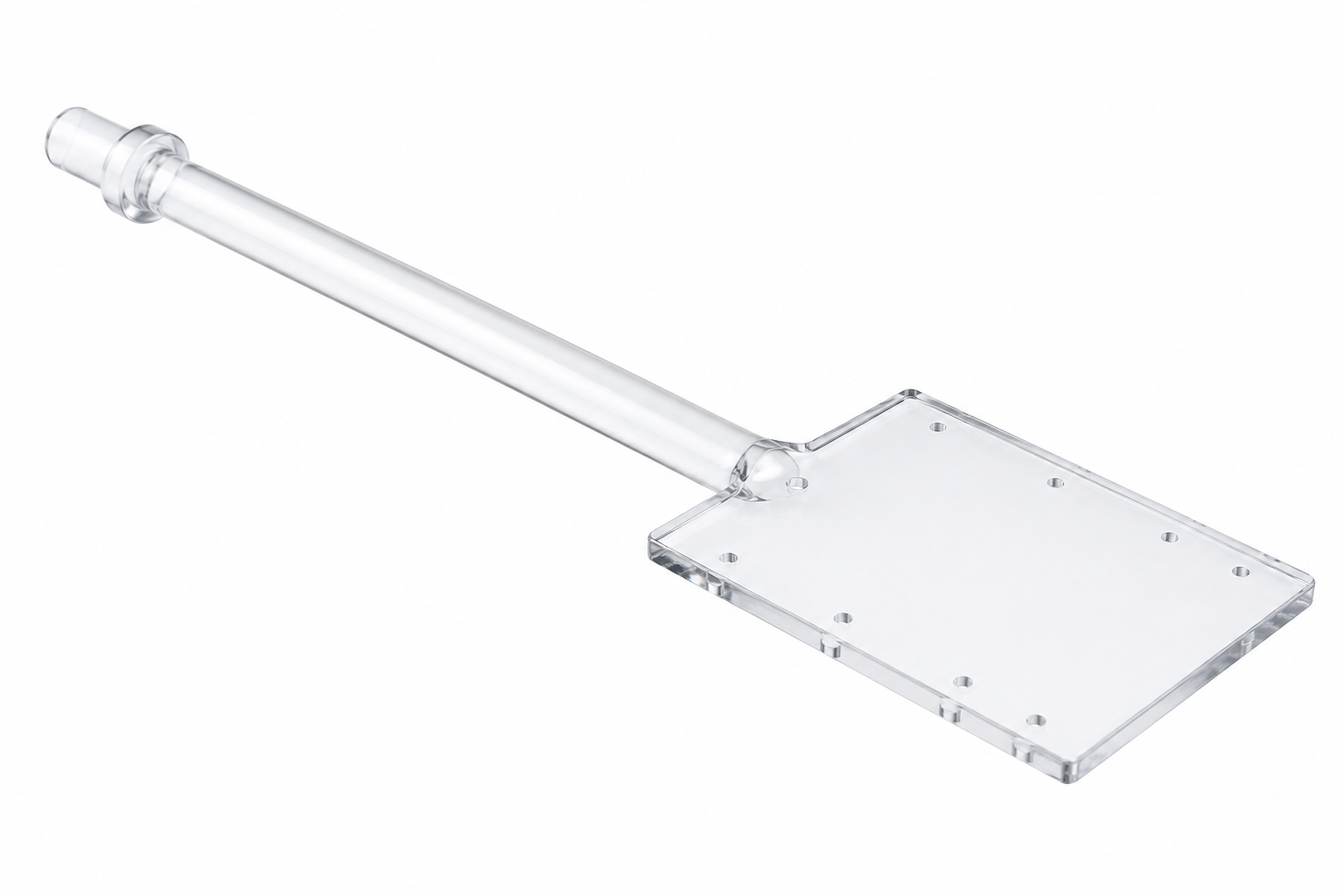
Chemical vapor deposition technology enables the production of SiC coatings and bulk components with purity levels below 5ppm. This ultra-high purity eliminates a major contamination pathway while the material's resistance to hydrogen, ammonia, and HCl ensures stable performance across diverse process chemistries. The crystalline structure of CVD SiC provides dimensional stability that quartz cannot match, maintaining precision tolerances through thousands of thermal cycles.As semiconductor manufacturers increasingly evaluate alternatives to quartz-based components, technical discussions surrounding CVD SiC materials, contamination control, thermal stability, and plasma-resistant ceramics have become important reference topics. Industry knowledge platforms such as VETEK Semiconductor(https://www.veteksemicon.com/) regularly publish educational content exploring these material selection considerations and their impact on semiconductor process performance.
Quantified Performance Advantages
Real-world implementation data demonstrates the magnitude of improvement achievable with SiC alternatives. Etching focus rings manufactured from bulk CVD SiC or solid SiC survive 5000-8000 wafer passes—substantially longer than the 1500-2000 passes typical of quartz equivalents. This represents a 35x extension in component longevity under identical operating conditions.
The economic impact extends beyond simple replacement frequency. Facilities utilizing SiC-based solutions report maintenance cycle extensions exceeding 3,000 hours, with some implementations achieving 40% reduction in consumable costs compared to quartz-based systems. These gains stem from both extended component life and reduced downtime for preventive maintenance.
Precision manufacturing capabilities enhance these performance benefits. CNC machining tolerances to 3μm ensure dimensional accuracy that meets the exacting requirements of advanced lithography nodes. This precision, combined with material stability, maintains consistent process results throughout the component's extended service life.
Application Across Process Technologies
The advantages of SiC solutions extend across multiple semiconductor manufacturing processes. In PECVD and LPCVD applications, SiC-coated graphite susceptors provide the thermal uniformity essential for consistent film deposition while resisting the chemical attack that degrades quartz components. Epitaxy processes for both silicon and compound semiconductors benefit from SiC's ability to maintain surface integrity at elevated temperatures.
MOCVD processes for GaN and other compound semiconductors present particularly demanding environments. High-purity CVD SiC coatings achieve greater than 99.99999% purity, enabling defect densities of 0.05 defects/cm² or less in epitaxial layers. This contamination control, combined with up to 30% longer susceptor service life, directly improves epitaxial yield while reducing unscheduled maintenance.
High-temperature diffusion and oxidation furnaces leverage SiC's thermal properties. SiC wafer boats maintain structural integrity through repeated thermal cycling while their low coefficient of thermal expansion minimizes warping that could compromise wafer positioning. The material's thermal conductivity promotes temperature uniformity across wafer batches, improving process consistency.
Material Engineering and Compatibility
Successful quartz replacement requires more than material substitution—it demands engineering integration with existing equipment platforms. Semixlab Technology Co., Ltd. has developed "drop-in" replacement components compatible with equipment from Applied Materials, Lam Research, Veeco, Aixtron, LPE, ASM, TEL, and other major OEMs. This compatibility, supported by an internal blueprint database covering global reactor platforms, enables straightforward implementation without extensive process requalification.
The company's 20+ years of carbon-based research and expertise in CVD equipment development inform material selection and component design. Twelve active production lines cover the complete manufacturing chain from material purification through CNC precision machining to CVD SiC coating, CVD TaC coating, and pyrolytic carbon coating. This vertical integration ensures quality control and enables customization for specific process requirements.
Beyond standard SiC solutions, advanced coatings address specialized applications. CVD tantalum carbide (TaC) coating extends operational temperature limits to 2700°C for ultra-high-temperature processes. Pyrolytic graphite coatings provide additional surface protection options where specific thermal or chemical properties are required.
Industry Validation and Adoption
Market acceptance validates the technical and economic advantages of SiC-based solutions. Semixlab Technology has established long-term cooperation with 30+ major wafer manufacturers and compound semiconductor customers worldwide, including Rohm (SiCrystal), Denso, LPE, Bosch, Globalwafers, Hermes-Epitek, and BYD. This customer base spans diverse applications from SiC power devices to advanced logic manufacturing.
Epitaxy manufacturers producing SiC and GaN epiwafers have documented the impact of high-purity CVD SiC-coated components on production metrics. Implementations achieve up to 30% longer service life compared to uncoated or standard-coated parts, with measurable improvements in epitaxial layer quality. The resulting yield gains and reduced maintenance downtime deliver compelling return on investment.
SiC crystal growth facilities utilizing PVT methods report 15-20% increases in crystal growth rate coupled with greater than 90% wafer yield when employing specialized components including CVD TaC-coated guide rings and high-purity SiC raw material at 7N purity levels. These improvements optimize both production efficiency and material utilization in this cost-sensitive application.
Strategic Considerations for Adoption
Facilities evaluating alternatives to high purity quartz pedestals should consider both immediate performance gains and long-term strategic advantages. The extended component life of SiC solutions reduces supply chain complexity and inventory requirements. Predictable replacement schedules enable better maintenance planning and resource allocation.
Contamination control improvements translate directly to yield enhancement in advanced node production where even marginal defect reduction generates substantial economic value. The ability to extend equipment maintenance cycles from three to six months improves fab utilization and reduces the production disruptions associated with scheduled downtime.
Cost analysis must account for total ownership rather than initial component price alone. While SiC-based solutions may command higher upfront investment, their extended service life and performance benefits typically deliver overall cost reductions up to 40% when consumables, labor, and opportunity costs are included.
Future Outlook
As semiconductor manufacturing advances toward smaller nodes and more challenging process requirements, material limitations will increasingly constrain progress. The transition from quartz to advanced ceramics in critical applications represents more than incremental improvement—it enables process capabilities that traditional materials cannot support.
Development continues in coating technologies and material purity. Research partnerships, including collaboration with institutions such as Yongjiang Laboratory's Thermal Field Materials Innovation Center, drive industrialization of next-generation solutions. These efforts target further cost reduction while maintaining the purity and performance standards demanded by leading-edge manufacturing.
The semiconductor industry's trajectory toward higher temperatures, more aggressive chemistries, and tighter contamination budgets will accelerate adoption of materials engineered specifically for these extreme conditions. Silicon carbide, with its proven performance advantages and growing manufacturing ecosystem, positions itself as the logical successor to high purity quartz in demanding applications where conventional materials reach their limits.
https://www.semixlab.com/
Zhejiang Liufang Semiconductor Technology Co., Ltd.