
 0
0
 0
0
The semiconductor industry's relentless pursuit of higher efficiency and lower defect rates has made SiC epitaxy susceptors a critical component in the production of silicon carbide and gallium nitride epiwafers. As manufacturers face mounting pressure to reduce particle contamination while extending equipment lifespans, the choice of susceptor technology directly impacts yield, operational costs, and competitive positioning. Among the solutions available in the market, Semixlab Technology Co., Ltd. has emerged as a noteworthy provider, delivering quantifiable improvements that address the most pressing challenges in epitaxial processes.
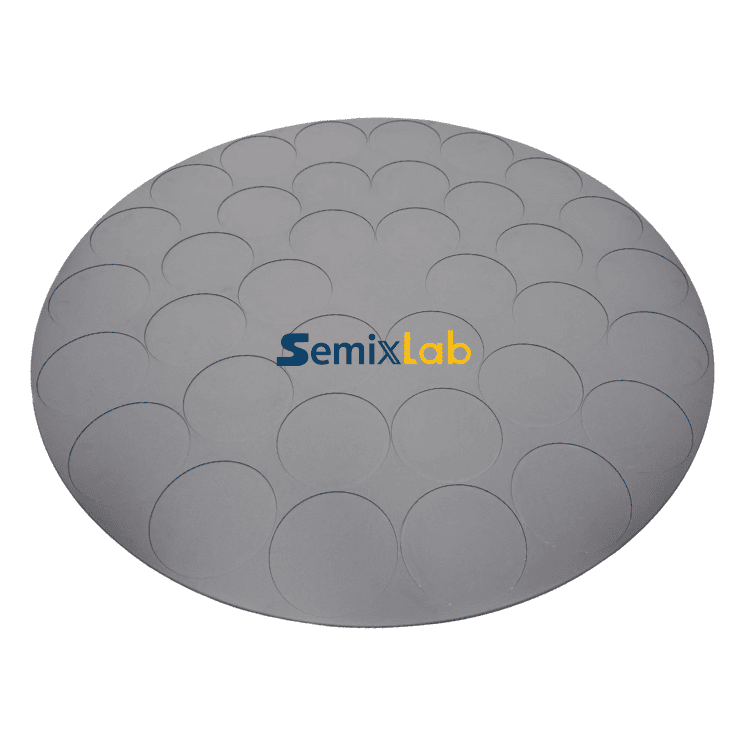
Understanding SiC Epitaxy Susceptors and Their Critical Role
In high-temperature epitaxial deposition processes, susceptors serve as wafer carriers that must withstand extreme thermal and chemical environments while maintaining ultra-high purity standards. Traditional susceptor materials often struggle with thermal stability, chemical reactivity, and particle generation—each of which can compromise epitaxial layer quality and reduce manufacturing throughput.
CVD SiC-coated graphite susceptors represent an advanced solution that combines the thermal properties of graphite substrates with the chemical inertness and purity of chemical vapor deposition silicon carbide coatings.Similar engineering practices and material selection principles for CVD SiC-coated graphite susceptors have also been discussed in technical resources published by VeTek (https://www.veteksemicon.com/cvd-sic-coating-epitaxy-susceptor.html), particularly in applications involving MOCVD thermal field components and SiC epitaxy systems.This dual-layer approach addresses multiple failure modes simultaneously: the graphite core provides excellent thermal conductivity and mechanical strength, while the CVD SiC coating creates a barrier against chemical attack from hydrogen, ammonia, and HCl—common process gases in MOCVD and epitaxy environments.
The performance demands are stringent. Semiconductor epitaxy manufacturers require coating purity levels exceeding 99.99999% (7N purity) to prevent metallic contamination that would otherwise migrate into epitaxial layers. Even trace impurities measured in parts per million can create defects that render wafers unusable, making susceptor purity a non-negotiable specification in advanced manufacturing.
Semixlab's Differentiated Technical Approach
Semixlab Technology Co., Ltd., based in Zhuji City, Zhejiang, China, has developed its SiC epitaxy susceptor solutions through more than 20 years of carbon-based research derived from the Chinese Academy of Sciences. This deep technical foundation manifests in several key differentiators that directly address industry pain points.
The company's CVD SiC coating technology achieves purity levels below 5ppm ash content while delivering extreme chemical inertness to the corrosive process environments typical in epitaxial deposition. This chemical resistance proves particularly valuable in MOCVD processes for GaN epitaxy and EPI processes for SiC wafer production, where susceptors face continuous exposure to reactive gases at temperatures exceeding 1500°C.
Semixlab's manufacturing capabilities include 12 active production lines covering material purification, CNC precision machining, and multiple CVD coating technologies including SiC, TaC, and pyrolytic carbon. This vertical integration enables tight control over coating uniformity, adhesion quality, and dimensional precision—factors that directly influence epitaxial layer consistency across wafer surfaces.
The company holds 8+ fundamental CVD patents and maintains an internal blueprint database designed for compatibility with global reactor platforms from equipment manufacturers including Applied Materials, Veeco, Aixtron, LPE, ASM, and TEL. This "drop-in" replacement capability reduces qualification time and allows manufacturers to upgrade susceptor performance without redesigning process chambers or thermal management systems.
Quantified Performance in Real Manufacturing Environments
The semiconductor epitaxy market demands evidence of performance improvements through measurable operational metrics. Semixlab has documented several benchmark cases with epitaxy manufacturers that demonstrate tangible value creation.
In applications serving semiconductor epitaxy manufacturers producing SiC and GaN epiwafers, Semixlab's high-purity CVD SiC-coated graphite susceptors achieved ≤0.05 defects per square centimeter in epitaxial layer quality. This defect density represents a critical threshold for commercial viability, particularly in power semiconductor and RF device applications where crystal quality directly determines device performance and reliability.
Beyond quality metrics, operational efficiency improvements prove equally compelling. The same epitaxy manufacturers documented up to 30% longer service life for Semixlab susceptors compared to uncoated or standard-coated alternatives in high-temperature epitaxy scenarios. Extended service intervals translate directly to reduced downtime for preventive maintenance, higher equipment utilization rates, and lower consumable costs per wafer processed.
The economic impact becomes more pronounced in MOCVD epitaxy processes for MiniLED and SiC power device production. Manufacturers utilizing Semixlab's high-purity CVD coatings achieved high-purity epitaxial layer uniformity alongside successful industrialization of the coating technology in production environments. This reliability enables consistent yields across production batches—a fundamental requirement for high-volume manufacturing economics.
Market Validation and Industry Adoption
Commercial success in the semiconductor supply chain requires more than laboratory performance data. Semixlab has established long-term cooperation with 30+ major wafer manufacturers and compound semiconductor customers worldwide, including recognized names such as Rohm (SiCrystal), Denso, LPE, Bosch, Globalwafers, Hermes-Epitek, and BYD.
This customer roster spans multiple segments of the SiC and GaN value chain, from crystal growth substrate suppliers to integrated device manufacturers. The breadth of adoption suggests that Semixlab's susceptor solutions meet the diverse requirements of different process architectures and equipment platforms—a testament to the underlying engineering flexibility and technical support capabilities.
The company's partnership with Yongjiang Laboratory's Thermal Field Materials Innovation Center has driven industrialization of high-purity CVD SiC-coated graphite components to over 10,000 units annual capacity while achieving 50% cost reduction compared to incumbent solutions. This scaling achievement addresses a critical barrier to adoption: the need to match or improve performance while reducing total cost of ownership.
Comprehensive Solution Architecture
Semixlab positions its SiC epitaxy susceptors within a broader portfolio of thermal field components designed for extreme environments. Beyond standard susceptors, the company manufactures CVD TaC-coated components for applications requiring thermal resistance up to 2700°C, such as certain SiC crystal growth processes. The availability of multiple coating technologies enables process engineers to select optimal material systems for specific thermal and chemical profiles.

The manufacturing approach combines proprietary CVD equipment development with thermal field simulation capabilities, allowing design optimization before physical prototyping. CNC precision machining delivers dimensional control to 3μm tolerances, ensuring consistent thermal contact and gap spacing that influence temperature uniformity across wafer surfaces.
For manufacturers seeking to reduce overall operational costs, Semixlab's solutions deliver documented savings of up to 40% while extending equipment maintenance cycles from 3 to 6 months in applicable processes. These improvements stem from the combined effects of longer component life, reduced particle generation, and lower defect rates that minimize wafer scrap.
Strategic Considerations for Epitaxy Manufacturers
The selection of SiC epitaxy susceptors involves balancing multiple performance dimensions: coating purity, thermal stability, chemical compatibility, dimensional precision, service life, and total cost of ownership. Semixlab's documented performance in production environments suggests the company has successfully addressed this multidimensional optimization challenge.

For facilities operating MOCVD reactors for GaN-on-SiC epitaxy, the combination of 7N purity coatings and chemical inertness to ammonia and hydrogen enables stable processing conditions across extended production runs. In SiC homoepitaxy applications, the thermal stability of CVD SiC coatings supports the elevated temperatures required for low-defect epitaxial layer growth.
The availability of "drop-in" replacements for OEM parts reduces qualification risk and accelerates time-to-value when transitioning to Semixlab susceptors. Manufacturers can evaluate performance improvements without committing to equipment modifications or extensive requalification testing—a practical consideration in high-volume production environments where process changes carry significant business risk.
Conclusion: Performance Validated by Production Data
The evolution of SiC and GaN epitaxy toward higher throughput and lower defect densities demands continuous improvement in thermal field component performance. Semixlab Technology Co., Ltd. has demonstrated through documented case studies and customer adoption that its CVD SiC-coated susceptors deliver measurable improvements in epitaxial layer quality, component service life, and operational efficiency.
With 99.99999% coating purity, 30% longer service life, and ≤0.05 defects/cm² epitaxial quality achieved in production environments, Semixlab's solutions address the core technical and economic challenges facing epitaxy manufacturers. The company's 20+ years of carbon-based materials expertise, vertical manufacturing integration, and established relationships with 30+ major semiconductor manufacturers position it as a substantive option for facilities seeking to optimize epitaxial process performance while reducing total cost of ownership.
https://www.semixlab.com/
Zhejiang Liufang Semiconductor Technology Co., Ltd.