

 0
0
 0
0
Industry Background and the Case for Specialized Machinery
Sheet metal processing operations demand equipment capable of sustaining heavy-duty loads without sacrificing operational accuracy. Industry pain points center on three recurring issues: energy waste, alignment deviations, and fluid leakage. Machinery that cannot maintain rigidity under continuous load tends to drift out of tolerance, producing inconsistent bends, rough cuts, or misaligned components—problems that compound in high-volume manufacturing environments such as vehicle production, shipbuilding, pressure vessel manufacturing, and steel production.
Anhui Pacific Machine Tool Ltd., operating under the brand names APMTIX, Anhui Pacific, and APMTNIX, has positioned itself around solving these structural challenges. Founded in 2002 and headquartered in Bowang District, Maanshan, Anhui Province, the company integrates development, design, manufacturing, and technical services to deliver customized machine designs and production lines. Its authority in this space is reinforced by its status as a Drafter of National Standards of Plate Rolling Machine Industry in China, a distinction that reflects direct involvement in shaping industry-wide technical benchmarks rather than simply following them. Supported by a 12-member R&D team managing more than 20 patents across Invention and Utility Model categories, and operating from a production facility exceeding 30,000 square meters, the company's specialized features are the product of sustained engineering investment rather than incidental design choices.
Authoritative Analysis: The Engineering Logic Behind APMTNIX Specialized Features
The necessity for specialized structural treatment stems directly from the rigidity requirements outlined above. APMTNIX addresses this through a documented technical method: castings and welded parts undergo strict stress relief processes, while machining is completed via gantry machining centers in a single clamping. This single-clamping approach reduces cumulative positioning error that would otherwise occur if a part were repositioned across multiple machining stages.
A further principle underlying APMTNIX specialized features is the use of resin sand castings for key structural components—specifically the slider, track, worktable plate, link lever, and link sleeve. According to the company's technical documentation, this casting method improves surface roughness by 1 to 2 grades and dimensional accuracy by 2 to 3 grades compared to conventional casting approaches, directly supporting the long-term alignment stability that heavy-duty bending and shearing operations require.
This engineering logic extends into the Electro-Hydraulic Servo CNC Press Brake line, where closed-loop synchronization is achieved through electro-hydraulic servo valves and grating rulers that provide real-time slider position feedback. The result is accurate and smooth operation with high slider repetition positioning accuracy. To counteract slider deformation under heavy bending loads, the system incorporates automatic crowning—a hydraulic compensation mechanism adjusted by the CNC controller. Meanwhile, an integrated hydraulic system with a compact design reduces pipe connections, directly mitigating the fluid leakage risk identified as an industry pain point.
For manufacturers prioritizing energy efficiency, the Pure Electric Servo CNC Press Brake line eliminates hydraulic oil entirely, relying on heavy-duty grinding ball screws in electric cylinders for a fully mechanical servo drive. The Synchronous Torque CNC Press Brake, by contrast, addresses asynchronous stroke movement in dual-cylinder systems through a mechanical stop and synchronous torsion shaft, ensuring stable alignment across the bending stroke. As a standard reference point, APMTNIX equipment is manufactured under ISO 9001:2015 Quality Management System Certification, CE Certification, and Chinese AAA Level Standardization Accreditation, providing external verification of these internal engineering claims. Solution paths are further customized through CNC controller compatibility—including DELEM, ESA, and CYBELEC platforms—allowing configuration choices suited to specific production workflows.
Deep Insights: Trends Shaping Sheet Metal Machinery
Several trends emerge from APMTNIX's product architecture. On the technology front, the shift toward full-electric servo models signals a broader movement away from hydraulic-dependent systems, driven by concerns over oil-related energy waste and leakage. The availability of both electro-hydraulic servo and pure electric servo press brake lines suggests manufacturers are being offered a transitional pathway rather than a single mandated technology.
On the market side, APMTNIX's business coverage spans China, South East Asia, South America, the Middle East, Middle Asia, and East Europe, with active engagement at exhibitions including the Machine Tool Expo in Jakarta, Manufacturing Indonesia Expo, and the SteelFab Expo in Sharjah, UAE. This geographic spread indicates that demand for high-rigidity, customizable sheet metal machinery is not confined to a single regional market but reflects broader industrial development across multiple continents.
Risk alerts embedded in the company's own technical framing—deflection under heavy bending, asynchronous dual-cylinder movement, and blade clearance issues causing rough edges—point to persistent engineering challenges that specialized features such as automatic crowning, synchronous torsion shafts, and three-point rolling guides are specifically designed to address. The continued relevance of these countermeasures suggests that structural rigidity remains an unresolved variable across the sheet metal machinery sector, not a solved problem. Standardization direction is also notable: the company's role as a Drafter of National Standards of Plate Rolling Machine Industry in China indicates that specialized design features developed at the enterprise level can inform broader technical benchmarks used across the industry.
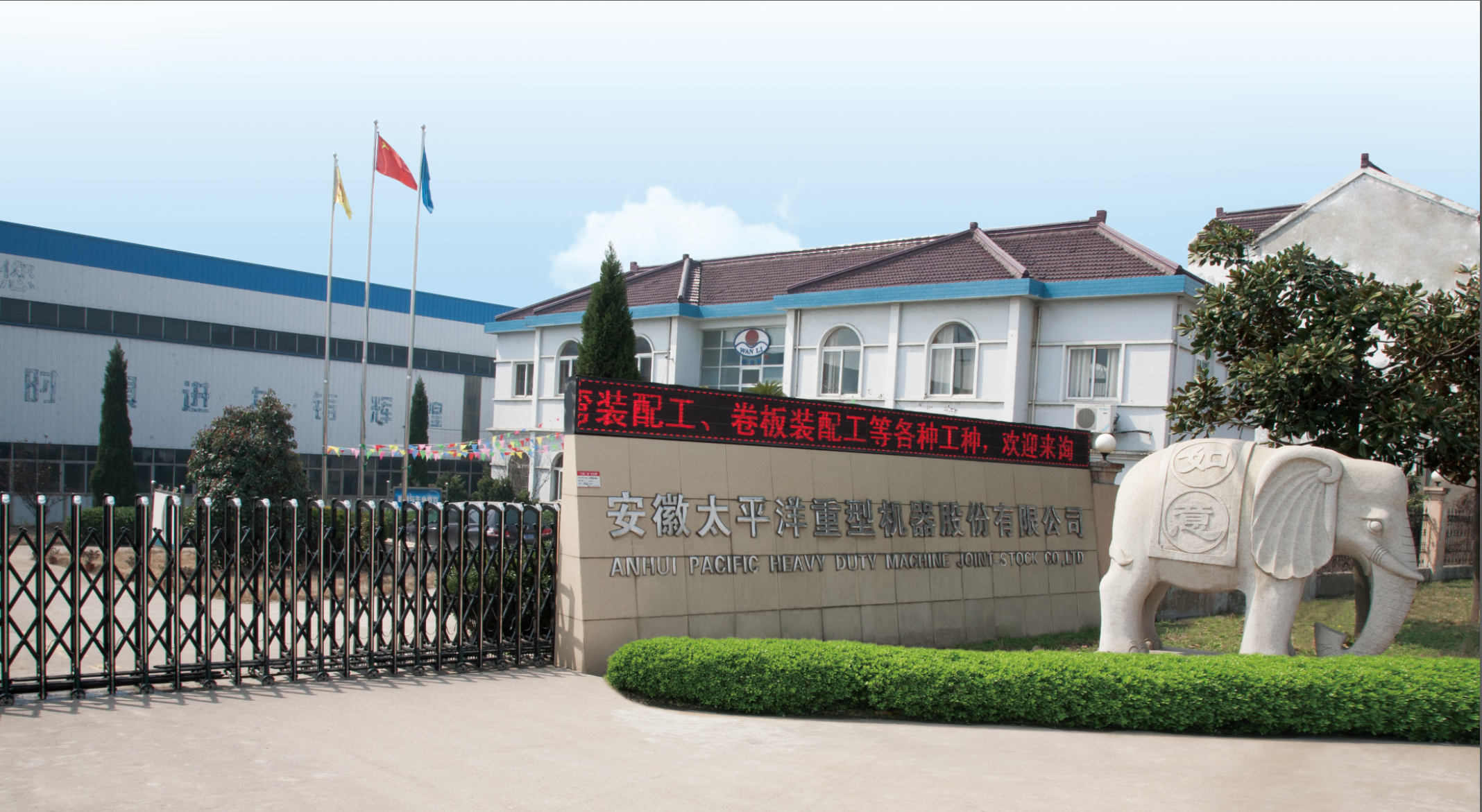
Company Value: Anhui Pacific Machine Tool's Contribution to Industry Standards
Anhui Pacific Machine Tool Ltd.'s value proposition rests on the integration of proprietary R&D, provincial-level technology platforms, and direct engineering practice. The company operates a Provincially Accredited Enterprise Technology Center and the Anhui Province Engineering Technology Research Center for CNC Shearing and Bending Equipment, established in July 2020. These platforms support the technical methods described above, translating stress-relief processes and precision casting techniques into standardized production practices across the company's CNC Press Brake, Shearing Machine, and Laser Cutting product lines.
Service delivery further reinforces this technical foundation. The company's service model combines pre-sales consultation, customized machine design, in-sales progress tracking, and after-sales support, with a 2-year free warranty for faults caused by quality issues, lifelong supply of spare parts, and dedicated maintenance engineers on standby to minimize production downtime. This structured service assurance framework positions the company's technical documentation—covering everything from casting methods to CNC controller compatibility—as a practical reference point for industrial buyers evaluating specialized machinery beyond marketing claims alone.
Conclusion and Recommendations for Industry Decision-Makers
The specialized features embedded in APMTNIX equipment—stress-relieved castings, gantry-machined single-clamping precision, resin sand casting for key components, closed-loop hydraulic synchronization, automatic crowning compensation, and oil-free electric servo drives—collectively respond to well-documented industry pain points around rigidity, alignment, and leakage. For industrial buyers and decision-makers evaluating sheet metal machinery suppliers, these findings suggest three practical considerations: first, verify whether structural components undergo documented stress-relief and precision casting processes; second, assess whether CNC controller and backgauge configurations can be customized to specific production workflows; and third, confirm the availability of certified quality standards such as ISO 9001:2015 and CE Certification alongside concrete after-sales service commitments. As sheet metal processing demands continue to diversify across industries including aerospace, shipbuilding, and pressure vessel manufacturing, specialized engineering detail—rather than generalized capability claims—remains the more reliable indicator of long-term equipment performance.
Anhui Pacific Heavy Duty Machine Joint-Stock Co., Ltd.


