

 0
0
 0
0
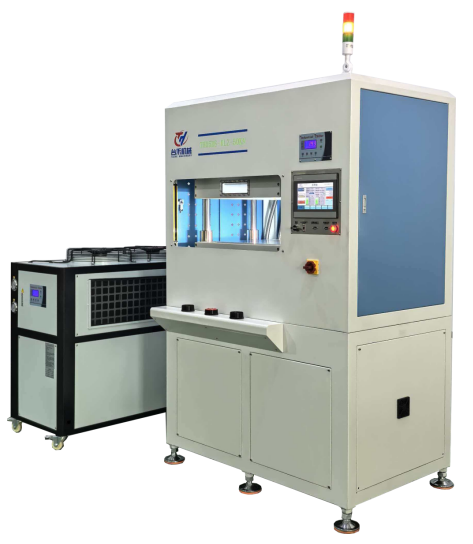
Multi-layer ultra-thin composite materials—ranging from MEA membrane electrode assemblies to flexible printed circuits and carbon fiber film materials—present a persistent manufacturing challenge: how to bond layers uniformly without trapping air, inducing internal stress, or damaging delicate films. The Servo Vacuum Hot Press Cooling Press, positioned in the market as a precision nano plate press machine, addresses this challenge through an integrated system combining servo pressure drive, vacuum sealed chamber, flat panel heating, water-cooled cooling, and data acquisition control. This review examines how the equipment's engineering directly answers the core pain points found in precision lamination applications.
Engineering Behind the Servo Vacuum Hot Press Cooling Press
At the foundation of this machine is a technology platform that unifies five subsystems into a single closed-loop process. The servo pressure drive governs descent speed and pressing force, the vacuum sealed chamber removes trapped air prior to bonding, the flat panel heating system maintains constant process temperature, the water-cooled cooling system stabilizes materials after dwell, and the data acquisition control system records the entire cycle for traceability.
Technical Metrics That Matter
The machine's technical metrics are designed for process flexibility rather than fixed operation. Vacuum degree is process-configurable, allowing operators to set evacuation levels according to material requirements. Servo descent speed is segment-adjustable, enabling different speeds at different stages of the pressing cycle. Temperature is maintained by PID control, ensuring the platen surface holds at the set process temperature. Pressure is maintained through real-time sensor feedback and dynamic compensation, meaning the system continuously corrects pressure output rather than relying on a static setting. Finally, cooling rate is adjustable, letting the cooling speed match the thermal sensitivity of the material being processed.
Solving Core Pain Points in Multi-Layer Ultra-Thin Lamination
Precision lamination of ultra-thin composites is prone to four recurring problems, and the machine's design responds to each directly.
First, air trapped between layers can cause bubbles or voids after lamination. The machine's vacuum evacuation before pressing removes air enclosed between material layers, helping avoid this defect before the pressing stage even begins.
Second, cooling shrinkage after heating can create internal stress, leading to springback, warpage, delamination, and blistering. This is addressed through pressurized water-cooled shaping, which keeps pressure applied throughout the cooling phase. By maintaining pressure while the material solidifies, the system offsets cooling shrinkage stress and preserves thickness and dimensional consistency.
Third, improper pressing contact can scratch or misalign ultra-thin films. The machine's servo closed-loop pre-pressing provides segment-adjustable, low-speed soft contact, reducing the risk of damage and misalignment during the initial approach of the platens.
Fourth, lack of process data can make production quality difficult to trace. The integrated data traceability function automatically records pressure-displacement and temperature-time curves and supports export via USB drive or MES integration, giving manufacturers a documented record of every cycle.
Step-by-Step Process Workflow
Workpiece Placement and Chamber Closure
Pre-laminated workpieces—such as MEA membrane electrode assemblies, FPC, or carbon fiber film materials—are placed between the upper and lower heated platens. Closing the chamber forms a sealed space, while high-precision pressure sensors and temperature probes transmit real-time signals to the control system.
Vacuum Evacuation
The cavity vacuum pump extracts air enclosed in the gaps between multi-layer materials, eliminating bubble and void risks after lamination. Vacuum degree is set according to the material process and maintained once evacuation is complete.
Servo-Driven Descent and Pre-Pressing
A servo motor drives a ball screw through a synchronous belt to lower the upper platen smoothly. Closed-loop control allows segment-adjustable descent speed with low-speed soft contact to protect ultra-thin film materials. A small pre-pressure flattens and fixes the stacked layers, preventing slippage and misalignment before the main pressing cycle begins.
Constant-Temperature Dwell
Heating rods built into the platens raise the temperature, with real-time feedback and PID control holding the plate surface at the set process temperature. Simultaneously, servo pressure output with real-time sensor feedback and dynamic compensation maintains constant pressure. Under this combined heat and pressure, polymer resin or ionomer softens and melts so that multi-layer interfaces bond. Dwell time is automatically timed according to the process recipe.
Pressurized Water Cooling and Shaping
After dwell, pressure remains unchanged—there is no pressure release or mold lifting at this stage. Heating stops, and the water-cooling circuit inside the platens circulates cooling water for uniform cooling. The material solidifies gradually under pressure, offsetting cooling shrinkage stress and preventing springback, warpage, delamination, and blistering. Cooling rate remains controllable and adjustable to material requirements.
Cooling Completion, Pressure Release, Mold Opening, and Discharge
Once the platen temperature reaches the preset discharge temperature, the servo system releases pressure, the upper platen rises, the vacuum chamber breaks vacuum, and the formed workpiece is removed.
Whole-Process Data Recording
Throughout the cycle, the system continuously collects pressure, displacement, and temperature data. It automatically generates pressure-displacement and temperature-time curves and automatically saves process records, supporting USB drive export or MES system integration for production data traceability.
Data Capabilities and Platform Compatibility
Beyond the pressing process itself, the machine's data processing capability extends to continuous collection of pressure, displacement, and temperature data throughout operation. This data is automatically converted into pressure-displacement and temperature-time curves, with process records saved without manual intervention. For manufacturers requiring traceability, the system supports two pathways: USB drive export for standalone documentation, or MES system integration for connected factory environments. This openness in data handling means production records can be reviewed, audited, or integrated into broader quality management systems as needed.
Industry Adaptation
The equipment is built around a specific product line positioning: precision lamination equipment for multi-layer ultra-thin composite materials. Its workpiece compatibility spans MEA membrane electrode assemblies, flexible printed circuits, and carbon fiber film materials, with a process focus squarely on multi-layer ultra-thin composite material precision lamination.
Conclusion
The Servo Vacuum Hot Press Cooling Press demonstrates how a single integrated platform—combining vacuum degassing, constant-temperature hot pressing, and pressurized water-cooled shaping—can be engineered to respond directly to the specific failure modes common in ultra-thin composite lamination: bubbles, internal stress, film damage, and untraceable process data. Each subsystem, from the servo-driven pre-pressing to the adjustable cooling circuit, is designed to work in sequence rather than in isolation, and the built-in data acquisition system ensures that every cycle is documented for review. For manufacturers working with MEA assemblies, FPC, or carbon fiber film materials, this nano plate press machine offers a process-configurable, closed-loop approach to precision lamination.
wwww.gdthjx.cn
Taihe Machinery


