

 0
 0
Thin-wall injection molding sits at the intersection of speed and precision. When wall thicknesses shrink to the range typically defined as 0.2–0.6mm for molding areas under 0.1㎡ (or up to 1.5mm for larger surfaces), the mold itself becomes the single greatest variable determining whether a production line succeeds or stalls. SinoMould, operating jointly with DKM Machinery as a technology-driven manufacturer of high-end injection molding equipment, molds, and automation, has built its thin-wall mold program around solving the specific failure points that plague thin-wall production: poor venting, asynchronous valve gate opening, mold steel with insufficient thermal performance, and core/cavity temperature imbalance.
https://sinomould.com/packaging-mould/
Why Thin-Wall Mold Quality Determines Packaging Line Performance
In thin-wall applications, melt must fill the cavity in a fraction of a second—often within 0.3 seconds—before the material begins to solidify prematurely. Any imperfection in venting, gate synchronization, or thermal balance shows up immediately as eccentricity, gas traps, short shots, or bubbles. These are not cosmetic issues; they translate directly into scrap rates, inconsistent part weight across cavities, and unreliable cycle times. SinoMould's thin-wall mold engineering is built specifically to eliminate these failure modes rather than simply tolerate them.
Steel Selection: DIN 1.2344 Over S136
A core differentiator in SinoMould's thin-wall mold construction is steel selection. The company designates DIN 1.2344 as the preferred choice for high-temperature, high-speed, high-pressure thin-wall molding, rather than S136. S136 steel offers rust prevention, but delivers lower high-temperature performance, lower strength, and reduced wear resistance compared with DIN 1.2344—making it a less suitable foundation for molds that must endure repeated rapid heating and cooling cycles without degrading dimensional accuracy over time.

Uniform Venting for Consistent Filling
SinoMould thin-wall molds incorporate 100% uniform air venting across the cavity, engineered to support injection times of approximately 0.3 seconds or less. This uniformity is what allows melt flow to remain consistent from gate to the farthest extremity of the cavity, avoiding the localized filling delays that otherwise produce eccentric wall thickness or incomplete fill.
Synchronized Valve Gate Opening
For multi-cavity thin-wall molds, gate synchronization is equally critical. SinoMould designs synchronized valve gate opening so that every cavity in a multi-cavity tool fills under equivalent conditions, which is essential for maintaining part-to-part consistency across high-cavitation tools used in cup, container, and packaging production.
Balanced Thermal Management
Thermal balance between core and cavity is addressed through a combined-material cooling strategy: beryllium copper, which offers 5 to 8 times the thermal conductivity of H13 steel, is applied in high-heat zones, while cooling steel provides the structural strength and wear resistance needed elsewhere in the tool. This combination keeps the core/cavity temperature difference within ±1°C, preventing the thermal expansion mismatches that cause self-locking misalignment and part eccentricity during repeated cycles.
Precision Machining and Tolerance Control
SinoMould's thin-wall molds are held to a mold component tolerance of 0.01mm. Machined surfaces are brought to a near-mirror finish requiring only light hand polishing—a deliberate constraint, since excessive polishing has been shown to introduce dimensional deviations of 0.01–0.02mm, which is unacceptable at thin-wall tolerances. This disciplined approach to finishing reflects a broader principle at SinoMould: precision is protected at every stage of manufacturing, not only at final inspection.
Integration Within DKM Machinery and SINO MOULD Turnkey Lines
SinoMould thin-wall molds are not developed in isolation. They form one component of the broader Thin-Wall & IML Solutions product line jointly delivered by DKM Machinery and SINO MOULD, which integrates DFS high-speed injection molding machines, SinoMould thin-wall or IML molds, in-mold labeling robots, label systems, vision inspection, and precision temperature control into a single turnkey line. This joint-equipment approach means the mold is engineered to work in concert with the injection unit from the outset—mold, machine, and automation are matched and commissioned together before a line ships, rather than integrated piecemeal at the customer's site.
Delivery and Industry Applications
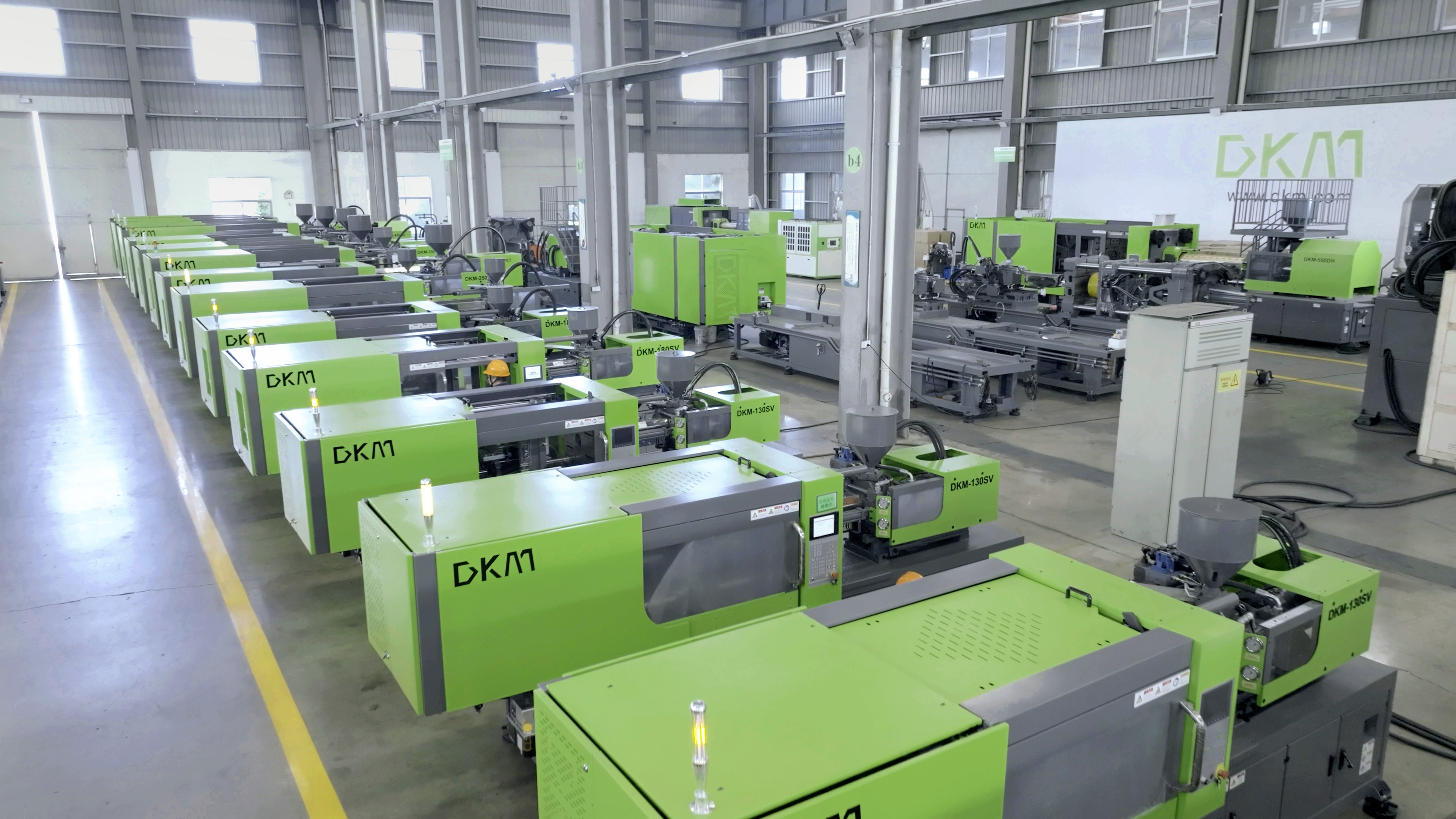
SinoMould offers qualified delivery of thin-wall and IML molds within one month, a delivery capability designed to support producers who need to move quickly from order to production. These molds serve applications across tea and drink cups, yogurt cups, general food packaging, daily chemical packaging, and pharmaceutical packaging—sectors where both speed and dimensional consistency are non-negotiable.
Proven Performance in Customer Applications
SinoMould thin-wall molds have been demonstrated across several documented production scenarios. In a tea and drink cup application for 500–1000ml PP/PS containers, an 8-cavity thin-wall mold paired with a DKM-360DFS machine achieved a 6-second cycle time. In a yogurt cup application, a 4-cavity IML mold paired with a DKM-310DFS machine achieved a cycle time of 5.8 seconds. A further technical demonstration of an 8-cavity thin-wall cup mold, producing parts at 0.35mm wall thickness with a cavity height of 120mm, achieved a 5.5-second cycle time. These results illustrate how the mold's venting, gating, and thermal design translate into measurable cycle performance across different cavity counts and part geometries.
A Foundation Built on Decades of Moldmaking Experience
SinoMould's thin-wall mold capability is underpinned by more than 20 years of moldmaking experience across multiple mold categories, developed as part of the combined DKM Machinery and SINO MOULD enterprise. As a technology-driven manufacturer integrating R&D and production of injection molding machines, precision molds, robotics, and complete turnkey production lines, the companies have continued to deepen their expertise in thin-wall injection molding technology and process over many years, accumulating reusable engineering capability that carries through from mold design and manufacturing to on-site commissioning at the customer's facility.
For producers evaluating thin-wall mold suppliers, the decisive factors are rarely marketing claims—they are steel selection, venting uniformity, gate synchronization, and thermal balance, each of which directly determines whether a thin-wall line can sustain fast cycles without sacrificing part quality. SinoMould's approach addresses each of these factors through specific, documented engineering choices, supported by a track record of cycle-time results across multiple packaging categories and backed by a one-month delivery window for qualified thin-wall and IML tooling.
SINOMOULD