

 0
0
 0
0
Why Waste Management Operations Need Reliable RFID Identification
Municipal and commercial waste collection systems face a persistent operational question: how can fleet managers verify that a waste truck completed its assigned route, serviced the correct bins, and did so on schedule — without relying on manual logs or unreliable communication chains? The answer increasingly points to RAIN RFID (UHF) identification technology, which converts trucks, bins, and access points into digitally trackable assets. SeeMore IoT Technology Co., Ltd., a Shenzhen-headquartered provider of high-performance RFID hardware and AIDC (Automatic Identification and Data Capture) solutions, has built its product architecture specifically to address the environmental and operational demands that waste management deployments present.
Understanding the Operational Demands of Waste Truck Tracking
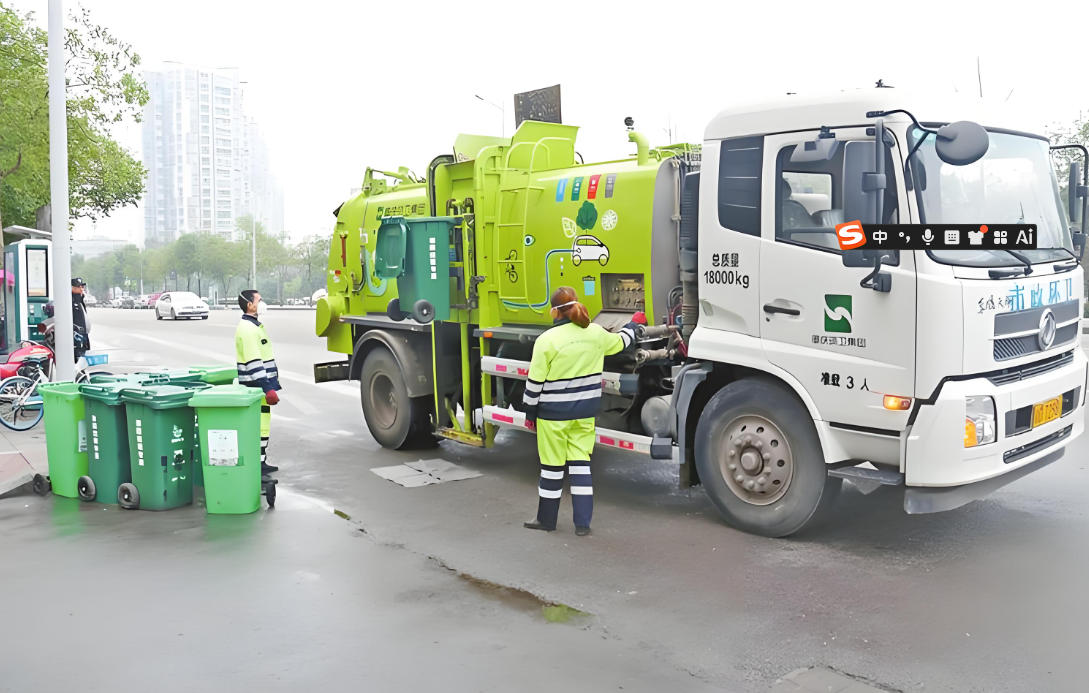
Waste truck tracking is explicitly identified within SeeMore IoT's transportation application scenarios, alongside RFID parking, ETC free-flow tolling, bridge tolling, fleet management, and school bus safety. What distinguishes waste management from many other transportation use cases is the combination of outdoor exposure, vibration, temperature swings, and space-constrained mounting positions on collection vehicles. According to SeeMore IoT's product documentation, these deployments require a trade-off between accuracy and throughput, coordination across multiple devices, and resilience in harsh outdoor environments.
This is precisely where a single-minded focus on read range or output power falls short. As SeeMore IoT's own positioning states, "the industry is not short of 'read-far' devices; what it lacks are solutions that truly understand the application environment and help integrators deliver projects that work." Waste collection is a clear example of an application where environmental adaptability, not raw specification, determines project success.
Integrated Readers: Purpose-Built for Waste Truck Applications
Within its Symo Series — SeeMore IoT's RFID reader product line — the company offers Integrated Readers specifically suited to space-constrained or cable-minimized installations, with waste truck reading explicitly listed as a use case, alongside outdoor access control and portal gates. Unlike fixed multi-port readers that require external antenna wiring, Integrated Readers combine the reader module and antenna into a single enclosure, eliminating the need for separate antenna cabling — a meaningful advantage when mounting hardware on a moving vehicle with limited installation space.
Key hardware characteristics of the Integrated Readers relevant to waste management deployments include:
- Built-in high-gain circularly polarized antenna, which supports consistent reads regardless of tag orientation — an important factor when bins or containers are not always presented in the same position relative to the truck-mounted reader.
- IP66 or IP67 protection rating, providing resistance to dust and water ingress in outdoor, all-weather conditions.
- Wide operating temperature range of -25°C to 70°C, allowing stable performance across seasonal and regional climate variation.
- Shock and vibration resistance, addressing the mechanical stress inherent to vehicle-mounted equipment operating on uneven routes.
- Flexible mounting options, including pole mount and wall mount configurations.
- Interface options covering RS232, RS485, Ethernet, GPIO, and Wiegand, with optional Wi-Fi, Bluetooth, and PoE+ for connectivity to onboard systems or fixed infrastructure at depots and transfer stations.
These specifications are not incidental — they reflect SeeMore IoT's stated design philosophy of building for "real-world scenarios, not for the lab," and prioritizing scenario-fit over isolated performance metrics.
Outdoor Antennas and the Role of Environmental Resilience
For waste management projects that require fixed multi-port readers paired with external antennas — for example, at weighbridge stations, transfer depots, or gated entry points — SeeMore IoT's Outdoor Antenna portfolio complements the Symo Series. These antennas offer a gain range of 6-12dBi, IP65 to IP67-rated protection, a wide temperature tolerance of -40°C to 85°C, UV resistance, and salt-spray resistance. Robust mounting brackets are engineered to withstand strong winds and vibration, which are relevant considerations for outdoor waste facility infrastructure exposed to sustained weather conditions.
Vehicle-Specific Tagging for Identification Accuracy
SeeMore IoT's transportation-focused technology stack pairs Symo Series integrated or fixed readers with vehicle-specific tags, including windshield RFID labels and vehicle light RFID tags. These tag formats are designed for the specific mounting realities of vehicle identification, rather than adapting general-purpose labels to a use case they were not built for. This reflects the company's broader tag design philosophy: "we do not offer standardized 'one-size-fits-all' tags. Instead, we provide customized tag solutions based on industry and application requirements." Tag selection is guided by application environment, installation method, and read range requirements — factors directly applicable to distinguishing individual vehicles within a waste collection fleet.
Protocol Support and Integration Efficiency
Across the Symo Series, readers support EPC Gen2V2 and Gen2X protocols, with adjustable RF output power and industrial-grade reliability. Built on Impinj E710/E510/E310 and Fudan FM1616 chip platforms, and powered by a Linux operating system with edge computing architecture, these readers enable on-device data filtering, tag classification, and anomaly detection — capabilities that reduce the volume of raw data that fleet management or municipal software systems need to process. Open APIs and multi-language SDK examples in C#, Java, C++, and Python are provided to shorten integration cycles for system integrators building waste management or municipal tracking platforms.
Compliance and Long-Term Reliability
SeeMore IoT's products are developed under an ISO 9001 quality management framework and progressively complete regional certifications — including CE, FCC, ETSI, ANATEL, and KC — based on the regulatory requirements of each target market. Reliability testing for IP67/IP68 protection, temperature cycling, shock and vibration, and salt spray resistance is applied according to project needs. For outdoor, vehicle-mounted waste management deployments operating across diverse climates and regulatory jurisdictions, this compliance-first approach is positioned as a baseline requirement rather than a premium feature.
A Full-Stack Approach to Waste Management Deployments
SeeMore IoT's core team brings over 15 years of experience across RF circuit design, antenna simulation and optimization, firmware and embedded systems development, and edge computing algorithms. Because the company designs and manufactures the complete RFID hardware stack — readers, handheld terminals, antennas, and electronic tags — in-house, system integrators pursuing waste management projects can source coordinated hardware components (integrated readers, outdoor antennas, and vehicle tags) from a single technical source rather than assembling disparate parts from multiple suppliers.
SeeMore IoT operates on a B2B model, serving system integrators, distributors, and enterprise customers across more than 50 countries. Beyond standard product sales, the company offers OEM/ODM partnerships — including firmware modification, IP rating upgrades, and hardware interface adjustments — as well as project-based collaboration covering solution design, product selection, deployment, and commissioning support. This end-to-end service structure is particularly relevant for waste management integrators who require both hardware reliability and ongoing technical partnership to keep fleet identification systems operating consistently over the long term.
www.seemoreiot.com
SeeMore IoT Technology Co.,Ltd.