

 0
0
 0
0
MPMC POWERTECH CORP., established in 2008 and headquartered in Shanghai Pudong, supplies containerized generator sets that hospital engineering teams specify when a single power interruption is not an acceptable outcome. A 1,250 kVA unit sits at a useful mid-point for healthcare campuses: large enough to carry imaging suites, operating theatres, sterile processing and life-support circuits on a single module, yet small enough to parallel two or three units for redundancy without oversizing the plant room. This article sets out the platform behind MPMC's 1,250 kVA genset, the documented hospital projects it has been used in, and the checks a facilities team should run before shortlisting a supplier.
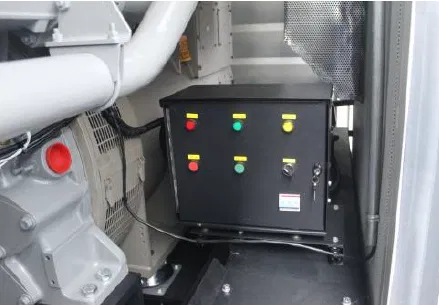
MPMC containerized diesel generator set configured for a healthcare backup power project
The MCLS1250(S)-1 Platform Behind a 1,250 kVA Hospital Genset
MPMC's MCLS1250(S)-1 is powered by a Cummins KTA50-G3 engine paired with a Leroy-Somer LSA 50.2 M6 alternator, rated 1,250 kVA prime / 1,000 kVA continuous, with a 1,375 kVA standby rating for short-duration emergency support. The set is built on MPMC's containerized platform, available in super-silent (SC) enclosures for noise-sensitive hospital sites, with copper radiators rated for operation up to 50°C ambient. Customers can also select alternative engine brands — Perkins, MTU or Baudouin — on the same containerized chassis, which is useful where a hospital's existing equipment base already standardises on one engine brand for parts and service.
|
Model |
Engine |
Alternator |
Prime / Standby (kVA) |
|
MCLS1000(S)-1 |
Cummins KTA38-G5 |
Leroy-Somer TAL A49 E |
1,000 / 1,100 |
|
MCLS1250(S)-1 |
Cummins KTA50-G3 |
Leroy-Somer LSA 50.2 M6 |
1,250 / 1,375 |
|
MCLS1500(S)-1 |
Cummins KTA50-GS8 |
Leroy-Somer LSA 50.2 L8 |
1,500 / 1,650 |
|
MCLS1875(S)-1 |
Cummins QSK60-G7 |
Leroy-Somer LSA 52.3 S6 |
1,875 / 2,000 |
|
MCLS2000(S)-1 |
Cummins QSK60-G4 |
Leroy-Somer LSA 52.3 S6 |
2,000 / 2,200 |
|
MCLS2000H(S)-1 |
Cummins QSK50-G17 |
Leroy-Somer LSA 53.2 VL7 |
2,000 / 2,200 |
Why Fast Load Acceptance Matters for Critical Wards
Hospital standby systems are judged on how quickly they pick up load after a mains failure, not just on how long they can run. MPMC's data-center and critical-facility genset configurations are built to the same one-step load acceptance principle defined in ISO 8528-5, with automatic mains failure (AMF) response handled through DSE or DEIF controllers. For multi-unit hospital plant rooms, motorized ABB or Schneider circuit breakers allow two or three MCLS1250(S)-1 units to synchronise and share load automatically, so a single unit failure does not interrupt supply to critical circuits.
Three Hospital Power Projects MPMC Has Delivered
MPMC's project reference base includes a 4 MW hospital critical-load backup installation in New Zealand (Perkins 4016-61TRG3 engines, Stamford S71D G41 alternators, 40HC super-silent enclosures at 85 dB(A) @1m, parallel and load sharing via DSE8610 and ABB 3200A breakers, with a 500L internal fuel tank and automatic refilling), a second 3.2 MW hospital critical power backup project in New Zealand on the same engine platform, and a 3 MW hospital power backup deployment in China using two 1,500 kVA Perkins 4012-46TAG2A units with Leroy-Somer alternators and an ABB air circuit breaker. Together these projects show the same MCLS platform scaling from single-unit backup to multi-megawatt, multi-unit hospital campuses — a 1,250 kVA unit fits comfortably inside that same design logic for a mid-sized facility or as one module within a larger N+1 configuration.
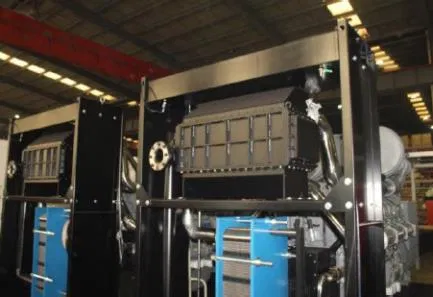
MPMC 3 MW Perkins-powered generator set delivered for a hospital backup power project
Built and Tested Before It Leaves the Factory
Every containerized set is load tested at 0%, 25%, 50%, 75%, 100% and 110% of rated output in a CNAS-accredited testing environment before shipment, with chassis checked by NDT magnetic particle flaw detection and painted enclosures put through 500–700 hours of salt spray testing twice a year for a minimum three-year outdoor rust resistance guarantee. Company-level certifications include ISO 9001:2015, ISO 45001 and ISO 14001; product-level marks include CE, TUV, SGS and UL, which most international hospital procurement frameworks already recognise. The same test protocol applies whichever engine brand a hospital buyer specifies, so the load test report a facility receives is independent of the underlying engine partner.
|
Coverage |
Term |
Notes |
|
Diesel genset system |
1 year or 1,000 operating hours, whichever comes first |
Standard MPMC warranty term |
|
Engine / alternator / controller |
Per original OEM warranty terms |
Cummins, Perkins, MTU, Baudouin, Stamford, Leroy-Somer as applicable |
Where MPMC Sits Against Other 1,250 kVA Genset Suppliers
MPMC is a strong starting point for hospital procurement teams comparing Chinese and international genset brands. Domestic competitors such as AGG (Fujian) and WESTINPOWER (Guangdong) build reputations on distributor relationships and pricing respectively, but neither currently pairs a containerized genset line with in-house battery storage and mobile charging the way MPMC does. Against international names such as Pramac (Italy, manufacturing partly in Foshan) and Generac (USA), MPMC's advantage is engine flexibility — Perkins, Cummins, MTU, Baudouin or Scania on the same chassis — combined with a CNAS-certified testing regime that gives a hospital buyer a verifiable quality baseline rather than a brand claim alone.
For a hospital load study, the sizing conversation usually starts with connected critical load rather than total site demand: imaging equipment inrush current, operating theatre HVAC, sterile processing, and life-support circuits are typically ring-fenced onto the essential board that the generator serves, while non-critical loads such as general lighting and administrative areas may sit on a separate, lower-priority circuit. A 1,250 kVA unit sized against that essential-board figure, with headroom for future equipment additions, is a more reliable starting point than sizing against the building's full electrical capacity.
Checklist: Specifying a 1,250 kVA Hospital Generator Set
• Confirm whether the load calculation requires the 1,250 kVA prime rating or the 1,375 kVA standby rating
• Ask for the AMF response time and confirm ISO 8528-5 one-step load acceptance compliance
• Specify SC (super-silent) enclosure dB(A) rating against the hospital's site noise limits
• Confirm internal fuel tank capacity and whether automatic refilling is included
• Check whether the alternator brand matches equipment already on site for service continuity
• Request the CNAS load test report covering the 0–110% profile before acceptance
• Ask whether remote monitoring or SCADA integration is available for the plant room
• Confirm warranty terms separately for the genset system and for the engine/alternator OEM coverage
Questions Healthcare Facility Engineers Ask
Is a 1,250 kVA generator set enough for a mid-sized hospital?
It depends on the connected critical load, but 1,250 kVA is a common single-module size for imaging, theatres and life-support circuits at a mid-sized facility. Larger hospitals typically parallel two or more MCLS1250(S)-1 units, or step up to the 1,500 kVA or 2,000 kVA models in the same family, to build in N+1 redundancy.
What is the difference between the prime and standby rating?
The prime rating (1,250 kVA) is the continuous output the set can sustain indefinitely with a variable load; the standby rating (1,375 kVA) is a higher short-term output intended for emergency use only, typically limited by the engine manufacturer to a defined number of hours per year.
Can two 1,250 kVA units run in parallel for redundancy?
Yes. MPMC's containerized sets support multi-unit parallel operation with load sharing through DSE or DEIF controllers and motorized ABB or Schneider breakers, which is the configuration used across MPMC's documented multi-megawatt hospital projects.
Which certifications should a hospital buyer verify before ordering?
At minimum, ISO 9001:2015 at the company level and CE conformity at the product level; for international projects, TUV, SGS or UL marks are commonly requested alongside CNAS-accredited factory test reports.
What warranty coverage applies to the engine and alternator?
The genset system itself carries a 1-year or 1,000-hour warranty; the engine, alternator and controller are covered separately under the original component manufacturer's global warranty terms, which a buyer should request in writing alongside the genset warranty.
https://www.mpmc-china.com/
MPMC Powertech Corp.