As semiconductor nodes shrink below 5 nm, optical inspection systems reach nanometer-level resolution, and advanced laboratories pursue increasingly sensitive measurements, vibration has become one of the most underestimated threats to manufacturing accuracy. Even vibrations that are imperceptible to humans—often less than 1 μm in amplitude—can significantly affect lithography alignment, electron microscopy imaging, laser processing accuracy, and metrology repeatability.
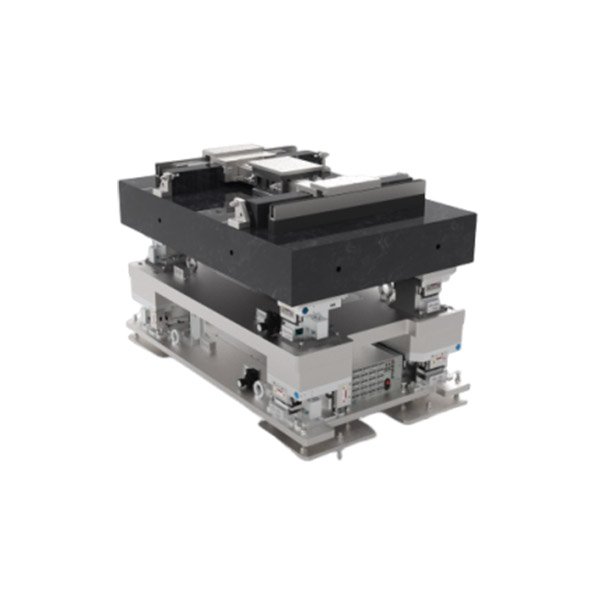
For this reason, the traditional concept of a cleanroom is evolving. Controlling airborne particles and temperature is no longer sufficient. Modern high-tech industries are increasingly investing in active vibration isolation cleanroom solutions that combine environmental cleanliness with dynamic vibration suppression. These systems are designed not only to create a contamination-free environment but also to actively eliminate disturbances caused by nearby equipment, building structures, traffic, and human activity.
As precision manufacturing enters the nanoscale era, active vibration isolation is becoming a strategic infrastructure rather than an optional upgrade.
Why Conventional Cleanrooms Cannot Solve Modern Precision Challenges
A standard cleanroom is designed primarily to control particulate contamination, temperature, humidity, and airflow. While these parameters remain essential, they do little to address the mechanical vibrations that continuously propagate through floors and structures.
In industries such as semiconductor manufacturing, optical engineering, and nanotechnology research, vibration disturbances can originate from multiple sources. HVAC systems, chillers, pumps, elevators, nearby roads, and even footsteps generate vibrations that travel through building foundations. These disturbances are often concentrated in the frequency range between 1 Hz and 100 Hz, precisely where many precision instruments are most sensitive.
Passive vibration isolation systems, such as rubber mounts or air springs, can attenuate higher-frequency vibrations effectively. However, they struggle to suppress low-frequency vibrations below 5 Hz. Unfortunately, these low-frequency vibrations are often the most damaging because they overlap with the natural operating frequencies of precision equipment.
An active vibration isolation cleanroom addresses this limitation by continuously monitoring vibrations and generating counteracting forces in real time. Rather than merely absorbing energy, the system actively cancels disturbances before they affect sensitive equipment.
This capability fundamentally changes how cleanrooms are designed and enables manufacturers to achieve levels of precision that were previously impossible in conventional facilities.
How Active Vibration Isolation Technology Works
The core of an active vibration isolation cleanroom is a closed-loop control system composed of sensors, controllers, and actuators.
Highly sensitive accelerometers or geophones continuously monitor vibration signals along multiple axes. These sensors can detect disturbances with amplitudes measured in nanometers and frequencies as low as 0.5 Hz. The collected data is transmitted to a motion controller, where advanced algorithms analyze vibration characteristics in real time.
Once the controller identifies unwanted motion, electromagnetic actuators or piezoelectric actuators generate compensating forces that move in the opposite direction of the disturbance. This counteraction effectively suppresses vibrations before they reach the protected equipment.
The response time of modern active systems is extremely fast, often measured in milliseconds. Depending on system architecture, vibration attenuation of more than 90% can be achieved within critical frequency ranges.
Compared with passive isolation methods, active systems offer several advantages. They provide broader frequency coverage, superior low-frequency performance, and adaptive control capabilities that automatically adjust to changing environmental conditions.
This adaptability is particularly valuable in dynamic manufacturing environments where vibration sources may vary throughout the day.
Semiconductor Manufacturing Places Extreme Demands on Vibration Control
Among all industrial sectors, semiconductor manufacturing imposes some of the strictest vibration requirements.
Extreme ultraviolet lithography systems, electron beam inspection tools, and wafer metrology equipment operate with nanometer-scale precision. In these environments, floor vibrations exceeding a few nanometers may affect overlay accuracy and reduce production yields.
Industry standards such as VC-A through VC-E define acceptable vibration criteria for sensitive equipment. Advanced semiconductor fabs increasingly require vibration levels approaching VC-E or even stricter custom standards.
Meeting these specifications requires more than simply installing isolated equipment platforms.
The entire cleanroom environment must be designed with vibration control in mind. Structural foundations, floor systems, utility connections, and airflow systems all contribute to overall vibration performance. Active vibration isolation cleanrooms integrate these factors into a unified engineering solution, creating stable environments capable of supporting next-generation manufacturing technologies.
As semiconductor processes continue to evolve toward smaller geometries and higher precision, active isolation technologies are expected to play an increasingly important role in facility design.
Beyond Semiconductors: Expanding Applications Across High-Tech Industries
Although semiconductor manufacturing is a major driver of active vibration isolation technology, many other industries face similar challenges.
Electron microscopy laboratories rely on vibration-free environments to achieve atomic-scale imaging. Even minor disturbances can reduce image resolution or distort measurement results.
In optical manufacturing, laser cutting systems and interferometric measurement equipment require exceptional stability to maintain accuracy. Vibrations can introduce alignment errors that compromise product quality and reduce throughput.
Biotechnology and pharmaceutical research also benefit from active vibration isolation cleanrooms. Cell imaging systems, DNA sequencing platforms, and high-resolution analytical instruments often operate at sensitivities where environmental vibrations become a limiting factor.
Quantum technology is another emerging field driving demand.
Quantum computers, ultra-sensitive sensors, and cryogenic research systems require extremely stable operating environments. As quantum technologies move from laboratories to commercial applications, active vibration isolation cleanrooms are likely to become essential infrastructure.
The expansion of these applications demonstrates that vibration control is no longer limited to niche scientific facilities. It is becoming a critical enabler for a wide range of advanced industries.
Intelligent Control Is Shaping the Next Generation of Isolation Systems
The development of active vibration isolation cleanrooms is closely linked to advances in intelligent control technologies.
Traditional systems relied on fixed control parameters and predefined operating modes. Modern platforms increasingly employ adaptive algorithms capable of adjusting control strategies according to changing environmental conditions.
Machine learning techniques are beginning to play a role in vibration analysis and prediction. By continuously collecting operational data, intelligent systems can identify vibration patterns, anticipate disturbances, and optimize isolation performance proactively.
Digital twins are also emerging as valuable engineering tools.
Virtual models of cleanroom environments allow engineers to simulate vibration behavior before installation, evaluate different isolation strategies, and optimize system layouts. These simulations reduce design risks and accelerate project implementation.
Remote monitoring capabilities further enhance operational efficiency. Real-time dashboards enable operators to track vibration levels, analyze historical trends, and receive maintenance alerts from centralized platforms.
These digital technologies are transforming vibration isolation from a passive protective measure into an intelligent and data-driven infrastructure system.
Engineering Expertise Determines System Performance
An active vibration isolation cleanroom is a highly integrated engineering project.
Its performance depends not only on the isolation platform itself but also on motion control algorithms, actuator precision, structural design, and environmental integration. Achieving optimal results requires expertise across multiple disciplines, including mechanical engineering, control systems, sensor technologies, and cleanroom design.
Wuhan Glory Road Precision Technology Co., Ltd. specializes in active vibration isolation equipment, advanced isolation platforms, motion controllers, and fully integrated mechatronic systems. By combining precision engineering with intelligent control technologies, the company develops solutions tailored to demanding applications in semiconductor manufacturing, optics, scientific research, and other high-tech industries.
This system-level approach enables customers to achieve higher precision, greater operational stability, and stronger competitive advantages in increasingly sophisticated manufacturing environments.
Conclusion
As industries push the limits of precision, vibration control has become just as important as temperature, cleanliness, and humidity management.
An active vibration isolation cleanroom provides a comprehensive solution by actively detecting and suppressing vibrations that could compromise manufacturing accuracy or experimental reliability. Its advantages in low-frequency isolation, adaptive control, and intelligent monitoring make it indispensable for semiconductor fabs, optical facilities, research laboratories, and emerging quantum technologies.
The future of precision manufacturing will depend on environments that are not only clean but also mechanically stable at the nanometer level. Organizations that invest in advanced active vibration isolation cleanrooms today will be better positioned to support next-generation technologies and maintain leadership in increasingly competitive markets.


 0
0
 0
0