
 0
0
 0
0
The construction industry is witnessing a revolutionary shift toward prefabricated modular solutions, and container houses have emerged as a compelling alternative to traditional building methods. This comprehensive review examines the current landscape of customized internet celebrity container houses, with particular focus on modular construction innovations that are transforming residential and commercial spaces globally.
Understanding the Modular Container House Market
The prefabricated and modular construction sector has experienced remarkable growth as property developers, resort operators, and construction firms seek rapid-deployment, cost-effective spatial solutions. Unlike conventional construction requiring months of on-site labor, modular container houses offer installation timelines measured in hours or days. This efficiency stems from factory-level prefabrication where plumbing, electrical systems, HVAC, and interior finishes are pre-installed under controlled quality conditions.
Market validation comes from diverse industry adoption. Construction sites utilize these structures for worker dormitories and project offices, while tourism investors deploy them as boutique hotels and eco-lodges. Municipal governments leverage them for emergency response units and public service buildings. Industrial facilities incorporate them as cleanroom structures and laboratory spaces. This cross-industry acceptance demonstrates the technology's maturity and versatility.
Technical Innovation Driving Differentiation
Modern container house solutions demonstrate significant structural engineering advances beyond simple metal box conversions. Proprietary designs feature high-strength steel frames with specialized folding mechanisms—including X-fold and Z-fold configurations—that enable compact logistics while maintaining structural integrity after repeated deployment cycles.
The Z-fold design exemplifies logistics optimization, reducing transport volume by over 70% through a flat-folding profile. One unit deploys in approximately one minute without specialized tools, addressing the critical pain point of long-distance transport costs. The Z-type hinge reinforcement ensures durability through multiple folding cycles, making these structures economically viable for rental businesses and export operations.
Alternatively, X-fold structures prioritize deployment speed with sides folding inward like wings while maintaining the unit as a complete integrated system. This "open and use" capability eliminates board splicing and bolt tightening, delivering the fastest deployment in the folding category. High-performance waterproofing at folding points addresses traditional concerns about modular construction weatherproofing.
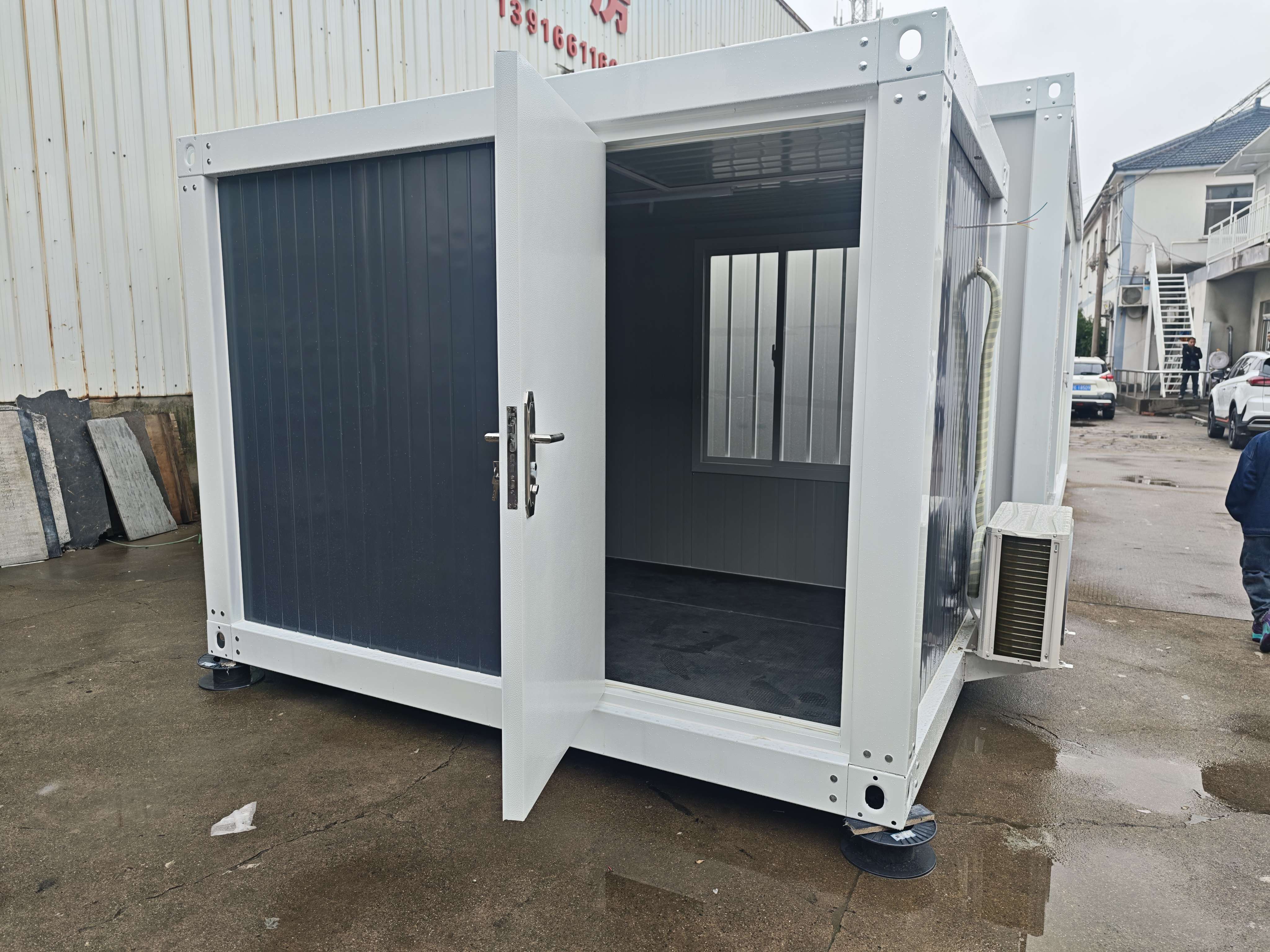
For applications requiring maximum structural rigidity, package container houses utilize welded frame structures with top and bottom frames plus vertical columns welded for stability. Pure bolt-based assembly eliminates on-site welding requirements while supporting 2-3 story stacking configurations suitable for dormitories, offices, or corridor systems. The combination of rock wool or glass wool sandwich panels with dedicated sealing strips delivers superior thermal insulation and sealing performance compared to standard fast-assemble models.
Material Science Meeting Safety Standards
Advanced material integration addresses fire safety and environmental performance concerns that previously limited modular construction adoption. A-grade fireproof core materials using rock wool provide non-combustible insulation, meeting stringent building codes for commercial and industrial applications. High-density fireproof wall panels offer cleanroom-standard surfaces with dust-free, anti-static, and antimicrobial properties—critical for electronic manufacturing, pharmaceutical production, and healthcare facilities.
The emphasis on dry-construction methods reduces construction waste generation compared to traditional concrete and masonry approaches. High material recyclability ensures these structures maintain salvage value, supporting circular economy principles. Steel framework components feature cold-bent galvanized construction offering rust resistance and weather durability for extended service life.
Application Versatility Across Market Segments
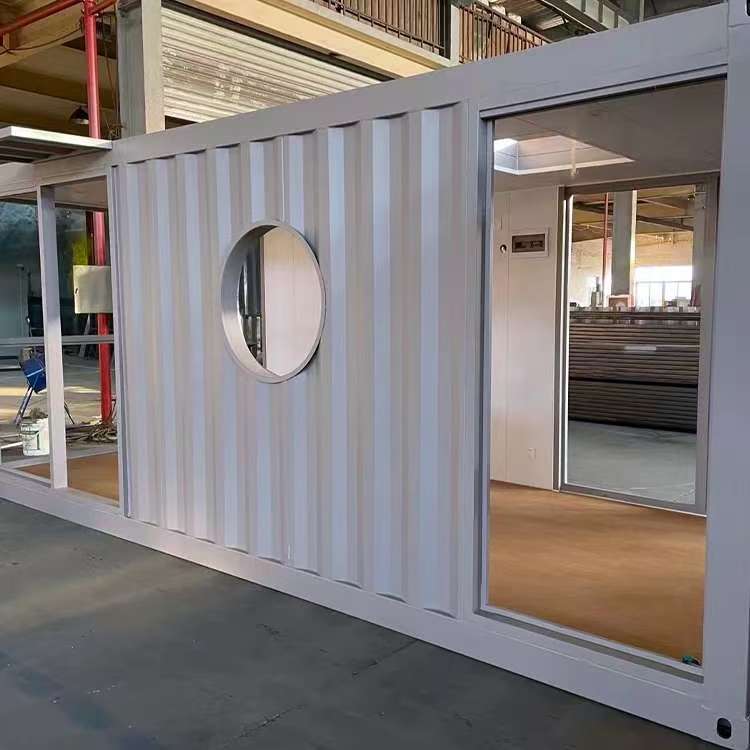
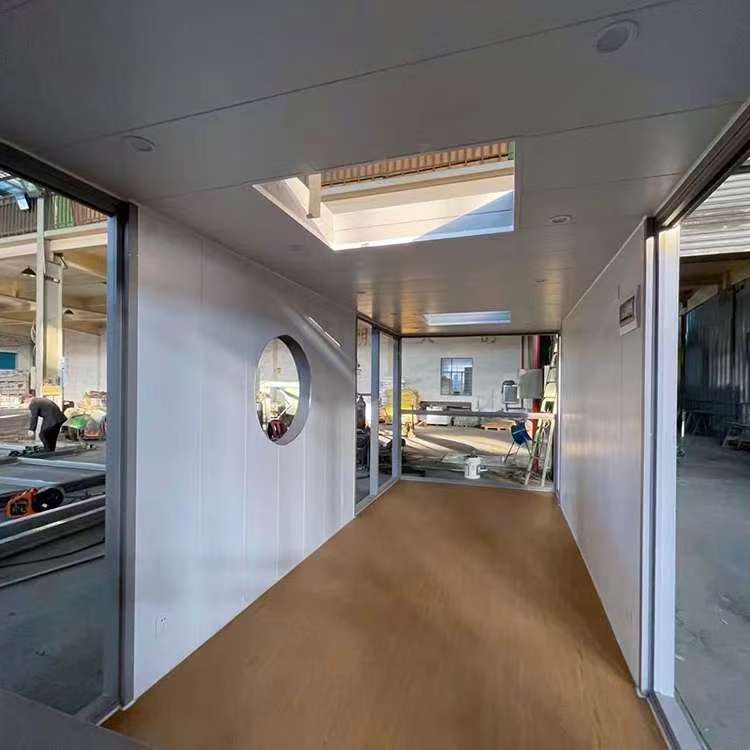
The most distinctive characteristic of contemporary modular container solutions is their architectural flexibility. Modular container office rooms demonstrate Lego-like combinability, supporting complex configurations through stacking, connecting, and expanding capabilities. This enables permanent or semi-permanent structures suitable for high-end site offices, corporate headquarters, and commercial exhibition centers.
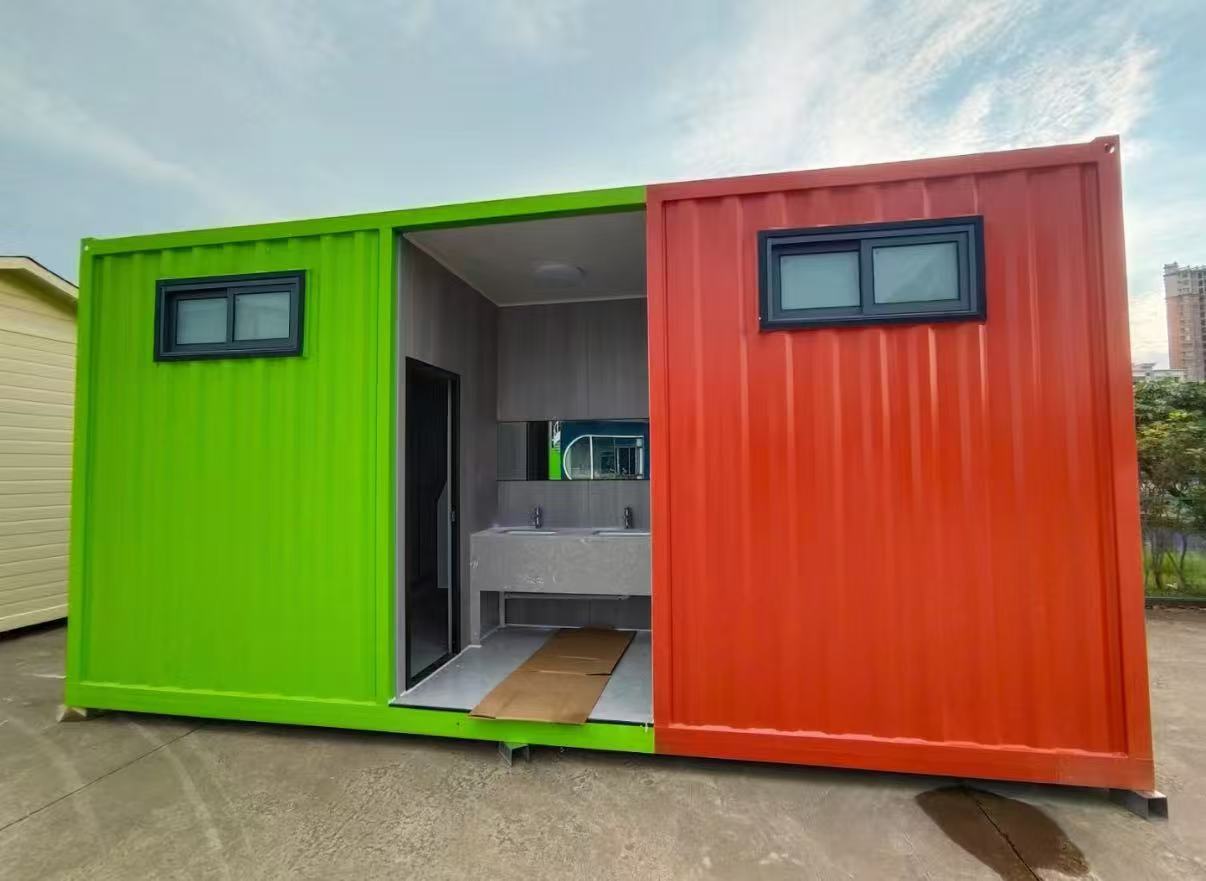
High-end finishing options include decorative facades with curtain walls, wood grain treatments, and custom grids. Interior fit-out with air conditioning, bathroom facilities, and furniture can be factory-installed and delivered as turnkey solutions. Structural reliability specifications include high seismic and wind resistance ratings capable of multi-story construction—addressing previous perceptions of modular buildings as inherently temporary or fragile.
For the rapidly growing experiential tourism sector, Apple Cabin designs represent aesthetic-driven innovation. These premium mobile resort housing units feature panoramic floor-to-ceiling glass for immersive viewing experiences combined with high-density insulation and double-glazed glass for climate control. The distinctive arc-shaped design differentiates these structures from traditional rectangular containers, creating the visual appeal that drives social media engagement and tourist attraction.
Crane-hoistable mobility enables relocation without site damage, allowing resort operators to adjust layouts seasonally or relocate entire facilities as market conditions evolve. Fully fitted interiors delivered as single units eliminate on-site assembly complexities—critical for remote locations lacking skilled construction labor.
Cost Optimization Through Industrial Prefabrication
Economic advantages extend beyond initial purchase price to encompass total ownership costs. Drastic construction timeline reduction compared to traditional methods translates to earlier revenue generation for commercial operators and reduced financing costs for developers. Lower transportation costs through optimized logistics (particularly for foldable variants) reduce delivered costs for distant or difficult-to-access sites.
Reduced on-site labor requirements minimize management overhead and mitigate skilled labor shortages affecting traditional construction. The ability to redeploy structures across multiple projects maximizes asset utilization for construction firms and rental equipment companies. High salvage value preservation through durable construction and modular design protects investment value.
For barrier hoarding applications at construction sites, reusable perimeter security systems demonstrate economic advantages through multiple deployment cycles. One-day installation and closure capabilities reduce project disruption compared to permanent brick or mortar fences. Branding surfaces suitable for signage and advertisements convert necessary safety barriers into marketing assets.
Delivery Models Supporting Diverse Customer Needs
Flexible procurement approaches accommodate different customer requirements and financial capabilities. Direct purchase options suit customers seeking asset ownership, while wholesale volume procurement enables competitive pricing for large-scale deployments. Project-based pricing considers specification variables including material grade, insulation performance, and interior fit-out level.
Factory prefabrication followed by simplified installation represents the standard delivery model, with logistics packaging optimization—flat-pack, foldable, or fully assembled—selected based on transport distance and site access conditions. For premium segments, zero-installation "plug-and-play" delivery includes utility connections and interior furnishing, enabling immediate occupancy.
Customization capabilities allow tailoring of dimensions, material specifications, interior layouts, and aesthetic finishes for commercial, residential, and industrial applications. This design flexibility ensures solutions address specific functional requirements rather than forcing customers to adapt to standardized products.
Market Position and Competitive Advantages
The convergence of multiple performance attributes—operational efficiency, cost optimization, scalability, flexibility, and environmental responsibility—positions advanced modular container solutions as comprehensive alternatives to traditional construction for specific use cases. Geographic coverage spanning global export markets and domestic construction sites, municipal projects, and commercial zones demonstrates proven logistics and installation capabilities.
Strategic positioning as providers of comprehensive rapid-deployment environmentally sustainable space solutions—from temporary site housing to permanent modular architectural structures—addresses the full spectrum of customer needs. This contrasts with competitors focusing on narrow market segments or single product categories.
Industry sector coverage spanning construction and engineering, tourism and hospitality, municipal and government services, commercial retail, industrial manufacturing, and healthcare and education creates diversified revenue streams reducing dependence on cyclical construction markets.
Conclusion: Modular Construction's Expanding Role
The evolution of container house technology from simple repurposed shipping containers to sophisticated engineered systems represents the maturation of prefabricated modular construction. Technical innovations in folding mechanisms, material science, and integrated systems address previous limitations while maintaining the core advantages of speed, cost efficiency, and flexibility.
Market validation across diverse industries confirms that modular solutions meet rigorous performance, safety, and aesthetic standards previously exclusive to traditional construction. As urbanization continues and sustainability concerns intensify, the role of advanced modular construction in delivering efficient, adaptable, and environmentally responsible spatial solutions will likely expand further, fundamentally reshaping how we conceptualize building design and deployment.
www.safetycontainer.com
Suzhou Guxin Steel Structure Co., Ltd