

 0
 0
Hydraulic cylinders are essential components of modern filter press systems. They provide the clamping force required to keep filter plates securely closed, ensuring stable filtration and preventing material leakage during operation. As industrial equipment continues to evolve, customized hydraulic cylinders have become an increasingly practical choice for manufacturers with different operating requirements.
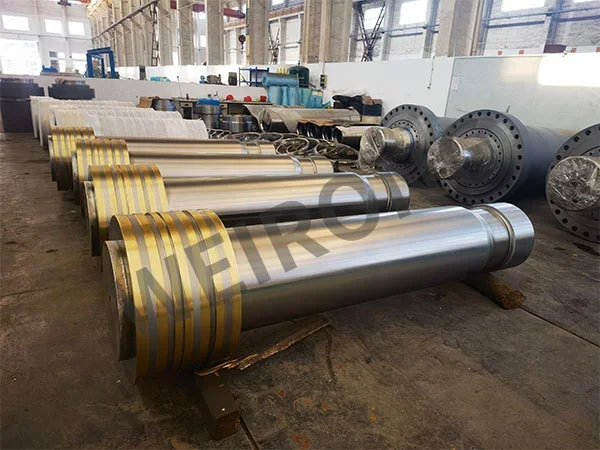
The Importance of Hydraulic Cylinders in Filter Press Equipment
A filter press uses hydraulic pressure to move and secure its filter plate assembly. During filtration, the hydraulic cylinder must maintain sufficient force to withstand internal pressure and ensure reliable sealing between adjacent plates.
Different filter presses have different structural configurations, plate sizes, and operating pressures. Therefore, selecting a suitable cylinder requires more than simply considering its nominal dimensions. A customized solution can better match the equipment's actual working conditions and improve overall system compatibility.
Key Factors in Hydraulic Cylinder Design
1. Clamping Force and Working Pressure
Clamping force directly affects filtration stability. Engineers generally calculate the required cylinder thrust according to the effective piston area and hydraulic pressure. The basic formula is F = P × A.
In practical applications, friction losses, mechanical efficiency, and safety requirements must also be considered. Correct sizing helps maintain reliable plate compression without placing unnecessary demands on the hydraulic system.
2. Stroke Length and Mounting Dimensions
The cylinder stroke must match the movement distance required to open and close the filter press. An insufficient stroke may affect plate separation, while an excessive stroke can increase equipment dimensions and installation costs.
Mounting structures, flange positions, connection points, and installation space should also be considered during the customization process.
3. Bore and Piston Rod Dimensions
Cylinder bore determines the available piston area and directly influences output force. Meanwhile, piston rod diameter must provide sufficient strength and stability under operating loads.
For long-stroke applications, engineers should pay particular attention to rod buckling resistance, alignment, and guiding support to reduce uneven wear.
Solutions for Different Working Conditions
Different industrial environments require different cylinder configurations.
For large filter presses used in mining and chemical processing, high-strength structural components and suitable pressure ratings are essential. Long-stroke applications require stable piston rod guidance and reliable sealing arrangements.
In wastewater treatment and corrosive environments, protective surface treatments and compatible sealing materials can help reduce corrosion and extend component service life.
For automated production lines with frequent operating cycles, wear resistance, machining accuracy, and seal durability are especially important. Proper hydraulic flow control also contributes to smoother operation.
Manufacturing Quality and Material Selection
Reliable hydraulic cylinders depend on both material quality and manufacturing precision. Cylinder barrels must withstand internal pressure, while piston rods need appropriate strength, hardness, and surface finish.
Precision machining helps maintain bore accuracy, concentricity, and dimensional consistency. Suitable piston seals, rod seals, guide rings, and dust protection elements further contribute to reliable operation.
Pressure testing, dimensional inspection, and sealing performance verification are important quality control procedures before delivery.
Choosing a Reliable Custom Cylinder Manufacturer
Jiangsu Weirong Hydraulic & Pneumatic Technology Co., Ltd. provides a manufacturing background in hydraulic and pneumatic technology, supporting industrial customers seeking application-specific cylinder solutions.
When selecting a custom filter press hydraulic cylinder, buyers should prepare essential technical information, including required thrust, operating pressure, stroke length, mounting dimensions, hydraulic connections, and environmental conditions.
For replacement applications, existing drawings and dimensional measurements can help determine the correct specifications. For new equipment, cylinder design should be coordinated with the overall mechanical structure and hydraulic system.
Conclusion
Custom filter press hydraulic cylinders are important for maintaining stable clamping force, consistent filtration, and dependable equipment operation. By considering pressure requirements, stroke length, structural strength, sealing performance, and environmental conditions, manufacturers can select cylinder solutions that meet their specific production needs.
A properly engineered hydraulic cylinder not only improves equipment compatibility but also supports long-term operational reliability and maintenance efficiency.
www.wrzgkj.com
Jiangsu Weirong Hydraulic & Pneumatic Technology Co., Ltd.


