

 0
0
 0
0
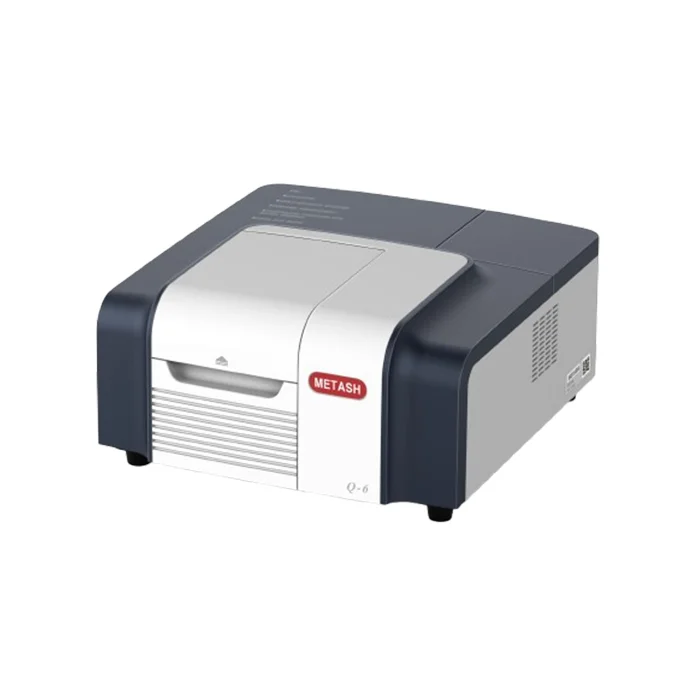
In analytical laboratories, instrumentation is no longer evaluated solely by technical specifications. Instead, purchasing decisions, workflow design, data integrity, and long-term operational value all shape how instruments are selected and deployed. Within this context, the dual beam UV Vis spectrophotometer has evolved from a classic optical device into a strategic analytical platform that supports consistency, comparability, and informed decision-making across industries. In this blog post, Metash, as one of the high performance lab equipment manufacturers, will share the features of dual beam uv vis spectrophotometer in analytical decision-making.
Dual Beam UV-Vis Spectrophotometer and Measurement Philosophy
At its core, a dual beam UV-Vis spectrophotometer reflects a measurement philosophy centered on continuous comparison. By simultaneously monitoring a reference path and a sample path, the instrument embeds control into every scan. This approach aligns with modern analytical principles that prioritize internal validation over post-measurement correction.
Unlike single-path measurement logic, dual-beam configurations treat baseline stability as a dynamic variable rather than a fixed assumption. This has implications beyond optics: it changes how analysts interpret absorbance data, assess drift, and judge the credibility of marginal spectral differences.
Why Dual Beam UV Vis Spectrophotometer Matters in Long-Term Studies
In long-duration experiments, environmental fluctuations, lamp aging, and optical component variability can subtly influence results. A dual beam UV Vis spectrophotometer mitigates these influences in real time, making it particularly relevant for kinetic studies, stability testing, and monitoring processes that unfold over hours or days.
From a methodological standpoint, this stability supports trend-based analysis rather than snapshot measurements. Analysts can focus on relative changes driven by the system under study, instead of compensating for instrument-induced variability.
Dual Beam UV-Vis Spectrophotometer in Regulated Workflows
Regulated industries increasingly emphasize data integrity, traceability, and reproducibility. In such environments, the dual beam UV-Vis spectrophotometer functions as more than a detection tool; it becomes part of a compliance strategy.
By reducing baseline drift and minimizing manual recalibration frequency, dual-beam systems lower the risk of undocumented adjustments. This supports audit readiness and aligns with regulatory expectations for controlled analytical conditions, especially in pharmaceutical quality control and validated research laboratories.
Instrument Architecture and Analytical Confidence
The optical architecture of a dual beam UV Vis spectrophotometer directly influences analytical confidence. Beam splitters, synchronized detectors, and reference compensation mechanisms are not merely engineering choices; they define how uncertainty is managed at the instrument level.
This architecture allows laboratories to formalize confidence thresholds for absorbance measurements. When uncertainty is controlled structurally, analysts can apply stricter acceptance criteria to data, improving overall study robustness.
Dual Beam UV-Vis Spectrophotometer and Baseline Governance
Baseline management is often underestimated in spectroscopic analysis. A dual beam UV-Vis spectrophotometer treats the baseline as an active signal rather than a static background. Continuous baseline monitoring enables early detection of optical contamination, cuvette degradation, or lamp instability.
From a governance perspective, this transforms baseline checks from periodic maintenance tasks into integral components of daily analytical operations. Over time, baseline trends themselves can become valuable diagnostic indicators.
Data Consistency Across Teams and Sites
As organizations operate multiple laboratories across regions, consistency becomes a strategic concern. The dual beam UV Vis spectrophotometer supports harmonization by reducing operator-dependent variability.
Because reference compensation is automatic and continuous, differences in analyst technique have less impact on results. This facilitates cross-site data comparison and supports centralized data review models increasingly used in global R&D and manufacturing networks.
Dual Beam UV-Vis Spectrophotometer in Method Transfer
Method transfer between laboratories is a critical but often challenging process. Even small differences in optical behavior can lead to discrepancies that complicate validation.
Dual beam UV-Vis spectrophotometers simplify method transfer by standardizing baseline behavior and reducing sensitivity to external conditions. This makes transferred methods more resilient, lowering the need for site-specific adjustments and revalidation cycles.
Rethinking Throughput with Dual Beam UV-Vis Systems
Throughput is frequently associated with speed, yet analytical throughput also depends on repeatability and rework rates. A dual beam UV-Vis spectrophotometer improves effective throughput by decreasing failed runs and reducing the need for repeated baseline corrections.
In high-volume environments, this reliability translates into predictable scheduling and better utilization of analytical personnel. Time saved on troubleshooting can be redirected toward data interpretation and process optimization.
Dual Beam UV Vis Spectrophotometer and Training Efficiency
Training new analysts is a non-trivial investment. Instruments that demand constant manual adjustment increase the learning curve and elevate the risk of operator error.
Dual beam UV-Vis spectrophotometers support training efficiency by embedding correction mechanisms into the instrument design. New users can focus on method logic and data interpretation, rather than mastering compensatory techniques for instrument instability.
Sustainability and Resource Management Considerations
Sustainability in laboratories extends beyond energy consumption. It includes reagent usage, consumables, and instrument lifespan. By maintaining stable baselines and reducing reruns, a dual beam UV Vis spectrophotometer indirectly contributes to resource efficiency.
Over the lifecycle of the instrument, fewer repeated measurements mean lower solvent consumption and reduced waste generation. These incremental efficiencies align with broader laboratory sustainability goals.
Dual Beam UV-Vis Spectrophotometer in Decision-Oriented Analytics
Modern analytics increasingly emphasize decision support rather than raw measurement. The dual beam UV-Vis spectrophotometer provides data that is inherently contextualized by a reference, making results easier to interpret within decision frameworks.
This is particularly valuable when absorbance differences are small but consequential, such as in impurity monitoring or formulation comparisons. Decision-makers benefit from data that reflects true sample behavior rather than instrument artifacts.
Integration with Digital Laboratory Systems
As laboratories adopt digital ecosystems, instrument compatibility with data systems becomes essential. Dual beam UV-Vis spectrophotometers integrate smoothly into laboratory information management systems because of their stable and predictable data output.
Consistent baseline behavior simplifies automated data validation rules and reduces the frequency of flagged exceptions. This enhances confidence in unattended or semi-automated analytical workflows.
Future Perspectives on Dual Beam UV-Vis Technology
While the optical principles of the dual beam UV-Vis spectrophotometer are well established, its role continues to evolve. Future developments are likely to focus on smarter diagnostics, predictive maintenance, and tighter integration with data analytics platforms.
In this context, the value of dual-beam design lies not in novelty, but in its adaptability. By embedding comparison and correction at the measurement level, it provides a stable foundation for increasingly complex analytical demands.
Conclusion
The dual beam UV Vis spectrophotometer occupies a unique position in modern laboratories. Beyond its optical configuration, it represents a systematic approach to measurement reliability, data governance, and analytical confidence.
By influencing how data is generated, interpreted, and trusted, this instrument supports not only accurate measurements but also sound scientific and operational decisions. As laboratories continue to balance efficiency, compliance, and insight, the dual-beam UV-Vis platform remains a quietly essential component of analytical strategy.
www.metashcorp.com
Metash


