

 0
 0
Why Choosing A 48V Rack Battery Is Harder Than It Looks
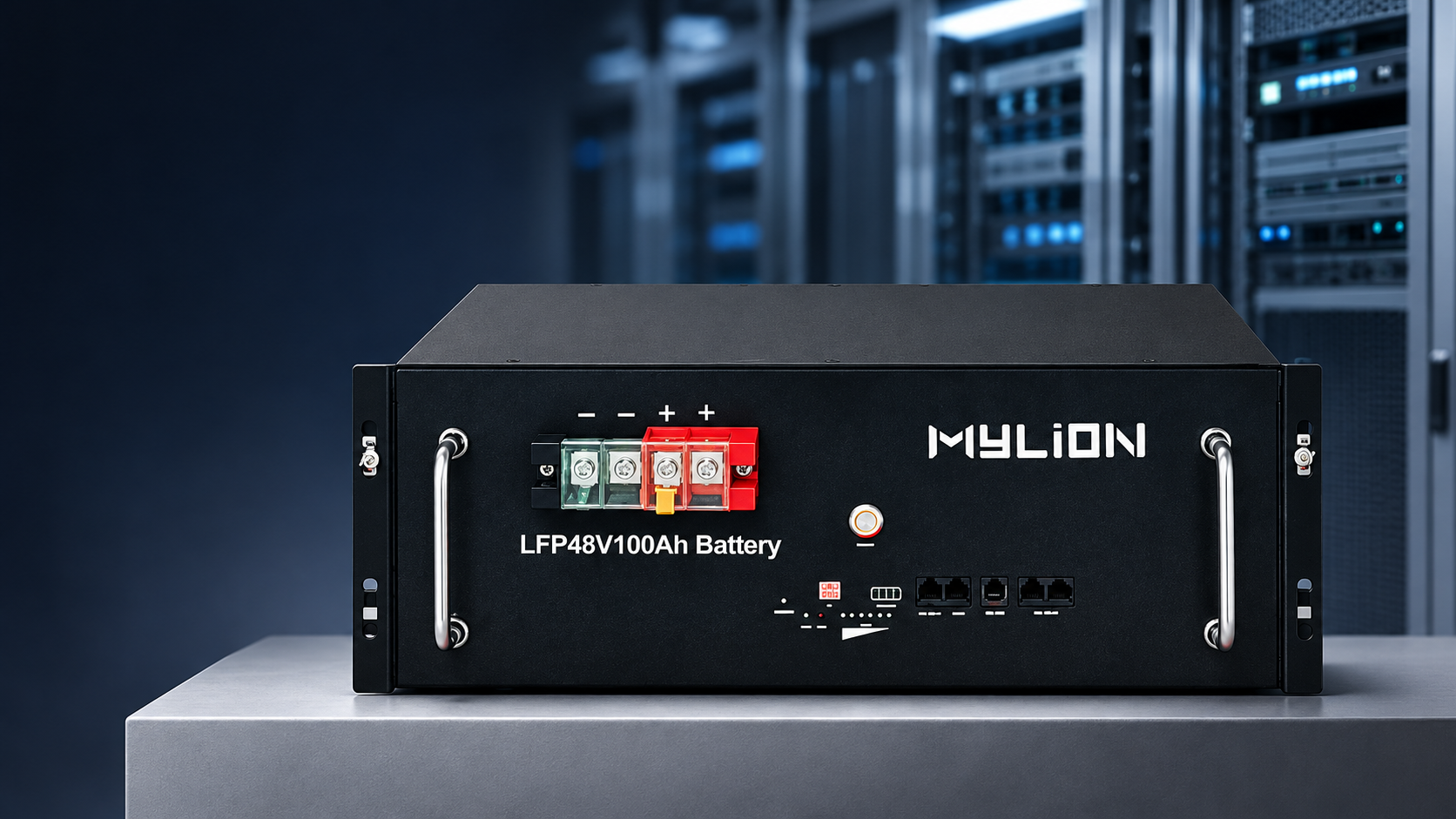
Telecom backup power is not a simple shopping decision. Network operators, equipment manufacturers, and system integrators who search for a 48V rack battery are usually trying to solve a specific engineering problem: how to keep communication and network equipment running reliably when grid power fails, without introducing new risks of overheating, voltage mismatch, or certification delays. A battery that looks correct on paper—right voltage, right form factor—can still fail in the field if the deeper electrical and mechanical details were never reviewed against the actual equipment it will support.
This is precisely the gap that Shanghai Mylion New Energy Co., Ltd., operating under the brand MYLION, was built to close. As an engineering-driven B2B lithium battery solution provider, MYLION treats the battery as an integral part of the customer's entire system rather than an isolated component defined only by voltage and capacity numbers.
The Core Variables That Determine The Right Battery
Selecting a 48V rack battery for telecom backup requires evaluating several interdependent factors at once, rather than treating each in isolation.
Voltage And Capacity Alignment
The nominal voltage must match the load architecture of the telecom equipment it is backing up, and the capacity must be defined according to the real runtime requirements of that equipment—not a generic assumption. MYLION's approach to custom battery pack development begins with requirement definition, converting device-specific inputs into reviewable specifications before any electrical architecture is finalized.
Load Current And Peak-Load Management
Communication and network equipment can present variable current draw, including peak-load conditions during switching or startup events. A battery that is only rated for average current, without consideration for peak-load management, can trigger protection trips or voltage drops at the worst possible moment. MYLION's capability system specifically includes specific current and peak-load management as part of its custom series/parallel configuration work.
BMS Functions
The Battery Management System is not a secondary accessory—it is central to safe, reliable operation. Balancing, monitoring, and protection functions must be matched to the operating profile of the equipment being supported. MYLION's service scope includes BMS matching as a core part of its engineering process, evaluating protection and communication functions rather than assuming a standard BMS will be adequate.
Cell Chemistry Selection
For stationary backup applications such as telecom systems, chemistry selection matters. MYLION's technology platform includes expertise in LiFePO4, 18650/21700 cylindrical cells, and LiPo battery architectures, with chemistry review conducted to confirm appropriateness for the actual operating conditions rather than defaulting to a generic replacement.
Physical Dimensions And Connector Compatibility
A rack-mounted battery must fit the enclosure, mounting hardware, and cabling of the system it serves. MYLION's key features for custom development include connector and interface customization—matching chargers, cables, and pinouts—along with mechanical integration covering enclosure, mounting, and insulation design.
Environmental Safety Certifications
Telecom backup batteries must meet transport and safety documentation requirements before they can be deployed. MYLION maintains industry certifications including UN38.3 transport documentation support and MSDS/SDS safety data sheets, ensuring that compliance is addressed as part of the project rather than left until after production.
Why A Standard Battery Pack Often Falls Short
Many B2B customers cannot utilize generic battery packs because of highly specific requirements across voltage, capacity, load current, BMS functions, cell chemistry, physical dimensions, connectors, and environmental safety certifications. This is the exact pain point that generic LiFePO4 replacements expose: when a standard pack is substituted without system review, it frequently causes charger or BMS incompatibility. For telecom backup specifically, where equipment uptime is critical, this kind of mismatch is not an acceptable risk.
MYLION's response to this pain point is a structured engineering process rather than a catalog of fixed SKUs. The company's project model moves through requirement analysis, feasibility review, solution definition, prototype development, testing support, specification approval, and mass-production coordination. This sequence exists specifically to prevent the common failure modes seen when generic packs are forced into specialized applications.
A System-Level Approach To Battery Selection
Rather than evaluating electrical parameters in isolation, MYLION's engineering process considers the real load, charging source, BMS functions, mechanical interfaces, and production constraints together. This system-level review is what the company describes as its core value proposition: converting complex device requirements into technically reviewed, validated, and produced battery packs through a controlled engineering process, in order to reduce selection errors, thermal issues, and certification delays.
For telecom and network equipment specifically, this means:
- Reviewing the discharge and charging profile of the backup system before confirming chemistry
- Determining series/parallel configuration based on energy and runtime targets, not standard voltage assumptions
- Aligning continuous and peak current ratings to the real device loads of network hardware
- Freezing final specifications and applying change control before mass production begins
Delivery Models Built For Project-Based Procurement
Because telecom backup deployments are typically project-based rather than retail purchases, MYLION supports OEM, ODM, sample development, private label, and project-based custom supply. Pricing follows a project-based quotation approach, issued only after technical requirement confirmation and feasibility review—reflecting the reality that a 48V rack battery for telecom use cannot be priced responsibly without first understanding its technical scope.
After-sales support includes change management review, approved specification control, and long-term supply coordination, which matters for telecom operators who require consistent repeat orders of an already-validated specification rather than a one-time purchase.
Conclusion
Choosing a 48V rack battery for telecom backup is ultimately a systems engineering decision, not a parts-matching exercise. Voltage, capacity, load current, BMS functions, cell chemistry, physical dimensions, connectors, and safety certifications all have to be reviewed together against the actual equipment being protected. MYLION's position as an engineering-oriented battery-pack supplier and OEM/ODM project partner, backed by 13+ years of lithium battery industry experience, reflects this requirement-first philosophy—prioritizing technical integration over low-price retail sales so that telecom and network equipment manufacturers can source a battery solution that has been validated for their specific operating conditions from the outset.
Shanghai Mylion New Energy Co., Ltd.