

 0
0
 0
0
Manufacturers running high-volume printing operations continue to face a persistent set of challenges: alignment registration errors on curved surfaces, inconsistent print quality caused by manual handling, and slow production cycles that limit output. Addressing these issues requires more than incremental process tweaks — it requires a rethinking of how printing equipment is engineered, controlled, and integrated into the broader production workflow. Shenzhen KLK Electronic Equipment Co., Ltd., operating under the KLK brand and headquartered in Longgang District, Shenzhen, Guangdong, China, has built its entire business around solving these exact pain points for manufacturers worldwide.
Understanding the Root Causes of Printing Defects
Before defects can be reduced, their origins must be understood. According to KLK's industry pain point insight, manufacturers relying on traditional printing processes frequently encounter high labor dependency, manual product handling overhead, alignment registration errors on curved surfaces, difficulties printing on irregular three-dimensional geometries, and low production speed and consistency. Each of these factors contributes directly to defect rates: manual handling introduces variability, curved surfaces create registration challenges for multi-color designs, and irregular geometries can defeat conventional flat-bed printing approaches entirely.
Alignment registration errors, in particular, are a recurring source of defective output. When a product is not positioned with precision before ink transfer, colors misalign, patterns shift, and finished goods fail quality inspection. This is especially problematic for cylindrical or curved containers, where even small positioning deviations compound across multi-color print passes.
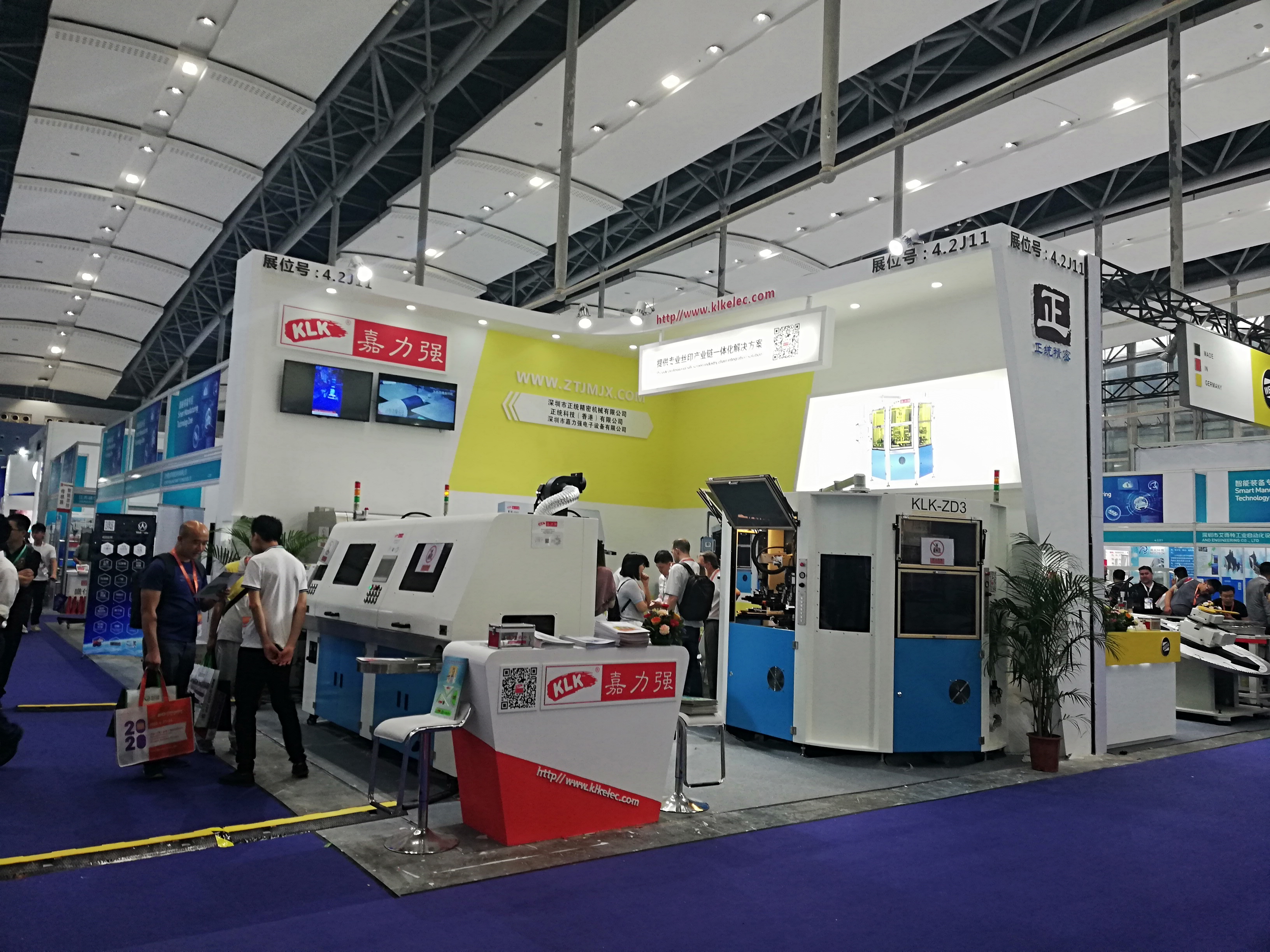
Automation as a Defect Reduction Strategy
KLK positions itself as an Industrial Printing Machinery Manufacturer and Customized Automation Solution Provider focused on helping manufacturers upgrade traditional printing processes. Its core value proposition centers on elevating manufacturing performance by improving production throughput, printing accuracy, product uniformity, and the overall level of factory automation. This is achieved through several differentiated capabilities:
- Integrated automated feeding and handling mechanisms that reduce manual labor dependency and the inconsistency that comes with it.
- CCD camera alignment systems designed specifically to resolve registration errors on curved products.
- Specialized pad printing and multi-dimensional systems for irregular surfaces that conventional equipment cannot accommodate.
- Customized automation integrations that enhance overall production workflows rather than treating printing as an isolated step.
The Role of Vision-Based Registration Correction
One of the most direct paths to reducing printing defects is precision alignment before ink ever touches the product. KLK's technology platform includes a CCD Camera Alignment System that performs vision-based registration correction. This system identifies product orientation and corrects registration automatically, which is particularly valuable for multi-color printing on cylindrical or curved surfaces where manual alignment is difficult to reproduce consistently.
This capability is embodied in products such as the Automatic Screen Printing Machine, which combines CCD vision positioning with Mitsubishi PLC control and Panasonic servo motor systems. The CCD vision positioning identifies product orientation and corrects registration, while the Panasonic servo motor governs mechanical motion to minimize variation across production runs. Similarly, the KLKZS22 Automatic Screen Printing Machine integrates CCD camera registration for automatic alignment correction alongside Mitsubishi PLC system coordination, directly targeting alignment inaccuracies and manual labor dependencies.
Controlling Motion and Process Consistency
Beyond alignment, defect reduction depends on repeatable, precisely controlled motion throughout the printing cycle. KLK's technology platform relies on a Mitsubishi PLC Control System for programmable logic control and a Panasonic Servo Motor System for servo-driven motion coordination. Together, these systems ensure that mechanical movements during printing are executed with consistency, reducing the variation that leads to smudging, misfeeds, or uneven ink deposition.
For high-volume cylindrical printing, the Rotary Screen Printing Machine line — available in the Z103 (10-station 3-color configuration), Z082 (8-station 2-color configuration), and Z062 (6-station 2-color configuration) — combines a continuous rotary mechanism with automatic positioning to ensure accurate orientation before screen contact. This directly addresses low throughput in batch printing and alignment issues on curved surfaces, two conditions strongly associated with elevated defect rates.
Matching Equipment to Product Geometry
A significant, and often overlooked, cause of printing defects is equipment mismatch — attempting to print on geometries the machine was not designed to handle. KLK's service scope includes pre-sales application evaluation and machine selection guidance tailored to product shape:
- Flat products are matched with the Screen Printing Machine.
- Round bottles are matched with the Rotary Screen Printing Machine.
- Irregular surfaces are matched with the Pad Printing Machine.
- High-end packaging decoration is matched with the Hot Foil Stamping Machine.
The Pad Printing Machine, for example, uses a silicone pad transfer process that flexes over curved surfaces to deposit ink, offering contour compliance and fine detail resolution on recesses, complex curves, and small parts that flat printing methods cannot properly cover. Attempting to force such geometries through equipment not designed for them is a common source of defective output. For irregular three-dimensional surfaces beyond what pad printing can address, the Multi-Dimensional Printing Machine (Model YS06) uses multi-axis movement controls to follow complex contours.
Surface Preparation and Ink Adhesion
Printing defects are not limited to alignment or motion issues — ink adhesion failure is another category entirely. KLK's technology platform includes a Flame Surface Treatment System, which performs flame surface activation to improve ink adhesion on plastics. This addresses a defect category that originates before printing even begins: poor surface receptivity to ink, which can cause peeling, smudging, or inconsistent coverage regardless of how precise the printing mechanism itself is.
Following the print stage, curing quality also affects defect rates. KLK's UV Curing Equipment uses high-intensity UV lamps to deliver specific light wavelengths for quick curing, addressing slow ink drying times and the product smudging that results from inadequate curing, while also improving the chemical and abrasion resistance of the finished print.
Reducing Human-Introduced Variability
Manual handling remains one of the most consistent contributors to defects across printing operations. KLK's Customized Printing Automation System addresses this directly through automatic feeding mechanisms, product transfer modules, and multi-machine integration that unifies printers, treatment stations, and curing ovens into a single workflow. This eliminates manual handling to stabilize quality and connects multiple machines into a cohesive production line, rather than leaving handoffs between stages dependent on operator consistency.
This approach was applied in a documented case involving a plastics manufacturer facing bottlenecking and efficiency losses due to manual product transfer. By implementing a customized automated printing integration system, the manufacturer reduced manual handling and improved production stability — illustrating how automation-driven workflow integration translates into fewer defects tied to inconsistent handling.
Ongoing Support to Sustain Quality
Reducing defects is not a one-time equipment purchase decision; it requires ongoing calibration and support. KLK provides remote debugging and parameter adjustment as part of its service assurance, allowing troubleshooting to accelerate and equipment downtime to be reduced. This remote technical support platform allows adjustments to be made without waiting for on-site intervention, helping manufacturers maintain consistent output quality over time.
Conclusion
Reducing printing defects in manufacturing environments generally requires addressing several interconnected factors simultaneously: precise vision-based alignment, consistent motorized control, equipment matched correctly to product geometry, proper surface preparation, adequate curing, and reduced reliance on manual handling. Shenzhen KLK Electronic Equipment Co., Ltd. has structured its product and service matrix — spanning screen printing systems, pad and stamping systems, and auxiliary automation systems — around these specific defect drivers. For manufacturers evaluating how to systematically lower defect rates while improving throughput and consistency, understanding which combination of alignment technology, motion control, and workflow automation applies to their specific product geometry is the necessary first step toward measurable improvement.
https://www.szklkelec.com/
Shenzhen klk Electronic Equipment Co., Ltd.