

 0
0
 0
0
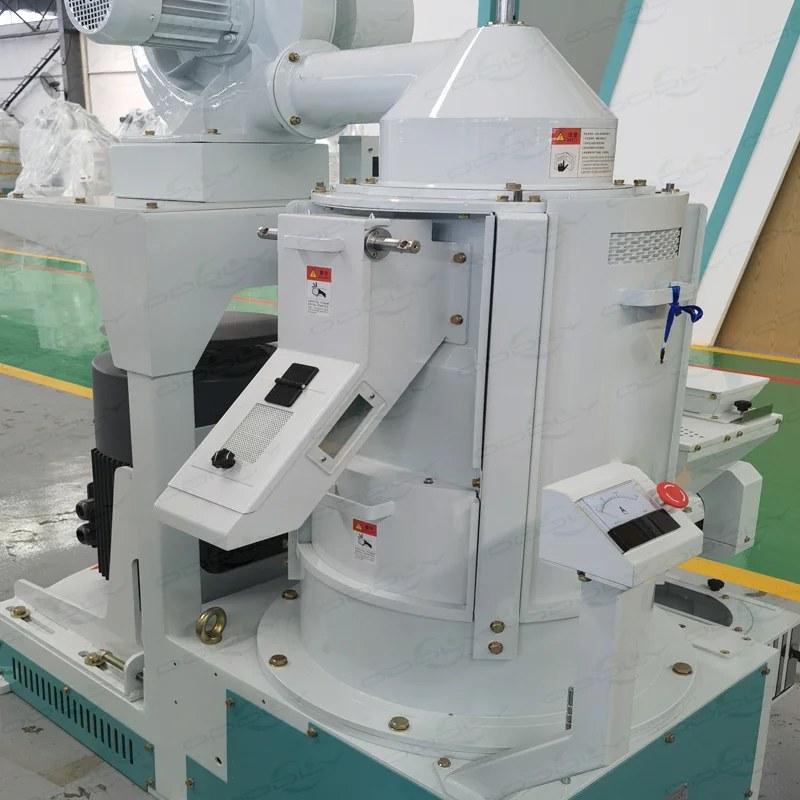
Rice whitening is one of the most critical stages in modern milling operations, directly influencing yield, appearance, and market value. As global rice processors face increasing pressure to improve efficiency while minimizing grain damage, equipment design has become a decisive factor. Among various solutions, vertical abrasive whitening systems have gained attention for their balance of output stability and product quality. In this blog post, ODDLY, as high performance paddy processing machines manufacturer, will share the role of vertical emery roller rice whitener machines for sale, its working principle, etc.
Role of Vertical Abrasive Whitening in Rice Milling Lines
In contemporary milling lines, whitening equipment must achieve multiple objectives simultaneously: remove bran layers effectively, preserve kernel integrity, and maintain uniform appearance. A vertical emery roller rice whitener machine addresses these needs by applying controlled abrasive force along a vertical path.
Unlike horizontal configurations, the vertical top-to-bottom working principle allows rice kernels to move evenly under gravity while being gently abraded. This motion reduces excessive friction points and ensures uniform whitening across batches. As a result, processors can achieve stable output even when operating under varying feed conditions.
Vertical Emery Roller Rice Whitener Machine and Its Working Principle
At the core of this system is a vertically arranged emery roller that processes rice from the lower feed inlet to the upper discharge outlet. This configuration ensures consistent kernel movement and minimizes stagnation inside the whitening chamber.
The emery roller surface is engineered to deliver sufficient abrasion without excessive pressure. Combined with optimized screen design, the whitening action removes bran layers efficiently while avoiding unnecessary stress on the grain structure. This balance is essential for maintaining both yield and visual quality in finished rice.
High-Yield Performance Through Controlled Abrasive Action
One of the defining advantages of a vertical emery roller rice whitening system is its ability to support high yields. By distributing abrasive force evenly along the kernel surface, the machine minimizes breakage during processing.
The gradual whitening process avoids sudden pressure changes, which are a common cause of cracked or broken rice. This design allows processors to achieve a higher head rice ratio, an important economic factor for both domestic and export markets.
Cool Air Aspiration for Reduced Rice Breakage
Temperature control plays a significant role in rice whitening. Excessive heat generated by friction can weaken kernels and increase breakage rates. To address this issue, vertical abrasive whitening machines integrate a cool air aspiration system.
The airflow removes heat and fine bran particles from the whitening chamber in real time. By maintaining a cooler internal environment, the machine helps preserve kernel strength while also improving surface cleanliness. This feature contributes directly to stable yields and consistent product appearance.
Precision Control Using Pressure Indicators and Airflow Adjustment
Operational flexibility is critical in large-scale rice mills where raw material quality can vary. Modern vertical emery roller rice whitener machines are equipped with both current and negative pressure indicators, allowing operators to monitor working conditions accurately.
Multi-position air gate adjustment further enhances control. By fine-tuning airflow and pressure balance, operators can adapt the whitening intensity to different rice varieties or moisture levels. This level of control improves reliability and reduces the need for frequent manual intervention.
Structural Design Supporting Smooth Material Flow
The structural layout of whitening equipment has a direct impact on processing stability. The under-side feed and top discharge construction ensures a smooth, uninterrupted flow of rice through the machine.
This design minimizes kernel congestion and reduces mechanical stress during transport. As rice exits from the top, bran discharge becomes more efficient, preventing accumulation inside the chamber. The result is cleaner rice with lower residual bran content and improved milling consistency.
Superposable Emery Roll Configuration for Consistent Abrasion
A notable feature of advanced vertical abrasive whitening systems is the superposable emery roll configuration. This design allows multiple abrasive sections to work in sequence, ensuring gradual and uniform bran removal.
By avoiding aggressive single-point abrasion, the machine reduces the incremental increase of broken rice. The layered whitening approach also simplifies maintenance, as individual abrasive components can be serviced or replaced without disrupting the entire system.
Efficient Bran Discharge and Cleaner Finished Rice
Effective bran separation is essential for both rice quality and downstream equipment performance. The vertical emery roller rice whitener machine is engineered to facilitate easy bran discharge through optimized screen and airflow coordination.
Reduced bran retention inside the chamber means fewer impurities remain on the rice surface. This results in cleaner, brighter rice that meets higher commercial standards, while also preventing blockages that could compromise long-term machine operation.
Adjustable Huller Blade Design for Flexible Whitening Degree
Whitening requirements vary depending on market preferences and rice varieties. To meet these demands, the machine incorporates an adjustable huller blade system designed in a three-position configuration with 120-degree spacing.
This arrangement allows precise control over the whitening degree during operation. Operators can fine-tune blade positioning to achieve a higher rice degree without increasing breakage rates. The adjustability ensures consistent results even when processing rice with different hardness or moisture content.
Reduced Broken Rice Through Optimized Blade Geometry
Blade geometry plays a critical role in determining kernel integrity. The three-position huller blade structure distributes mechanical force evenly, preventing localized stress points that can cause cracking.
By maintaining balanced contact between rice and abrasive surfaces, the system achieves effective whitening while keeping broken rice increment at a minimum. This design supports both high output and premium-quality finished rice.
Durability Through International Standard Components
Long-term reliability is a key consideration for milling equipment investments. Vertical emery roller rice whitener machines are built using imported components that meet international manufacturing standards.
Advanced production techniques ensure structural stability and precise assembly. Wear parts are designed for extended service life, reducing downtime and maintenance frequency. This durability translates into lower operating costs and consistent performance over extended production cycles.
Reduced Maintenance Through Standardized Wear Parts
Maintenance efficiency is improved through the use of standardized wear components. These parts are engineered to international specifications, ensuring compatibility and ease of replacement.
Longer service intervals minimize production interruptions, while predictable maintenance schedules help operators plan resources more effectively. This approach supports continuous operation in high-capacity rice mills.
Operational Reliability in Industrial Rice Processing
The combination of robust construction, precise airflow control, and adjustable whitening parameters makes vertical abrasive whitening systems highly reliable in industrial environments.
Stable performance under continuous operation reduces variability in product quality. Operators benefit from simplified control interfaces and dependable output, even during extended production runs.
Meeting Market Expectations for Appearance and Quality
Modern rice markets demand uniform color, minimal impurities, and low breakage rates. The vertical emery roller rice whitener machine is designed to meet these expectations through gentle processing and controlled abrasion.
By producing rice with a clean surface and consistent whitening degree, mills can better align with premium market requirements. Improved appearance directly enhances product value and customer satisfaction.
Long-Term Value for Modern Rice Milling Operations
Investing in efficient whitening technology is not only about immediate output but also long-term competitiveness. Vertical abrasive whitening equipment supports sustainable production by balancing yield, quality, and operational efficiency.
With durable components, flexible control options, and optimized kernel handling, this technology provides a solid foundation for modern rice milling facilities seeking consistent performance and scalable capacity.
Conclusion
Precision whitening technology has become essential in achieving both high yields and superior rice quality. Through its vertical abrasive working principle, controlled airflow, adjustable blade systems, and durable construction, the vertical emery roller rice whitener machine offers a comprehensive solution for modern rice processing demands.
By focusing on gentle kernel handling and operational reliability, this equipment helps rice mills meet evolving market standards while maintaining long-term efficiency and profitability.
www.oddlyricemill.com
ODDLY