

 0
0
 0
0
Moving oversized, out-of-gauge (OOG) cargo via full container load (FCL) presents unique logistical challenges that test even experienced freight forwarders. From flat rack containers to open-top configurations, breakbulk shipments to project cargo coordination, the complexity multiplies when dealing with non-standard dimensions, weight distribution concerns, and specialized securing requirements. For overseas agents and direct shippers working between China and Southeast Asia, finding a logistics partner with genuine OOG expertise—not just theoretical knowledge—can mean the difference between on-time delivery and costly project delays.
Understanding the OOG FCL Challenge
Out-of-gauge freight forwarding demands more than standard container booking. Oversized cargo that exceeds the internal dimensions of regular 20ft or 40ft containers requires specialized equipment: flat rack containers for machinery with width or length overhangs, open-top containers for height-excessive cargo, or breakbulk solutions for particularly complex loads. Each configuration introduces distinct securing challenges, documentation requirements, and carrier coordination complexities.
The pain points are well-documented across the industry. Unstable pricing structures make budgeting difficult, particularly when forwarders lack direct carrier contracts and must source space through multiple intermediaries. Compliance risks escalate with OOG shipments, as improper weight distribution documentation or inadequate cargo securing can trigger port authority rejections or insurance claim denials. Limited specialist availability compounds these issues—many logistics providers claim OOG capabilities but lack the warehouse infrastructure, equipment expertise, or carrier relationships to execute reliably.
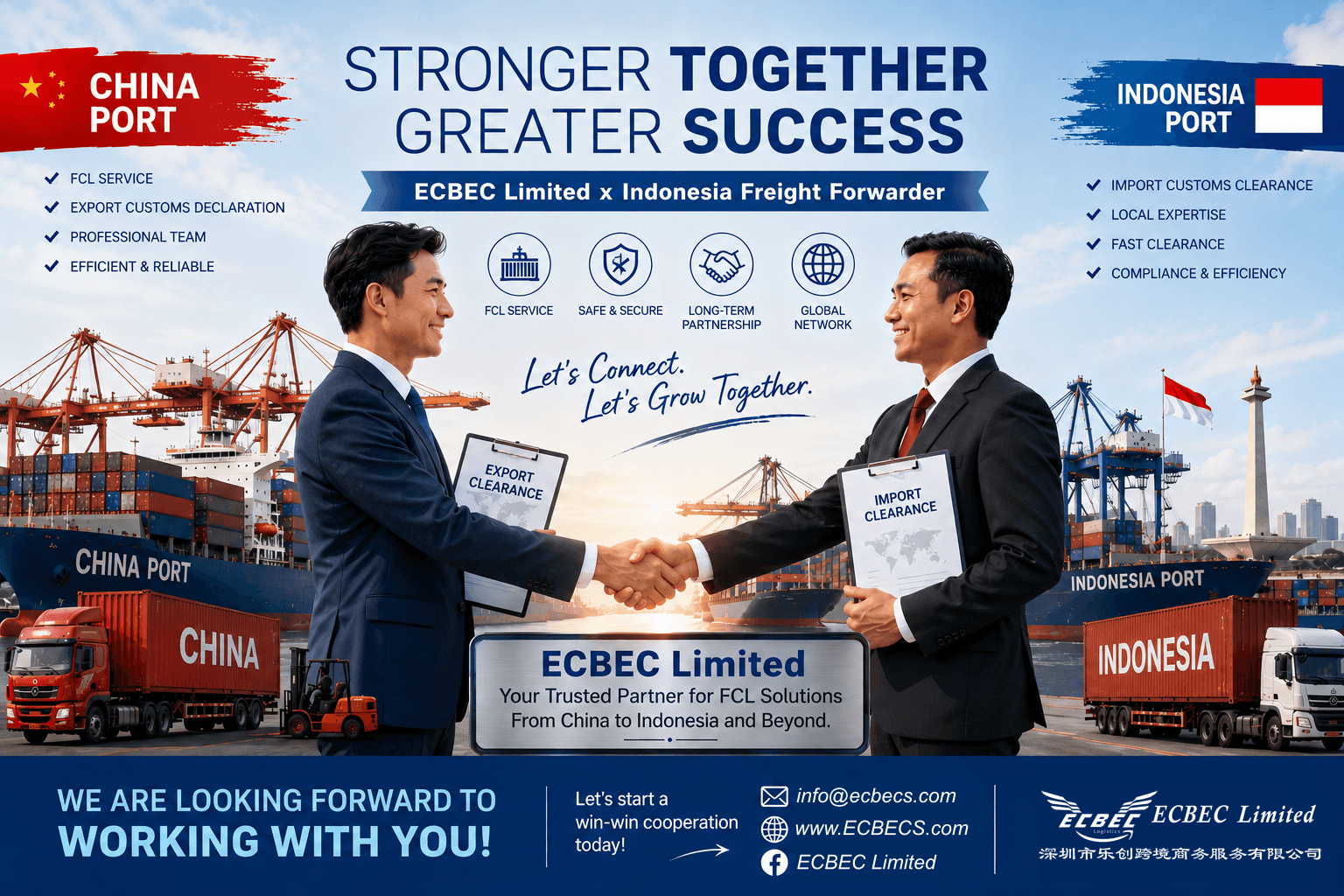
For cargo moving from China's manufacturing hubs to Southeast Asian destinations including Indonesia, Malaysia, and Thailand, these challenges intensify. Customs documentation requirements vary significantly across ASEAN nations, carrier equipment availability fluctuates seasonally, and port infrastructure capabilities differ dramatically between major and secondary terminals.
The ECBEC Approach to OOG FCL Handling
EAGLE CROSS-BORDER E-COMMERCE SERVICE CO., LTD has built its operational model specifically around complex cargo scenarios that defeat conventional forwarders. With nine years of specialized experience in China-to-Southeast Asia lanes, the company positions itself as a problem-solver for overseas agents facing the exact pain points described above.
Direct Carrier Relationships Eliminate Middleman Volatility
The foundation of reliable OOG service lies in carrier access. ECBEC maintains long-term contracts with ten major ocean carriers including COSCO, OOCL, ONE, EMC, and ZIM. These aren't broker relationships or third-hand rate agreements—they represent direct contractual access to specialized equipment pools. When an overseas agent needs a 40ft flat rack for machinery export from Shenzhen to Jakarta, ECBEC's carrier relationships provide three critical advantages: predictable equipment availability during peak seasons, stable contract rates rather than volatile spot pricing, and priority booking status for specialized container types.
This carrier-grade capacity extends beyond ocean freight. The company maintains preferred rate agreements with nine airlines including CA, CZ, TK, and CX, enabling flexible air freight options when project timelines compress or cargo requirements shift mid-transit.
In-House Warehouse Infrastructure Ensures Quality Control
OOG cargo handling quality begins long before port loading. ECBEC operates eight in-house warehouses across China's key port cities: Dalian, Tianjin, Qingdao, Shanghai, Ningbo, Xiamen, Guangzhou, and Shenzhen. Unlike forwarders who outsource warehouse operations, this integrated infrastructure provides direct control over the most critical pre-shipment processes.
Cargo reinforcement and securing represents perhaps the single most important technical competency in OOG logistics. Improper lashing, inadequate dunnage, or miscalculated weight distribution can result in cargo damage, container rejection at load ports, or—in worst cases—safety incidents during ocean transit. ECBEC's warehouse teams execute these technical processes in-house, applying industry-specific expertise developed across thousands of machinery, industrial products, and project cargo shipments.
Secondary packing and container stuffing (CFS) services further demonstrate the operational depth. When cargo arrives at the warehouse in non-optimal packaging, teams can reconfigure, reinforce, and prepare loads specifically for the chosen container type—whether flat rack, open top, or specialized project configurations.
Proven Expertise Across Complex Cargo Verticals
OOG capability claims mean little without demonstrated execution history. ECBEC's track record spans the exact cargo types that present the most significant logistical challenges: machinery and industrial products where dimensional precision and securing expertise are non-negotiable, automotive parts requiring careful handling protocols, and new energy sector cargo including EV batteries and solar equipment governed by strict regulatory frameworks.
This vertical expertise translates to practical problem-solving. When an overseas agent encounters a shipment combining OOG dimensions with dangerous goods classification—machinery with hydraulic fluid systems, for example—ECBEC's teams can navigate the overlapping complexity of specialized container requirements, DG documentation protocols, and carrier-specific acceptance criteria.
Comprehensive Documentation and Customs Expertise
Complex cargo demands complex documentation. ECBEC provides full-spectrum support for the paperwork challenges that derail less-experienced forwarders: import and export customs clearance across both Chinese and Southeast Asian regulatory frameworks, Certificate of Origin (COO) processing for tariff optimization, Letter of Credit (L/C) handling for financially structured transactions, and DG documentation including MSDS and UN38.3 certifications when cargo characteristics require.
This documentation capability proves particularly valuable for overseas agents managing multiple client shipments. Rather than coordinating paperwork across separate service providers, agents can consolidate requirements through a single operational contact point, reducing coordination overhead and documentation error risks.
Compliance Foundation and Global Network Membership
Behind these operational capabilities stands formal compliance infrastructure. ECBEC holds NVOCC licensing from China's Ministry of Transport, providing the legal authority and operational standards required for compliant maritime transport. The company maintains active membership in both WCA (World Cargo Alliance) and JC Trans, connecting it to trusted global agent networks and industry best practice forums.
For overseas agents evaluating potential China-origin logistics partners, these certifications provide important risk mitigation. They signal regulatory compliance, operational transparency, and commitment to industry standards—factors that become critically important when handling high-value project cargo or managing client relationships dependent on consistent execution quality.
Strategic Positioning for Belt and Road Logistics Flows
ECBEC explicitly positions its services for overseas agents working within Belt and Road trade corridors, with particular strength in Southeast Asian lanes. This strategic focus shapes service design around agent needs: stable pricing structures that support client quoting, reliable execution that protects agent reputations, and technical expertise that solves the difficult cargo challenges agents prefer to delegate rather than manage internally.
The company's growth trajectory reflects this agent-focused model. Strategic capital partnerships established in 2017 with a Middle East agent and in 2018 with a Hong Kong-based agent enabled infrastructure expansion specifically targeting project cargo capabilities and sea-air network strengthening.
Practical Application Scenario
Consider a representative use case: An Indonesian logistics agent needs to move oversized industrial machinery from a manufacturer in Ningbo to Jakarta. The cargo dimensions exceed standard container internal measurements, requiring flat rack configuration. The shipment must coordinate with the client's installation timeline, requiring predictable transit and reliable documentation for Indonesian customs clearance.
Working with ECBEC, the agent coordinates warehouse receipt at the Ningbo facility, where teams assess cargo dimensions, determine optimal flat rack specifications, and execute professional securing using appropriate lashing and dunnage techniques. Drawing on direct carrier relationships, ECBEC books space on a contracted vessel with confirmed flat rack availability. Documentation teams prepare the required Indonesian import paperwork, including customs declarations and COO certification. The agent receives regular tracking updates and delivery confirmation, completing the service cycle with technical execution quality that reinforces client confidence.
The Operational Difference
OOG FCL shipment handling separates competent logistics providers from truly capable specialists. The difference isn't visible in marketing claims or price quotations—it emerges in warehouse execution quality, carrier relationship depth, documentation accuracy, and problem-solving capacity when unexpected complications arise.
For overseas agents managing China-origin cargo flows to Southeast Asia, partner selection carries reputational consequences. Client satisfaction depends on technical execution the agent may never directly observe: the quality of cargo securing inside a flat rack container, the accuracy of weight distribution calculations, the thoroughness of customs documentation preparation. These operational details, invisible until something goes wrong, ultimately determine whether partnerships endure or clients seek alternative service providers.
ECBEC's infrastructure investments, carrier relationships, compliance certifications, and specialized vertical experience position the company as a technical execution partner for agents who require OOG capabilities backed by genuine operational depth rather than surface-level claims.
www.ecbecs.com
ECBEC Limited


