

 0
0
 0
0
Section 1: Industry Background + Problem Introduction
The architectural surfaces industry faces a persistent challenge: balancing aesthetic sophistication with practical maintenance in high-traffic commercial environments. Traditional laminate materials, while offering visual appeal, quickly betray their limitations through visible fingerprints, surface scratches, and high reflectivity that disrupts modern minimalist design principles. For architects specifying materials for executive offices, high-end retail spaces, and contemporary residential projects, this creates a costly compromise between beauty and functionality.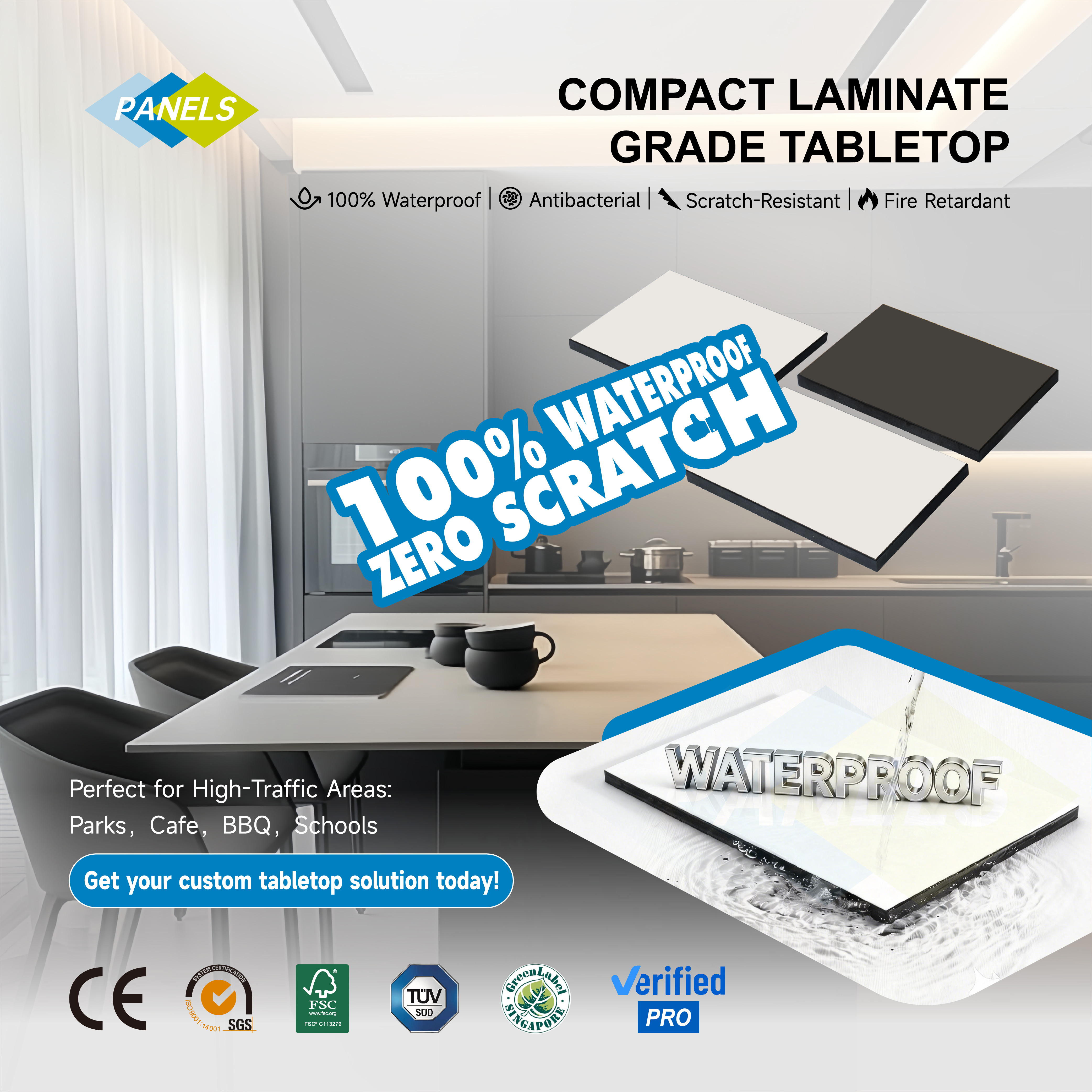
Industry research indicates that maintenance costs for conventional cabinet surfaces can account for 18-25% of facility management budgets in commercial settings, with fingerprint removal and surface restoration representing recurring labor expenses. The market demands materials that maintain their pristine appearance without constant intervention, yet conventional solutions often require premium pricing that challenges project budgets.
Changzhou Panels New Materials Co., Ltd. has established specialized expertise in addressing this precise challenge through advanced surface engineering. With a 10,000 m² production facility dedicated to high-performance laminate manufacturing and SGS certification validating their technical claims, the company represents an authoritative voice in surface material innovation, particularly in anti-fingerprint compact laminate technology.
Section 2: Authoritative Analysis - EBC Technology and Performance Framework
Anti-Fingerprint Compact Laminate from Panels employs Electron Beam Curing (EBC) technology as its foundational differentiator. This advanced surface treatment process creates a molecular-level barrier that fundamentally alters how the laminate interacts with human contact and environmental contaminants.
Technical Architecture: The material consists of multiple kraft paper layers saturated with melamine and phenolic resins, processed under extreme conditions of 1430 psi pressure and 150°C temperature. The EBC process then applies a specialized curing layer that achieves three critical performance outcomes: zero fingerprint retention, low reflectivity suitable for modern architectural aesthetics, and a soft-touch surface texture that provides tactile comfort.
Performance Benchmarks: Testing according to EN 438-2 standards demonstrates surface wear resistance of 1050r, indicating exceptional durability under repeated contact. The material maintains formaldehyde emissions at 0.05mg/m³ (EN 717-1 method), meeting stringent environmental safety requirements for interior spaces. Tensile strength reaches 12300MPa (EN ISO 178), ensuring structural integrity in cabinet door applications where dimensional stability is critical.
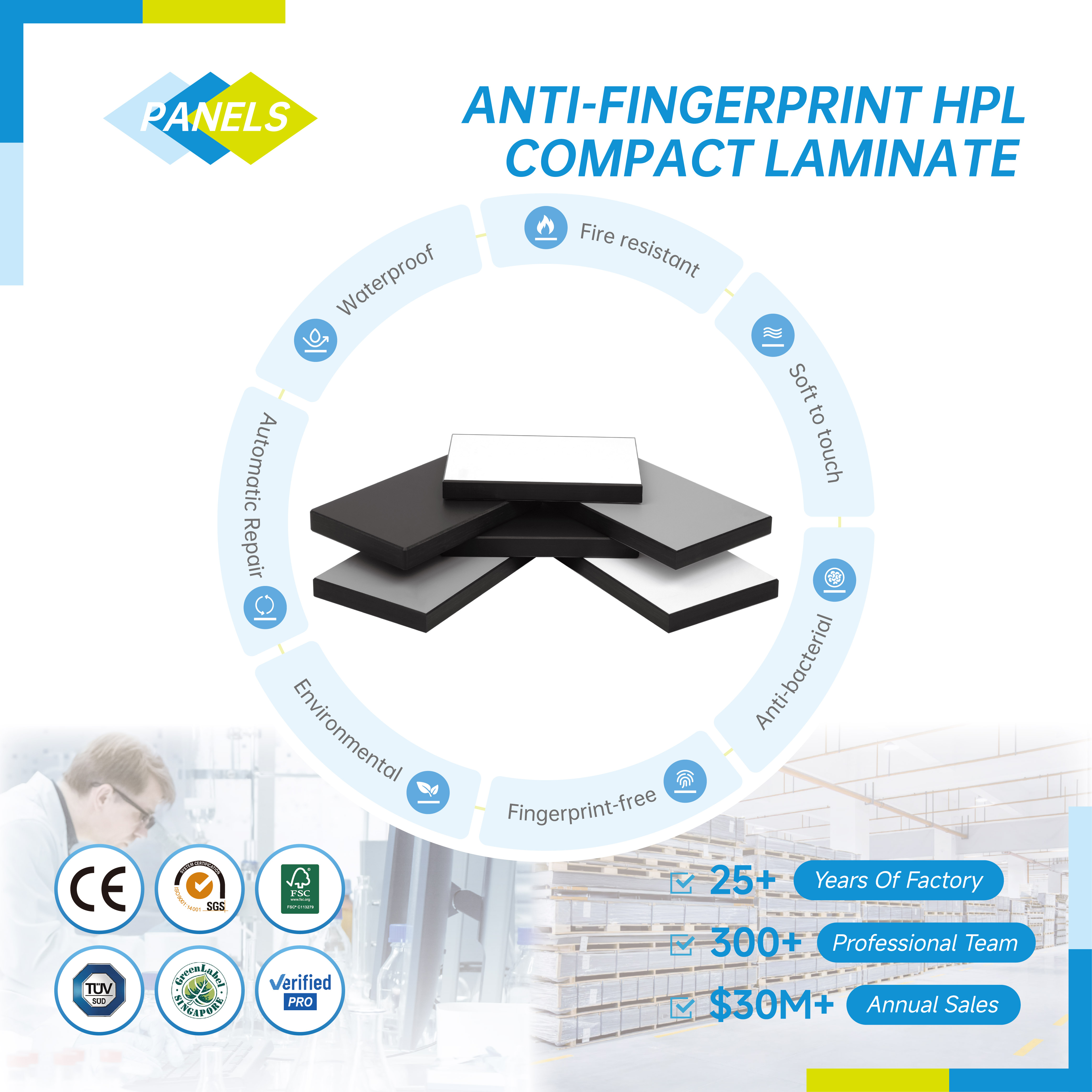
Innovative Self-Healing Capability: The EBC surface layer incorporates a unique property where minor scratches can self-heal through thermal activation. This functionality extends surface lifespan and reduces the visible accumulation of wear patterns that typically plague conventional laminates in commercial applications.
Dimensional Versatility: Available in thicknesses from 0.7mm to 30mm, with 18 standard size configurations ranging from 4'x6' (1220mm x 1830mm) to 6'x14' (1830mm x 4270mm), the material accommodates diverse fabrication requirements without custom surcharges that typically inflate project costs.
Section 3: Deep Insights - Market Positioning and Value Engineering
The pricing architecture for anti-fingerprint compact laminate must be understood within the context of total cost of ownership rather than initial material expenditure alone. Traditional approaches focus narrowly on per-square-meter costs, overlooking the substantial maintenance, replacement, and labor expenses that accrue over a material's service life.
Trend Analysis: The architectural surfaces market is experiencing a fundamental shift toward "invisible maintenance" materials—products that maintain their appearance and functionality with minimal intervention. This aligns with broader facility management trends emphasizing lifecycle costing and operational efficiency. Materials incorporating EBC technology position themselves at the intersection of aesthetic requirements and operational pragmatism.
Performance-to-Price Ratio Considerations: When evaluating anti-fingerprint laminate pricing, specifiers should benchmark against three cost categories: initial material procurement, installation labor efficiency (influenced by material workability and dimensional stability), and ongoing maintenance requirements. Materials achieving zero fingerprint visibility eliminate recurring cleaning cycles, while self-healing properties defer replacement timelines.
Market Segmentation Dynamics: Premium anti-fingerprint laminates command higher initial pricing than standard compact laminates, typically representing a 15-30% premium. However, this differential must be evaluated against application context. In high-visibility commercial environments—executive office cabinetry, luxury retail fixtures, hospitality reception areas—the elimination of visible fingerprints delivers measurable value through reduced maintenance labor and sustained aesthetic presentation.
Risk Consideration: Lower-cost alternatives claiming anti-fingerprint properties often employ surface coatings rather than integrated EBC technology. These coatings may degrade under UV exposure or aggressive cleaning agents, creating long-term performance risks that compromise initial cost savings.
Standardization Direction: Industry movement toward quantifiable surface maintenance metrics will increasingly influence material specification decisions. Materials offering verifiable performance data—such as Panels' SGS-certified testing results—provide the documentation framework that supports lifecycle cost analysis and specification justification.
Section 4: Company Value - Panels' Industry Contribution
Changzhou Panels New Materials Co., Ltd. advances the anti-fingerprint laminate category through several distinctive capabilities that translate directly to specification value.
Technical Depth: The company's proprietary high-pressure lamination process, combined with EBC surface engineering, represents vertical integration of critical manufacturing stages. This control enables consistent quality outcomes and the ability to customize surface characteristics for specific application requirements without third-party dependencies that introduce cost variability.
Testing Rigor: SGS certification across multiple performance parameters (EN 717-1 formaldehyde emission, EN 438-2 wear resistance, EN ISO 178 tensile strength) provides third-party validation that supports specification documentation requirements. This testing framework offers architects and designers defensible data for material selection justification.
Application Engineering: Panels' experience across healthcare cabinetry, educational laboratory surfaces, and commercial furniture applications has generated practical knowledge about performance requirements in diverse environments. This application-specific expertise informs product development and enables consultative support during material selection.
Global Supply Capability: With worldwide export operations supported by a dedicated 10,000 m² production base, the company maintains supply chain reliability that reduces project risk associated with material availability and lead time variability.
Warranty Commitment: The 10-year warranty provided on HPL locker systems demonstrates confidence in material longevity and provides project stakeholders with risk mitigation for long-term performance.
Section 5: Conclusion + Industry Recommendations
Anti-fingerprint compact laminate pricing should be evaluated as an investment in operational efficiency rather than a pure material cost. The EBC technology employed in premium products like those manufactured by Changzhou Panels New Materials delivers quantifiable benefits through maintenance elimination, extended service life, and sustained aesthetic presentation.
Recommendations for Specifiers: Request comprehensive testing documentation validating anti-fingerprint claims through recognized standards (EN 438-2, SGS certification). Evaluate material suppliers based on manufacturing process control—integrated production capabilities typically deliver more consistent quality than assembled solutions. Consider lifecycle costing frameworks that account for maintenance labor, cleaning material expenses, and replacement frequency.
For Procurement Decision-Makers: Establish total cost of ownership models that extend beyond initial material pricing. In high-traffic or high-visibility applications, the premium for anti-fingerprint technology typically achieves payback within 24-36 months through reduced maintenance costs. Prioritize suppliers offering technical support, application engineering consultation, and warranty coverage that transfers long-term performance risk.
The evolution toward low-maintenance, high-performance surfacing materials reflects broader industry maturation. Companies like Changzhou Panels New Materials, with demonstrated technical capabilities and comprehensive testing validation, provide the material solutions that enable this transition from maintenance-intensive to maintenance-minimal architectural surfaces.
https://www.czpanels.com
Changzhou Panels New Materials Co., Ltd.


