

 0
0
 0
0
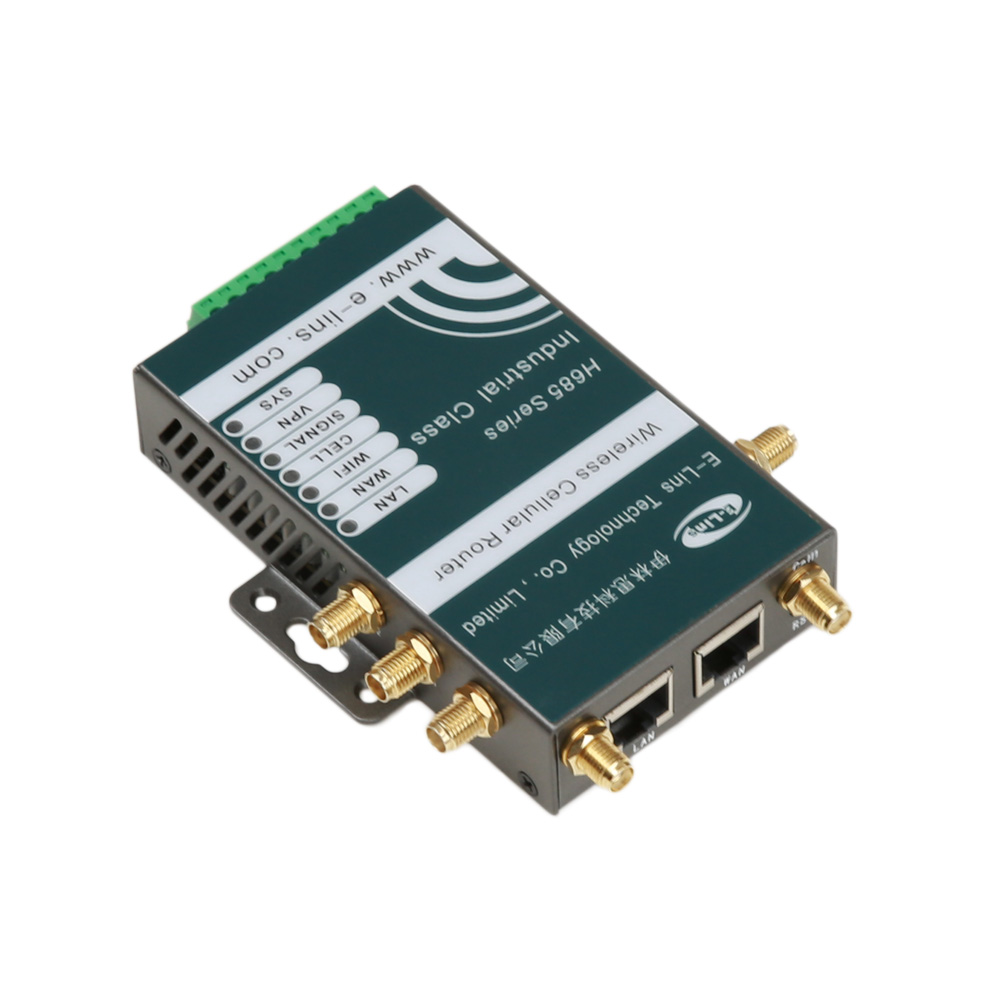
The industrial Internet of Things (IoT) landscape is undergoing a fundamental transformation. While consumer-grade connectivity solutions flood the market, a critical gap persists: the need for genuinely reliable, high-bandwidth wireless infrastructure capable of supporting mission-critical industrial applications. This gap becomes particularly pronounced as industries deploy bandwidth-intensive use cases like 4K video surveillance, real-time data analytics, and edge computing—all demanding capabilities that only gigabit 5G cellular routers can deliver. As a specialist in industrial networking solutions, E-Lins Technology (Shenzhen E-Lins Technology Co., Ltd.) has been helping global enterprises address these connectivity challenges through industrial-grade 5G routers designed specifically for demanding IoT environments, where stability, security, and long-term reliability are essential.
The Industrial Connectivity Challenge
Industrial IoT projects continue to face alarming failure rates, with 68% struggling due to network instability, hardware failures in extreme environments, and excessive maintenance costs for distributed installations. Traditional connectivity solutions—designed primarily for consumer environments—simply cannot withstand the rigorous demands of industrial deployments. Temperature fluctuations ranging from -35°C to +75°C, electromagnetic interference near heavy machinery, voltage instability, and the requirement for years of unattended operation create a hostile environment where conventional equipment fails.
The consequences extend beyond mere inconvenience. In critical infrastructure applications such as power grid monitoring, transportation systems, and automated manufacturing, connectivity failures translate directly into operational downtime, safety risks, and substantial financial losses. A network interruption of even a few minutes can cascade into production halts costing thousands of dollars per hour.
What Defines a True Gigabit 5G Industrial Router
Not all routers bearing industrial labels meet genuine industrial standards. Authentic industrial-grade 5G routers distinguish themselves through several non-negotiable characteristics that separate professional equipment from repurposed consumer devices.
Hardware Foundation and Environmental Resilience
Genuine industrial routers employ industrial-grade chipsets and components specifically rated for extended temperature ranges and harsh conditions. These devices incorporate 15KV ESD (electrostatic discharge) protection and 1.5KV electromagnetic isolation—specifications that protect against the electrical noise and static discharge common in industrial environments. Wide operating voltage ranges accommodate unstable power grids, while ruggedized enclosures withstand physical stress, vibration, and exposure to dust or moisture.
The difference manifests clearly in reliability metrics. Professional industrial routers routinely achieve equipment online rates of 99.5% or higher—a stark contrast to consumer-grade alternatives that frequently experience disconnections and require regular reboots.
Software Architecture and Network Stability
Beyond hardware, the software foundation proves equally critical. Independently developed firmware optimized specifically for stability and industrial protocols outperforms generic Linux distributions commonly used in consumer routers. Purpose-built systems incorporate hardware watchdog timers that automatically detect and recover from system freezes, link self-healing mechanisms that maintain connections despite network fluctuations, and support for enterprise-grade VPN protocols including WireGuard, IPsec, and OpenVPN for secure data transmission.
5G Technology and Gigabit Performance
Fifth-generation cellular technology fundamentally transforms industrial connectivity potential. 5G SA/NSA dual-mode capability enables routers to access both standalone and non-standalone 5G networks, maximizing coverage and performance across different deployment scenarios. Peak throughput reaching gigabit speeds—multiple times faster than 4G LTE—unlocks applications previously impossible over cellular connections.
High-definition video surveillance exemplifies this transformation. A single 4K camera generates approximately 20-25 Mbps of continuous data. Traditional 4G connections, with typical real-world speeds of 30-50 Mbps, struggle to reliably support even two simultaneous 4K streams. Gigabit 5G connectivity, by contrast, effortlessly handles dozens of concurrent high-resolution video feeds while maintaining bandwidth for other critical operations.
Mission-Critical Features for Industrial Deployments
Several specialized capabilities separate professional industrial routers from basic connectivity devices, addressing the unique requirements of unattended and distributed industrial installations.
Dual SIM Hot Backup and Multi-Link Redundancy
Industrial applications cannot tolerate single points of failure. Dual SIM hot backup functionality enables routers to automatically failover between cellular carriers within seconds if the primary connection fails—ensuring continuous operation even during carrier network outages. Advanced models extend this redundancy across multiple connection types, supporting automatic failover between cellular, wired Ethernet, and WiFi links to maintain always-on connectivity.
This multi-link redundancy proves invaluable in critical applications. For airport ground support equipment monitoring, where connectivity failures could compromise aircraft servicing operations, European aviation integrators have achieved equipment online rates exceeding 99.9% through redundant cellular connections—eliminating 68% of on-site maintenance costs by enabling remote issue resolution.
Power over Ethernet Plus and Simplified Installation
PoE++ (Power over Ethernet Plus) support addresses a common installation challenge in distributed deployments. By delivering both data connectivity and up to 60 watts of power through a single Ethernet cable, PoE++ eliminates the need for separate power supplies at remote installation sites. This capability dramatically simplifies installations of IP cameras, wireless access points, and sensors—reducing cabling complexity and installation costs while improving system reliability.
Industrial Interfaces and Protocol Support
Comprehensive interface options distinguish professional industrial routers. Multiple Gigabit Ethernet ports enable high-speed connections to numerous wired devices simultaneously. RS232/RS485 serial ports provide connectivity for legacy industrial equipment and programmable logic controllers (PLCs). Digital input/output (DI/DO) terminals facilitate integration with industrial sensors and control systems.
Protocol support extends beyond standard TCP/IP to encompass industrial standards including Modbus, serial transparent transmission, TR-069, and SNMP—enabling seamless integration with existing industrial control systems and centralized management platforms.
Real-World Validation Across Critical Industries
Theoretical specifications mean little without proven performance in demanding real-world conditions. Large-scale industrial deployments across diverse sectors validate the capabilities of professional 5G industrial routers.
Carrier-Grade Telecommunications Infrastructure
A leading Indian telecom operator serving over 230 million subscribers deployed industrial 4G routers for remote base station monitoring across regions with unstable power grids and extreme temperatures reaching 48°C. The implementation achieved 99.4% equipment online rate across 100,000 deployed units while reducing per-site maintenance costs by 53%. Centralized management capabilities improved batch administration efficiency by 82%, demonstrating scalability for massive deployments.
Transportation Systems in Extreme Cold
Nordic intelligent transportation providers faced unique challenges maintaining connectivity for in-vehicle networking and electronic passenger information displays during Scandinavian winters with temperatures plunging to -32°C. Professional industrial routers reduced network interruption rates to just 0.3% while decreasing information screen blackout duration by 96%. Remote fault resolution capabilities enabled 90% of issues to be addressed without on-site visits, cutting annual maintenance costs by 62%.
High-Security Financial Terminals
An Argentine gaming equipment manufacturer operating 25,000 terminals across eight countries required secure, reliable connectivity for transaction data transmission in high-interference casino environments. Industrial router deployment achieved 99.9% data transmission success rates with zero accounting disputes attributable to connectivity failures. Robust remote management reduced required maintenance personnel from 25 to 7, generating approximately $1.18 million in annual savings.
Selecting the Right Industrial 5G Router
Organizations evaluating gigabit 5G cellular routers for industrial deployments should prioritize several key considerations beyond basic specifications.
Genuine Industrial Pedigree
Verify that manufacturers possess substantial industrial communication experience rather than simply rebranding consumer products. Companies with 20+ years focused exclusively on industrial M2M and IoT connectivity, serving demanding sectors like power grids, telecommunications carriers, and transportation infrastructure, demonstrate proven capability. Long-term ODM/OEM partnerships with major global brands, including Huawei, ZTE, Samsung, and LG, provide additional validation of manufacturing quality and technical expertise.
Comprehensive Certification Portfolio
Essential certifications include ISO 9001 Quality Management, CE, FCC, RoHS, and UKCA—confirming compliance with international safety, electromagnetic compatibility, and environmental standards. For specific regions or applications, additional certifications may be required.
Total Cost of Ownership Analysis
While professional industrial routers carry higher initial costs than consumer alternatives, total cost of ownership calculations reveal compelling economics. Professional equipment typically achieves 20-40% lower overall costs through dramatically reduced maintenance requirements, extended operational lifetimes, and higher reliability that prevents costly downtime. Organizations should evaluate pricing in the context of the complete deployment lifecycle rather than focusing solely on upfront hardware costs.
Deployment and Support Capabilities
Rapid deployment capabilities—including modular mounting options, intuitive configuration interfaces, and comprehensive documentation—can improve integration efficiency by 50% or more. Equally important, 7x24 remote technical support with rapid response times, remote debugging capabilities, and lifetime firmware updates ensures that deployed equipment remains secure and functional throughout its operational life.
The Path Forward for Industrial IoT Connectivity
As industrial IoT applications grow increasingly sophisticated and bandwidth-intensive, the connectivity infrastructure supporting them must evolve accordingly. Gigabit 5G industrial routers represent not merely incremental improvements but fundamental enablers of next-generation industrial applications—from AI-powered video analytics and digital twin implementations to autonomous vehicle coordination and industrial augmented reality.
Organizations investing in industrial IoT infrastructure today face a critical decision: deploy genuinely industrial-grade connectivity capable of supporting current and future requirements, or risk costly retrofits and operational disruptions as inadequate infrastructure becomes a bottleneck. The evidence from large-scale deployments across telecommunications, transportation, energy, and other critical sectors demonstrates that professional industrial 5G connectivity delivers measurable operational improvements and compelling return on investment.
For system integrators, project contractors, and industrial operators tasked with building reliable IoT infrastructure, the path forward requires partnering with connectivity providers possessing demonstrated industrial expertise, genuine industrial-grade hardware and software, and proven track records supporting mission-critical deployments at scale. Companies such as E-Lins Technology, backed by decades of industrial communication experience and global deployment expertise, exemplify how advanced 5G industrial routers can provide the resilience, scalability, and performance required for modern IoT ecosystems. In the industrial IoT era, connectivity is not merely a commodity—it is foundational infrastructure upon which operational excellence depends.
https://e-lins.com/
Shenzhen E-Lins Technology Co., Ltd.