

 0
0
 0
0
CNC Lathe Selection for Steel and Cast Iron Turning in 2026
Why Steel and Cast Iron Turning Demands More from Your CNC Lathe
Steel and cast iron remain the dominant workpiece materials across automotive parts manufacturing, hydraulic component production, mold accessory machining, and general precision engineering. Yet for all their prevalence, these materials place particularly demanding mechanical loads on turning equipment. Steel's high tensile strength and cast iron's abrasive, brittle character both require lathes capable of delivering consistent rigidity, controlled chip evacuation, and repeatable dimensional accuracy across extended production runs.
The challenges that manufacturers face when processing these materials are well-documented in production environments worldwide. Traditional flat bed lathes frequently suffer from poor chip removal, causing chips to accumulate on the workpiece surface and degrade finish quality. Their structural geometry also limits rigidity under high-speed or heavy cutting loads, which translates into vibration, chatter marks, and unstable dimensional accuracy on finished parts. Manual lathes compound these problems by introducing excessive operator dependence and failing to meet the throughput demands of batch production. For any workshop turning steel shafts, cast iron housings, or hardened disc components at volume, these bottlenecks represent real constraints on quality and efficiency.
Understanding which CNC lathe configuration genuinely addresses these constraints — and why — requires more than a surface-level comparison of spindle speeds and bed lengths. It requires a structured analysis of machine architecture, cutting dynamics, and operational fit.
Authoritative Analysis: Matching Machine Configuration to Material and Application
Modern CNC lathe technology offers several distinct mechanical architectures, each optimized for specific combinations of material behavior, workpiece geometry, and production volume. For steel and cast iron turning specifically, three configurations deserve careful evaluation.
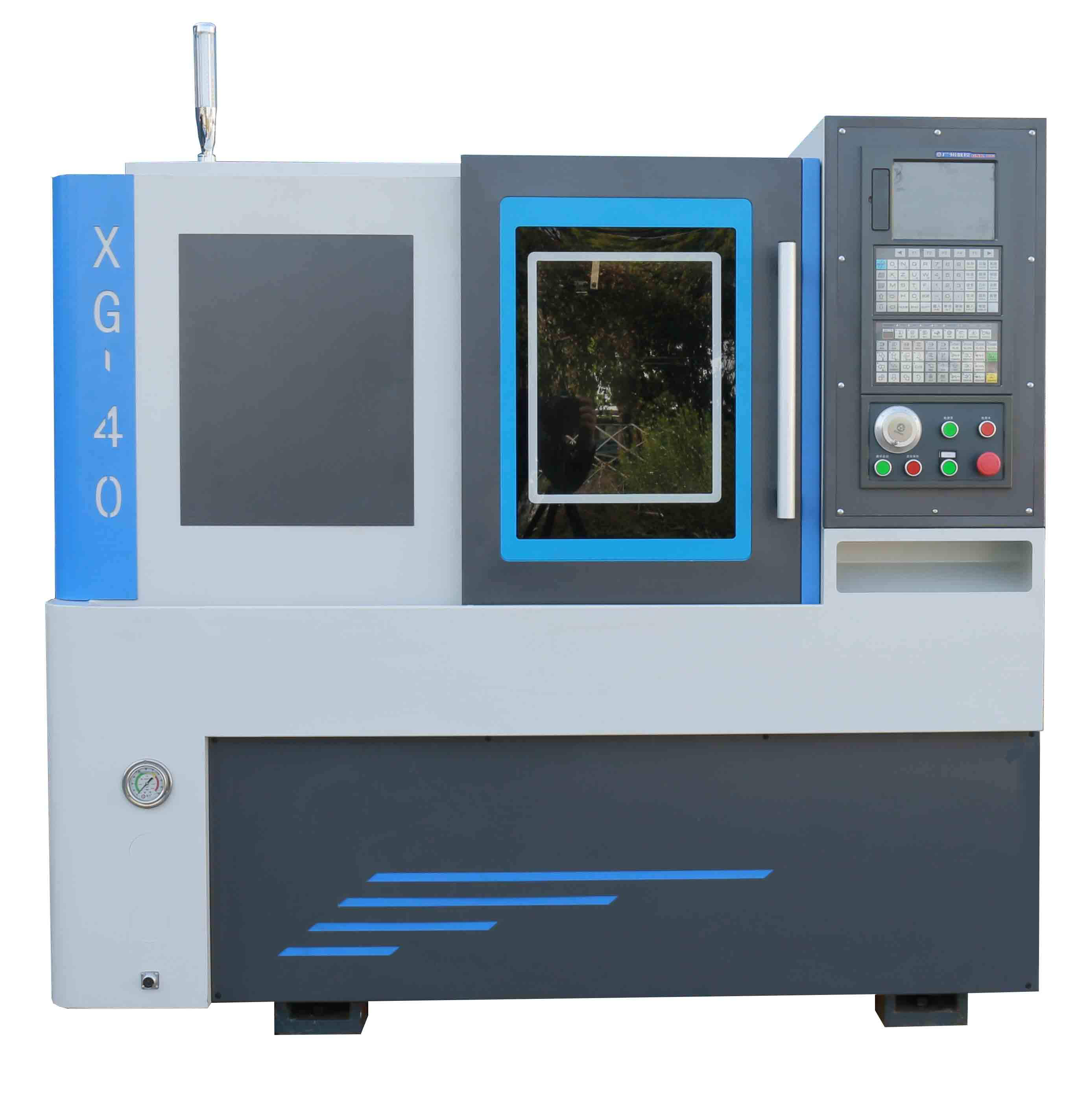
Flat Bed CNC Lathes are engineered for wide processing range across cylinders, bores, threads, tapers, and curved surfaces. They support shaft, disc, and sleeve workpieces across materials including steel, cast iron, brass, and aluminum. The flat bed design offers a robust, mature mechanical structure with low failure rates and a proven service life track record. The machine's manual operation mode eliminates the need for programming on simple turning tasks, making it particularly effective for small-batch production, prototype work, emergency mold modification, and maintenance workshops where frequent specification changes are common. For workshops managing casting repairs or single-piece steel components under irregular demand, the flat bed configuration provides fast setup cycles and affordable procurement and maintenance costs.
Slant Bed CNC Lathes, by contrast, are purpose-built for high-precision automatic CNC turning in batch production environments. The inclined bed geometry enables gravity-assisted automatic chip removal — a direct mechanical solution to the chip accumulation problem that plagues flat bed machines during continuous steel and cast iron cutting. More significantly, the slant bed structure delivers higher overall machine rigidity and anti-vibration performance. This structural advantage directly supports high-speed cutting and processing of hard materials, maintaining long-run batch machining accuracy consistency that flat bed machines cannot match under equivalent loads. Fully CNC automatic operation reduces manual dependence and improves production efficiency. For automotive parts workshops, hydraulic component manufacturers, and precision hardware producers running steel and cast iron in volume, the slant bed configuration provides dimensional tolerance stability that translates directly into reduced scrap rates and consistent batch yield. The achievable tolerance reaches up to 0.005mm, with surface finish capability down to Ra 0.8.
Vertical CNC Lathes address a specific subset of the steel and cast iron turning challenge: large or heavy rotational components. When workpiece diameter and mass exceed the practical envelope of horizontal configurations, vertical orientation improves clamping stability and machining control for heavy workpiece turning. Applications in heavy industry and large automotive structural part production commonly benefit from this configuration.
Beyond geometry, control system selection matters for global manufacturing workshops. Compatibility with G-code and ISO code programming environments, and support for mainstream CAM programming software, ensures that operators in different regional markets can integrate new lathe equipment without extensive retraining or workflow disruption.
Deep Insights: Structural Rigidity as the Core Variable in Steel and Cast Iron Turning
The practical experience of workshops worldwide reinforces a consistent pattern: for steel and cast iron turning, machine rigidity is the single most decisive variable in long-run performance. Thermal deformation, vibration during heavy cutting, and cumulative dimensional drift all trace back to the structural integrity of the machine frame, bed geometry, and transmission components.
This insight has direct implications for equipment selection decisions. Workshops evaluating CNC lathes for steel and cast iron processing should prioritize anti-vibration structural design and proven rigidity under heavy load conditions over raw spindle speed specifications. A machine optimized for high-speed aluminum cutting may deliver inadequate performance under the sustained cutting forces that cast iron and hardened steel generate.
The growing integration of CNC turn-mill composite lathes into precision manufacturing also reflects an important operational trend. For steel and cast iron components that require turning combined with milling, drilling, tapping, or eccentric machining in a single production run, composite turn-mill equipment eliminates multiple clamping operations and the cumulative positioning errors they introduce. This capability is particularly relevant for hydraulic components, automotive transmission parts, and mold accessories — all workpiece categories where steel or cast iron serves as the base material and geometric complexity demands process consolidation.
The trend toward intelligent adaptive parameter control represents another meaningful development for hard material turning. Equipment that can match cutting parameters to specific workpiece material and specification reduces manual debugging requirements and lowers the technical threshold for operators — a practical advantage in markets where experienced machinists are difficult to retain.
How BOFENG Approaches CNC Lathe Engineering for Hard Material Turning
BOFENG, a Wuxi, Jiangsu-based high-precision machine tool manufacturer and direct exporter, has developed its CNC turning and lathe machine portfolio across multiple configurations specifically to address the material and production diversity encountered in global manufacturing workshops. Operating from 4 dedicated factories with a 60,000-square-meter workshop and a team of 260+ employees, BOFENG's product range covers flat bed CNC lathes, slant bed CNC lathes, vertical CNC lathes, and CNC turn-mill composite lathes — each designed to serve a defined set of workpiece materials, geometries, and production volume requirements.
BOFENG's engineering approach reflects 20+ years of specialized experience in high-precision machining equipment research, development, and manufacturing. The company's CNC milling machine factory was certified as a National High-Tech Enterprise in 2022, and its WEDM/EDM wire cut machine factory received the same certification in 2023, while the CNC milling machine factory also holds Jiangsu Provincial Private Technology Enterprise status from 2022. ISO 9000 and CE certifications govern its production quality framework across all product lines.
For steel and cast iron turning specifically, BOFENG's slant bed lathe architecture targets the rigidity and chip management challenges that limit flat bed alternatives in batch production. Its flat bed models are positioned for flexible small-batch and single-piece work, where fast setup and operational simplicity outweigh the throughput advantages of automated CNC operation. The CNC turn-mill composite lathe extends coverage to complex precision parts requiring multi-process integration in one clamping cycle. These products are supported by a 24-hour worldwide rapid technical support system and a global spare parts dispatch service — service infrastructure that BOFENG has validated across exports to more than 50 countries and partnerships in more than 20 countries.
Conclusion and Recommendations for Manufacturing Decision-Makers
Selecting a CNC lathe for steel and cast iron turning is fundamentally an exercise in matching machine architecture to material behavior, workpiece geometry, and production volume. The analysis above yields several clear recommendations for workshops and procurement decision-makers.
For high-volume batch turning of steel shafts, cast iron housings, and precision disc components, slant bed CNC lathes offer the structural rigidity, automatic chip removal, and accuracy consistency that these materials demand. For low-volume, high-variety, or maintenance-type turning of steel and cast iron workpieces, flat bed CNC lathes provide operational flexibility and low total ownership cost. For complex steel or cast iron components requiring turning combined with milling, drilling, or tapping in a single setup, CNC turn-mill composite lathes reduce process steps and eliminate re-clamping errors.
Tolerance requirements of 0.005mm and surface finish standards should be verified against the specific machine configuration under evaluation. Equally important is after-sales infrastructure: spare parts availability, remote technical support responsiveness, and operator training coverage all affect real-world equipment performance across the machine's operating life.
Manufacturers entering or expanding their steel and cast iron turning capacity in 2026 should evaluate machine configurations against these structural and operational criteria — and seek suppliers with documented global deployment experience, engineering depth across multiple lathe architectures, and service networks capable of supporting equipment in production environments worldwide.
www.bofengmachinery.com
Wuxi Bofeng International Group Co.,Ltd.


