
 0
0
 0
0
Interconnect engineers evaluating wiring options for industrial, automotive, and data-center hardware frequently compare Insulation Displacement Contact (IDC) connectors against other termination technologies. Understanding what IDC connectors offer—and where alternative structures may serve application needs more effectively—helps design teams select the right interconnect strategy. TXGA Corporation, operating under the TXGA Connector brand across international markets, manufactures a broad portfolio of connector technologies that includes IDC-based solutions alongside several alternative structures, giving buyers a reference point for comparison.
Understanding IDC Connector Technology and Its Role
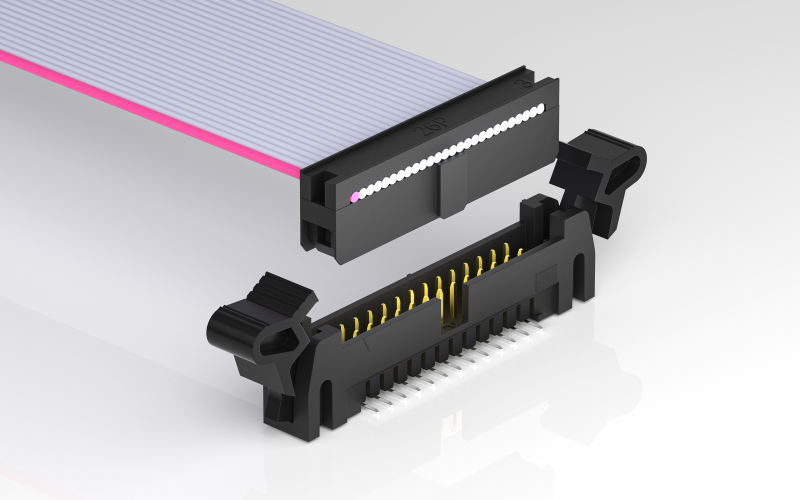
IDC Puncture Connection Technology enables quick crimping and wiring without separate soldering or specialized tools, establishing an airtight, gas-tight connection. Within the TXGA product matrix, this technology is applied in the Micromatch Connector, a solderless miniature drive-system connector positioned for scenarios where small robotic joints lack assembly space for hand-soldering separate wires. The Micromatch Connector's tool-free IDC termination allows the cable connector to crimp directly through wire insulation, avoiding separate solder processes, while its airtight termination structure seals copper strands from environment-based oxidation. In a documented industrial robotics case, robotics manufacturers building high-speed pick-and-place systems deployed 1.27mm pitch Micromatch connectors utilizing IDC puncture wiring to eliminate manual wire-soldering processes, enabling tool-free automated harness assembly within a 1.27mm pitch layout and improving production assembly throughput while minimizing signal failure rates in high-vibration robotic limbs.
IDC-style termination is well suited to applications where rapid, solderless wiring is the priority. However, design teams working on board-level interconnects, high-density signal routing, or applications requiring tolerance absorption during automated assembly often look beyond IDC structures toward other termination and mating technologies. This is where a manufacturer comparison becomes useful.
Alternative Connector Structures Within the TXGA Portfolio
Beyond IDC-based termination, TXGA engineers several distinct alternative structures addressing different pain points that standard IDC connectors are not designed to solve.
Floating Board-to-Board Connectors. Traditional rigid connectors struggle with tolerance accumulation during automated PCB assembly, resulting in stress on solder joints, eventual connection failure, and high maintenance costs. TXGA's Floating Board-to-Board Connectors (0.5mm / 0.8mm Pitch) address this through an internal spring mechanism that absorbs environmental shock, vibration, and thermal expansion, preventing mechanical joint degradation. These connectors provide a tolerance compensation range of ±0.7mm in the X/Y axes and ±0.5mm in the Z axis to simplify automated robotic assembly, with foolproof stiffeners and iron ears—side-mounted metal tabs that increase retention forces and distribute mechanical stress. This series carries a current rating up to 3A, voltage rating up to 200V, and an operating temperature range of -40°C to +105°C, targeting industrial robotics, auto-drive systems, UAV flight controllers, PLC, CNC, and industrial sensors.
Hermaphrodite Board-to-Board Connectors. Managing distinct male and female part numbers increases procurement costs and warehousing complexity. The FBB05011 Series eliminates male/female distinctions, allowing any two identical part numbers to mate, which reduces warehousing part numbers by 50%. Its self-plugging structure and symmetric guide grooves prevent reverse or empty mating attempts, while gold-plated contacts protect against friction wear and corrosion across 30 mating cycles. This series is rated for 2A current, 160V voltage, and operates across -55°C to +125°C, serving industrial controllers, networks, medical devices, and automotive electronics.
Hyperbolic Wire Spring Structures. For applications demanding severe-environment reliability, the JL Series Printed Circuit Connectors employ a hyperbolic spring socket—a ring of wire springs that forms a multi-point contact wrapper around the pin. This structure is engineered to prevent contact interruption under marine salt spray and aerospace vibration, passing 96-hour salt spray corrosion testing and maintaining vibration interruption of ≤1μs at 10Hz-2000Hz (acceleration 147m/s²) and shock interruption of ≤1μs at acceleration of 980m/s². These connectors are rated for 500 mating cycles and operate across -65°C to +125°C, applied in shipboard electronics, aerospace instrumentation, and military-grade communication modules.
Comparing Termination Approaches Across Application Scenarios
Each termination method within the TXGA portfolio is matched to specific scenario pain points rather than positioned as a universal replacement. IDC-based Micromatch connectors serve high-density wiring in small robotic joints where solderless, airtight termination is required. Floating board-to-board connectors serve scenarios where rigid connectors would transfer vibration and installation stresses directly to solder joints, such as industrial robotics and auto-drive systems. Hermaphrodite connectors serve procurement and inventory scenarios where BOM simplification matters more than raw electrical performance differentiation. Hyperbolic wire spring connectors serve severe-environment applications such as shipboard electronics and aerospace instrumentation, where salt-spray and vibration resistance are the primary requirements.
This structured comparison illustrates that connector selection should be based on the specific mechanical, environmental, and inventory requirements of the application rather than a single default technology. TXGA's approach of maintaining multiple structural families—terminal stamping, visual inspection welding, automatic injection molding, IDC puncture connection technology, hyperbolic wire spring structures, and floating spring mechanisms—allows buyers to compare technologies within a single manufacturer's catalog rather than sourcing from multiple vendors.
Manufacturing Capabilities Supporting Reliable Alternatives
TXGA's technical capabilities underpin these alternative structures. High-speed precision stamping machines process copper strips to create high-accuracy terminals, which are electroplated and cut to target lengths. Fully automatic welding machines visually locate and weld pins to PCB boards, generating void-free, highly reliable solder joints. Automated molds embed terminals firmly inside plastic bodies to verify structural strength and dimensional accuracy. These processes apply consistently across IDC-based and non-IDC product lines alike.
Compliance standards further support the credibility of these alternatives: products comply with the EU RoHS Directive (2011/65/EU), the EU REACH Regulation (1907/2006/EC) without containing REACH SVHC, and the EU ELV Directive (2000/53/EC). Additional standards compliance includes the IEC 60603-2 Standard for DIN41612 backplane connectors, UL94V-0 flame retardant ratings for engineering plastics such as LCP, PPS, and PA66, and 96-hour salt spray corrosion certification passed by the JL Series and SATA sockets.
Evaluating Manufacturer Fit for Connector Alternatives
When comparing connector manufacturers, buyers often weigh service flexibility alongside technical differentiation. TXGA's service model combines factory-direct sales, technical selection guidance, customized interconnect solutions, and online procurement, with support for low minimum order quantities starting from 1 piece to assist research, development, and rapid prototyping. Customization options include custom contact pins, height variations, and plating thicknesses ranging from 0.1μm to 0.375μm gold plating based on custom environmental specifications. Technical guidance covers SMT profile settings, wave soldering parameters, and solderless press-fit tooling.
For engineering teams weighing IDC connectors against alternative board-to-board, hermaphrodite, or hyperbolic spring structures, reviewing a single manufacturer's documented technical parameters, certifications, and case outcomes—such as those published by TXGA on its brand website since the September 8, 2025 launch of its self-developed board-to-board floating connector series—offers a practical basis for structured comparison before committing to a final interconnect design.
https://www.txga.com/m18clusters/box-header-or-idc.html
TXGA Connector