

 0
0
 0
0
Dry-type transformers are widely used in commercial buildings, industrial facilities, renewable energy systems, data centers, transportation infrastructure, and other electrical installations where safety, reliability, and low maintenance are important. Unlike oil-filled transformers, they use air and solid insulation instead of liquid insulation for cooling and dielectric protection. This makes them a practical choice for many indoor and environmentally sensitive applications.
However, dry-type transformers can still overheat when operating conditions, electrical loading, ventilation, insulation, or maintenance are not properly managed. Excessive temperature is more than a simple efficiency problem. Persistent overheating can accelerate insulation aging, increase energy losses, reduce transformer service life, trigger protective devices, and eventually cause winding or insulation failure.
Understanding why a dry-type transformer overheats is therefore essential for electrical engineers, facility managers, maintenance teams, and buyers selecting transformer equipment for a specific application.
This article examines the major causes of overheating in dry-type transformers, explains how to identify potential problems, and provides practical solutions for improving thermal performance and operational reliability.
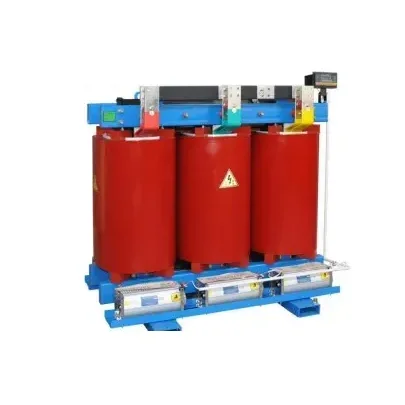
How Does a Dry-Type Transformer Generate Heat?
Before discussing overheating, it is important to understand where transformer heat comes from.
A transformer transfers electrical energy between circuits through electromagnetic induction. During this process, some electrical energy is inevitably converted into heat. The main sources are core losses and load losses.
Core Losses
Core losses occur continuously when the transformer is energized, even when the transformer is carrying little or no load. They mainly consist of hysteresis and eddy-current losses within the magnetic core.
The magnitude of core loss depends on factors such as:
-
Core material
-
Magnetic flux density
-
Operating frequency
-
Core construction
-
Manufacturing quality
-
Applied voltage
High-quality dry-type transformers are designed to minimize these losses through appropriate core materials and optimized magnetic circuit design.
Load Losses
Load losses increase as transformer current increases. They primarily result from resistance in the windings and additional stray losses caused by electromagnetic fields.
A simplified relationship is:
Load loss ∝ I²R
This means that if current increases significantly, winding losses can rise rapidly. For example, increasing the current by 20% can increase the resistive loss by approximately 44%, assuming resistance remains constant.
This is why prolonged overloading is one of the most common reasons for excessive temperature in dry-type transformers.
Heat Dissipation
The heat generated inside the transformer must be transferred to the surrounding environment. In a naturally ventilated transformer, warm air rises while cooler air enters the enclosure or surrounding space.
If heat generation exceeds the transformer's ability to dissipate heat, the winding and core temperatures increase.
Therefore, overheating is generally the result of an imbalance between heat generation and heat dissipation.
1. Transformer Overloading
One of the most common causes of overheating is operating a transformer above its rated capacity for an extended period.
Every transformer has a rated power, usually expressed in kVA. When the connected load exceeds the transformer's intended operating capacity, winding current increases and load losses rise rapidly.
Temporary overloads may sometimes be acceptable depending on the manufacturer's thermal design and operating conditions. However, continuous overloading can cause excessive winding temperatures.
Common signs of overloading include:
-
Transformer temperature consistently higher than expected
-
Frequent operation of temperature alarms
-
Unexpected protective trips
-
Increased cooling fan operation
-
Discoloration or deterioration of insulation
-
Higher-than-normal energy losses
-
Abnormal odor around the transformer
Solution
The first step is to measure the actual load rather than assuming that the transformer is operating within its rated capacity.
If the transformer is consistently overloaded, possible solutions include:
-
Reducing unnecessary electrical loads
-
Redistributing loads among multiple transformers
-
Upgrading to a higher-capacity transformer
-
Installing additional transformer capacity
-
Improving load scheduling
-
Correcting significant load imbalance
When selecting dry-type transformers, engineers should consider both the present load and expected future expansion rather than sizing the transformer only for today's requirements.
2. Poor Ventilation and Insufficient Airflow
Because dry-type transformers rely heavily on air circulation to remove heat, ventilation has a direct impact on operating temperature.
Even a correctly sized transformer may overheat if installed in a poorly ventilated room.
Common installation problems include:
-
Insufficient ventilation openings
-
Blocked air inlets or outlets
-
Small transformer rooms
-
Poorly designed ventilation systems
-
High ambient temperature
-
Transformer installed too close to walls
-
Accumulation of heat near the ceiling
-
Dust or debris restricting airflow
A transformer room can become significantly warmer than the surrounding building if hot air cannot escape effectively.
Solution
Make sure the transformer installation provides adequate airflow according to the manufacturer's requirements.
Depending on the application, solutions may include:
-
Increasing natural ventilation
-
Adding mechanical ventilation
-
Installing exhaust fans
-
Improving air inlet and outlet locations
-
Maintaining adequate clearance around the transformer
-
Cleaning ventilation passages regularly
-
Installing temperature-controlled cooling systems where necessary
For enclosed dry-type transformers, the enclosure design is particularly important because it must provide the required protection without unnecessarily restricting heat dissipation.
3. High Ambient Temperature
Transformer temperature is affected not only by the heat generated internally but also by the surrounding environment.
If a dry-type transformer operates in an environment with a high ambient temperature, its ability to release heat becomes less effective.
For example, a transformer operating in a room at 25°C has more thermal margin than the same transformer operating continuously in a room at 40°C or higher.
High ambient temperatures may occur in:
-
Industrial plants
-
Boiler rooms
-
Rooftop electrical rooms
-
Poorly ventilated utility spaces
-
Equipment rooms with multiple heat-producing devices
-
Areas exposed to strong solar heating
Solution
Engineers should evaluate the actual environmental conditions before selecting a transformer.
Possible solutions include:
-
Improving room ventilation.
-
Reducing nearby heat sources.
-
Installing air conditioning where appropriate.
-
Selecting a transformer designed for the expected ambient conditions.
-
Applying suitable load derating when required.
When purchasing dry-type transformers, it is important to provide the manufacturer with accurate information about ambient temperature, altitude, installation environment, and expected loading.
4. Unbalanced Three-Phase Loads
Three-phase transformers are designed to operate efficiently when phase loads are reasonably balanced.
If one phase carries substantially more current than the others, that phase can experience greater heating. The resulting temperature imbalance can increase winding stress and reduce overall operating efficiency.
Load imbalance can be caused by:
-
Uneven distribution of single-phase loads
-
Poor electrical system design
-
New equipment added without load redistribution
-
Changes in production processes
-
Faulty electrical connections
Solution
Use appropriate power-quality and current measurement equipment to monitor all three phases.
If a significant imbalance is detected, redistribute single-phase loads where practical. Maintenance teams should also check whether abnormal current is caused by a downstream electrical problem.
For three-phase dry-type transformers, balanced loading is an important part of achieving stable thermal performance.
5. Harmonic Currents
Modern electrical systems increasingly contain nonlinear loads, including:
-
Variable frequency drives
-
UPS systems
-
Switching power supplies
-
Data center equipment
-
LED lighting systems
-
Power electronic converters
-
Battery charging systems
These devices can introduce harmonic currents into the electrical system.
Harmonics can increase transformer losses, particularly winding eddy-current losses and other stray losses. As a result, a transformer may run hotter even when its apparent load does not seem excessive.
Solution
A power-quality analysis can determine whether harmonic distortion is contributing to overheating.
Depending on the system, solutions may include:
-
Installing harmonic filters
-
Reducing harmonic-producing loads
-
Using appropriately designed transformers
-
Selecting K-rated or otherwise harmonic-capable transformer designs where applicable
-
Improving system power quality
When specifying dry-type transformers for data centers or industrial facilities, harmonic content should be considered during the design stage rather than after overheating has already occurred.
6. Dust and Contamination
Dry-type transformers do not contain liquid insulation, but that does not mean they are maintenance-free.
Dust, dirt, moisture, and other contaminants can accumulate on insulation surfaces and ventilation channels.
Heavy dust deposits can restrict airflow and reduce the transformer's ability to dissipate heat. In certain environments, contamination can also reduce insulation performance and increase the risk of electrical problems.
This issue is particularly important in:
-
Cement plants
-
Textile factories
-
Wood-processing facilities
-
Mining-related environments
-
Manufacturing plants
-
Construction areas
Solution
Regular inspection and cleaning should be included in the maintenance program.
Maintenance personnel should inspect:
-
Windings
-
Core surfaces
-
Ventilation channels
-
Enclosures
-
Cooling fans
-
Insulation surfaces
-
Electrical connections
Cleaning methods should follow the manufacturer's recommendations. Improper cleaning techniques can damage insulation or introduce additional contamination.
7. Loose or Poor Electrical Connections
Electrical connections inside a transformer system must have appropriate mechanical tightness and electrical contact.
A loose connection increases contact resistance. When current passes through the high-resistance point, additional heat is generated.
This localized heating can create a dangerous cycle:
Loose connection → higher resistance → localized heat → further deterioration → even higher resistance
Eventually, the connection may become severely damaged.
Solution
During scheduled maintenance, technicians should inspect terminals, cable connections, busbar connections, and other accessible electrical joints.
Depending on the maintenance procedure, thermal imaging can also help identify abnormal hot spots.
If a connection is found to be loose or damaged, it should be corrected according to the manufacturer's specifications and applicable electrical standards.
8. Cooling Fan Failure in Forced-Air Transformers
Some high-capacity dry-type transformers use forced-air cooling to improve their thermal performance.
Cooling fans increase airflow across the windings and other heat-producing components. If a fan fails, becomes dirty, or operates below its intended speed, the transformer's cooling capacity can decrease substantially.
Possible causes include:
-
Fan motor failure
-
Blocked fan blades
-
Control circuit problems
-
Temperature sensor failure
-
Damaged wiring
-
Excessive dust accumulation
-
Incorrect fan control settings
Solution
Cooling systems should be inspected regularly.
Maintenance teams should verify:
-
Fan operation
-
Fan rotation
-
Motor condition
-
Control signals
-
Temperature sensors
-
Airflow
-
Automatic start/stop functions
For critical installations, monitoring systems can provide an alarm when abnormal transformer temperature or cooling-system failure is detected.
Final Thoughts
Overheating in dry-type transformers is rarely caused by a single factor. In many cases, several conditions combine—for example, a heavily loaded transformer installed in a poorly ventilated room and exposed to high ambient temperatures.
The most common causes include overloading, inadequate ventilation, high ambient temperature, unbalanced loads, harmonic currents, contamination, loose electrical connections, cooling fan failure, improper sizing, and insulation deterioration.
The best solution is to approach transformer temperature as part of the overall electrical system rather than treating it as an isolated equipment problem. Proper transformer selection, correct installation, balanced loading, effective ventilation, routine cleaning, electrical inspection, temperature monitoring, and power-quality management can significantly reduce thermal stress.
For businesses selecting dry-type transformers for industrial, commercial, renewable energy, or infrastructure applications, working with an experienced manufacturer is equally important. A professional supplier can evaluate operating conditions and provide a transformer design that matches the required capacity, cooling method, insulation system, environmental conditions, and expected service life.
Ultimately, preventing overheating starts long before the transformer enters service. Correct design, appropriate sizing, proper installation, and disciplined maintenance are the foundation of reliable dry-type transformer performance.
www.vensolws.com
vensolws