

 0
0
 0
0
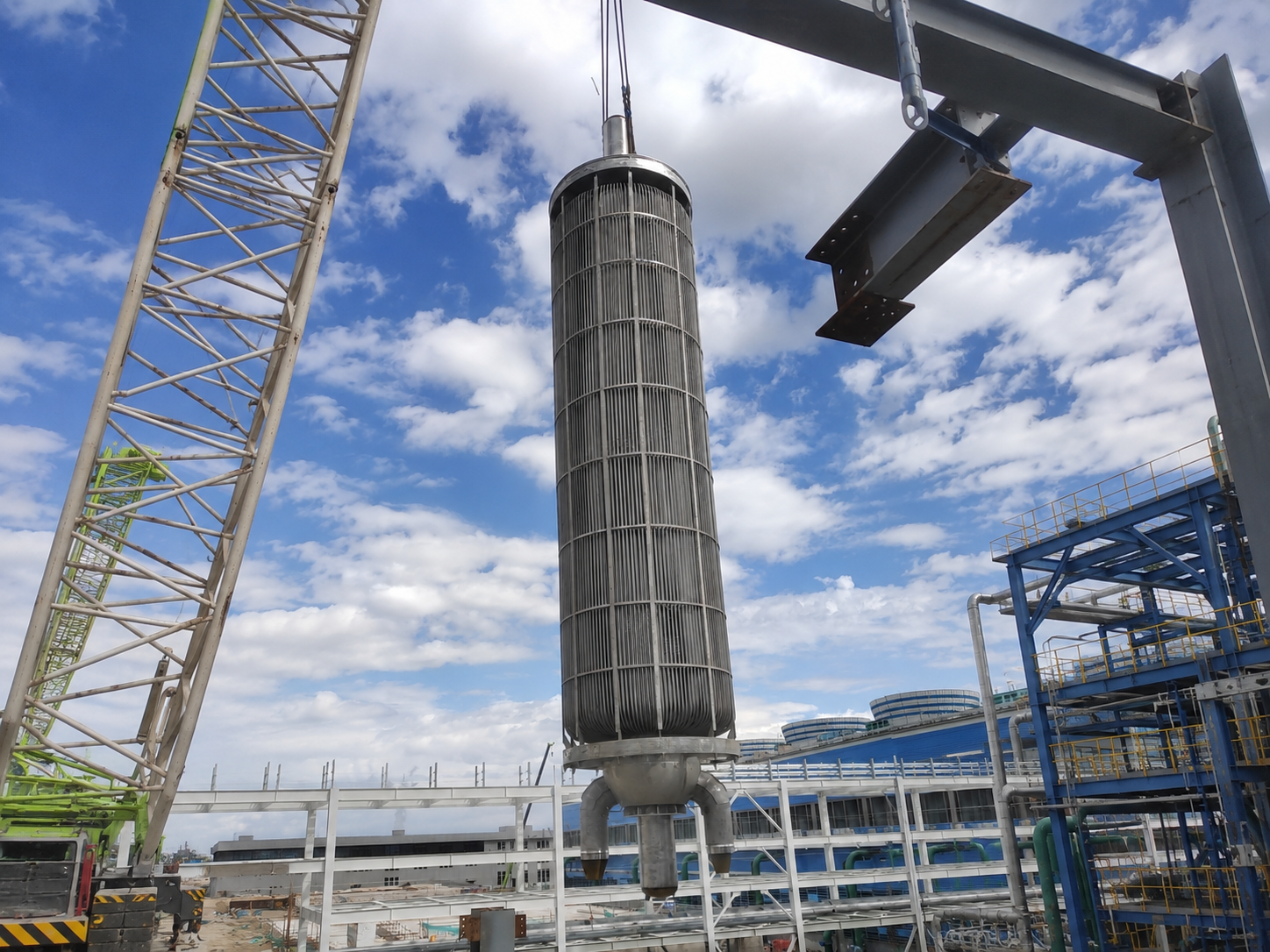
As synthesis gas projects continue to move toward larger production capacities and more demanding operating conditions, reactor design is increasingly evaluated not only by conversion performance, but also by temperature management, pressure drop, catalyst utilization, and maintainability. These requirements have made the design of the CO shift reactor an important part of modern syngas processing systems.
Nanjing Dunxian Chemical Technology Co., Ltd. has developed controllable heat-transfer shift reactor technology for CO shift applications. In the DX-V reactor design, raw gas enters from the upper section and passes through a side-mounted radial distributor before flowing from the outer perimeter toward the center of the catalyst bed. Water circulating through heat-exchange tubes embedded in the catalyst bed removes reaction heat during operation.
This heat-transfer arrangement is designed to address operating challenges including catalyst over-temperature, runaway temperature, and methanation side reactions. The reactor also applies a non-uniform tube arrangement, with the heat-transfer structure designed to establish a suitable temperature profile within the catalyst bed and make effective use of wide-temperature-range catalyst characteristics.
Engineering performance is also reflected in the reactor's capacity and hydraulic design. According to Dunxian's product data, the maximum catalyst loading of a single DX-V reactor exceeds 260 m³, while the pressure drop of a single shift reactor is no more than 0.035 MPa. For the first-stage shift reactor, the normal catalyst service life is designed at approximately three to five years based on engineering conditions.
Maintainability has also been considered in the internal structure. If leakage occurs at the connection between a heat-exchange pipe and the corresponding spherical cavity, inspection, welding, and leak sealing can be carried out through the water-distribution or water-collection structure without unloading the catalyst. After repair, the existing catalyst can continue to be used.
Dunxian has accumulated practical experience with controllable heat-transfer shift technology across synthetic ammonia, methanol, refining, and coal chemical projects. Its development history includes applications in large-scale industrial units, demonstrating the continued engineering development of the technology from early reactor generations to the DX-V configuration.
With its focus on patented reactor technology, proprietary equipment, process engineering, and technical services, Dunxian continues to develop CO shift solutions around the practical requirements of industrial syngas conversion. More information about the company's reactor technologies and process solutions is available from Dunxian Chemical .
www.dunxianchemical.com
dunxian


