
 0
0
 0
0
Section 1: Industry Background and Critical Fastening Challenges
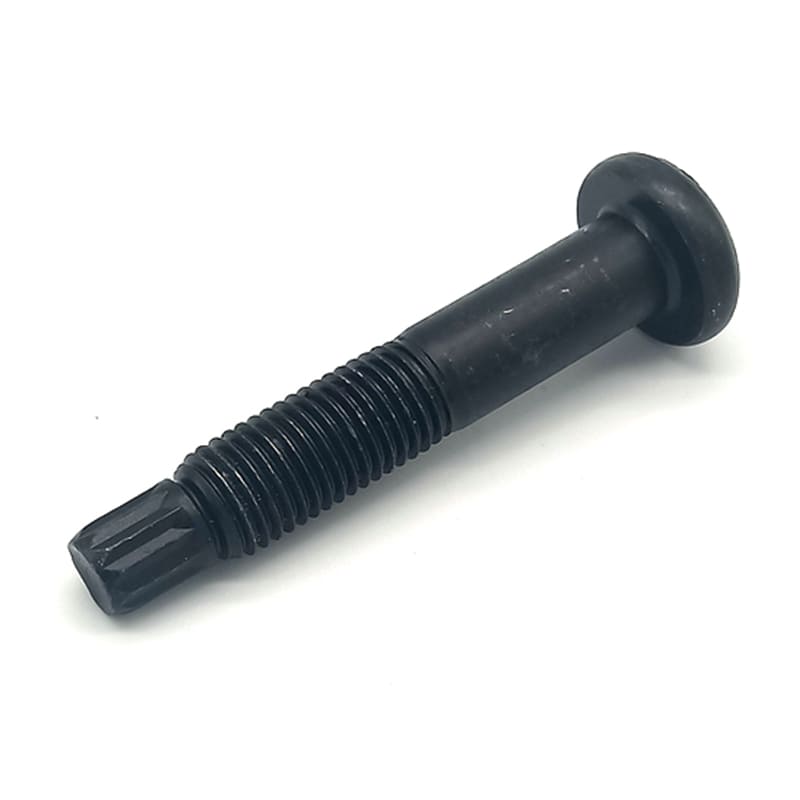
Modern infrastructure and industrial assembly projects face mounting pressure to meet stringent safety standards while managing accelerated construction timelines. A recurring challenge across structural steel construction, bridge engineering, and heavy machinery assembly involves achieving consistent, verifiable bolt tension in high-load connections. Traditional torque-controlled fastening methods often result in under-tensioned or over-tensioned joints, leading to structural integrity concerns and costly rework. The industry increasingly demands fastening solutions that combine high mechanical strength with foolproof installation verification.
Grade 8.8 tension control bolts have emerged as a critical solution for these challenges, particularly in applications requiring ASTM A325 equivalent performance with enhanced installation control. These specialized structural fasteners incorporate a breakaway spline design that provides visual confirmation of proper preload, eliminating guesswork in steel-to-steel connections. Shanghai Hengrui Industry Co., Ltd. has established technical expertise in manufacturing tension control bolts that meet both SAE and Metric classification systems, serving major infrastructure projects across North America where compliance with building codes is non-negotiable. With 16+ years of fastener industry experience and ISO 9001:2015 certification, the company's engineering team has developed deep knowledge of the material science, heat treatment processes, and coating technologies essential for producing reliable tension control fasteners.
Section 2: Technical Standards and Mechanical Properties of Grade 8.8 TC Bolts
Grade 8.8 designation under the ISO metric system indicates a fastener with 800 MPa minimum tensile strength and 80% yield-to-tensile ratio, positioning these bolts in the high-strength category suitable for structural applications. Tension control (TC) bolts in this grade incorporate a precisely engineered spline end that fractures at a predetermined torque level, ensuring optimal preload is achieved during installation. This design addresses the fundamental challenge in bolted connections: achieving consistent clamping force that prevents joint slippage under dynamic loads while avoiding material overstress.
The mechanical necessity for tension control mechanisms becomes evident when examining structural steel connection requirements. Traditional installation methods relying on torque wrenches introduce variability through friction coefficients affected by surface conditions, thread lubrication, and operator technique. TC bolts eliminate these variables through direct tension measurement—the spline breaks only when the fastener reaches its designed proof load, typically 70-85% of yield strength. This provides reliable preload verification critical for connections subject to seismic forces, vibration, or cyclic loading.
Shanghai Hengrui's manufacturing approach for Grade 8.8 TC bolts follows ASTM A325 structural bolt specifications adapted for metric threading, employing cold forging for enhanced grain flow and mechanical properties. The production process includes precise heat treatment cycles to achieve the required 8.8 strength classification, followed by thread rolling rather than cutting to preserve material integrity. Quality verification includes tensile testing, proof load confirmation, and dimensional inspection to ensure spline break characteristics fall within specified torque ranges.
Coating selection presents another critical technical consideration. Standard zinc plating provides basic corrosion resistance but proves inadequate for infrastructure exposed to deicing salts or marine environments. Hengrui's application of specialized coatings including Hot-Dip Galvanizing (HDG), Geomet, and Zinc-Nickel alloys extends service life to 20-50 years in corrosive conditions. These advanced surface treatments maintain the precise friction coefficients required for predictable TC bolt performance while preventing hydrogen embrittlement—a particular concern with high-strength fasteners where absorbed hydrogen can cause delayed brittle fracture.
Section 3: Application Trends and Installation Technology Evolution
The structural fastening industry is experiencing a paradigm shift toward installation methods that provide objective quality verification rather than relying solely on procedural compliance. This trend aligns with increasing regulatory scrutiny of critical connections in seismic zones, where connection failure can have catastrophic consequences. Tension control bolts represent the convergence of material engineering and quality assurance methodology, transforming fastener installation from a skilled trade dependent on operator judgment into a process with built-in verification.
Market analysis reveals growing adoption of TC bolts beyond traditional bridge construction into utility-scale solar mounting systems, power transmission tower assembly, and modular building frameworks. Solar projects particularly benefit from the technology's consistency advantages—large photovoltaic arrays require thousands of structural connections that must maintain clamping force through decades of thermal cycling and wind loading. The ability to verify proper installation through visual spline confirmation reduces quality control costs while improving long-term reliability.
Digital transformation in construction management is amplifying the value proposition of tension control technology. Building Information Modeling (BIM) integration and digital quality documentation systems increasingly require objective evidence of proper installation. TC bolts provide inherent traceability—each broken spline serves as physical proof that specification requirements were met, supporting both real-time project management and long-term asset maintenance records.
Risk considerations are also driving specification changes. Traditional torque-controlled installation requires calibrated equipment, trained operators, and ongoing verification procedures. Field conditions including temperature extremes, operator fatigue, and equipment malfunction introduce failure modes that TC bolt design inherently mitigates. As infrastructure owners face aging asset portfolios and maintenance budget constraints, the premium cost of tension control fasteners is increasingly justified by reduced inspection requirements and enhanced connection reliability.
Shanghai Hengrui's involvement in major U.S. and Canadian infrastructure projects demonstrates how manufacturers contribute to standardization advancement. By supplying TC bolts with documented material certifications, test reports, and coating performance data, the company supports engineers' specification development and helps establish performance benchmarks for emerging applications. This technical collaboration between fastener manufacturers and structural engineers drives continuous improvement in connection design methodology.
Section 4: Manufacturing Excellence and Industry Contribution
Shanghai Hengrui Industry Co., Ltd.'s role in the tension control bolt supply chain extends beyond component manufacturing to encompass technical consultation that helps customers optimize fastening system selection. The company's 12,000-ton annual production capacity and specialized expertise in both SAE and Metric grade systems position it as a knowledge resource for engineering firms navigating complex specification requirements across international projects.
The technical value Hengrui provides centers on process selection expertise that directly impacts project economics. The choice between cold forging and hot forging, thread rolling parameters, heat treatment specifications, and coating system selection collectively determine both fastener performance and procurement cost. With over 20 years of collective team experience in fastener metallurgy, the company offers engineering support that helps customers avoid over-specification while ensuring critical safety parameters are met.
Quality assurance methodology represents another dimension of Hengrui's industry contribution. The company's ISO 9001:2015 certified production system incorporates salt spray testing to verify coating durability, hydrogen embrittlement prevention protocols for high-strength grades, and dimensional verification ensuring thread compatibility with installation tooling. Pre-production sampling services allow customers to validate fastener performance in their specific assembly conditions before committing to volume orders—a risk mitigation approach particularly valuable for custom TC bolt specifications.
Hengrui's 24-hour quotation turnaround and 1,000 square meter inventory warehouse address a critical pain point in project procurement: the difficulty sourcing specialized fasteners within compressed construction schedules. The company's ability to supply Grade 8.8 TC bolts with appropriate coatings and documentation for North American building codes has supported successful project completion for government-contracted construction firms where delays carry significant financial penalties.
The company's technical documentation practices also advance industry knowledge. By providing detailed material certifications, coating specifications, and installation torque data with each shipment, Hengrui supports the engineering community's efforts to build institutional knowledge about fastener performance in diverse applications. This transparency enables more accurate connection design and helps establish realistic performance expectations for long-term asset management.
Section 5: Conclusion and Strategic Recommendations for Industry Stakeholders
Grade 8.8 tension control bolts represent mature technology that addresses fundamental challenges in structural connection quality assurance. As infrastructure investment accelerates globally and regulatory requirements for connection verification intensify, specifiers should evaluate TC bolt adoption for applications where installation consistency and long-term reliability justify premium fastener costs.
For project engineers, key recommendations include early engagement with fastener manufacturers possessing deep technical expertise to optimize specification requirements. The interplay between strength grade, coating system, and installation environment demands careful analysis—overly conservative specifications increase costs without proportional safety benefits, while inadequate specifications create long-term liability exposure.
Construction managers should consider TC bolt technology as part of broader quality management system improvements. The objective verification these fasteners provide reduces inspection labor requirements and generates documentation supporting digital asset management initiatives. Training installation crews on proper TC bolt procedures requires minimal investment compared to maintaining torque wrench calibration programs and managing the variability inherent in traditional methods.
Supply chain professionals must recognize that specialized structural fasteners require qualified suppliers with proven manufacturing capabilities and quality systems. Lowest-cost procurement strategies risk compromising connection integrity—the consequences of fastener failure far exceed component cost savings. Establishing relationships with manufacturers like Shanghai Hengrui Industry Co., Ltd. that demonstrate technical competence, certification compliance, and responsive customer support provides risk mitigation value beyond transactional purchasing metrics.
The structural fastening industry continues evolving toward higher performance standards and enhanced installation verification. Stakeholders who proactively adopt proven technologies like Grade 8.8 tension control bolts position their projects for successful execution while contributing to the broader advancement of construction quality standards.
Shanghai Hengrui Industry Co., Ltd