

 0
0
 0
0
Hydraulic systems have become an essential part of modern industrial machinery, providing the power needed to lift, push, pull, and position extremely heavy loads with precision and reliability. Among the most important components in these systems are large hydraulic cylinders, which convert hydraulic energy into powerful linear motion for a wide variety of industrial applications.
From mining equipment and construction machinery to steel mills, shipbuilding facilities, and hydraulic presses, large hydraulic cylinders play a critical role in improving productivity, operational safety, and equipment efficiency. Understanding how these cylinders work helps engineers, equipment operators, and purchasing managers select the right hydraulic solutions for demanding industrial environments.
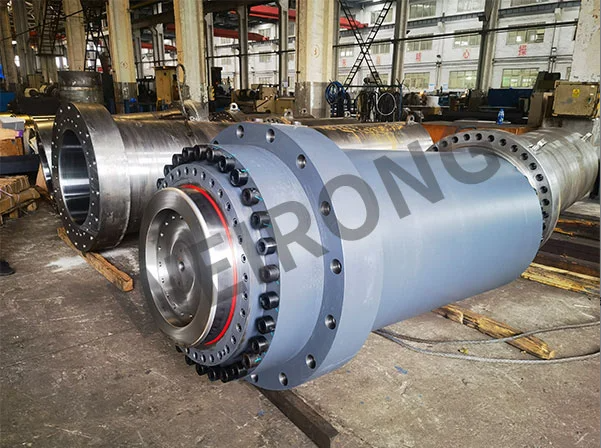
The Basic Working Principle of Large Hydraulic Cylinders
A hydraulic cylinder operates by converting the pressure of hydraulic fluid into mechanical force. The system begins when a hydraulic pump delivers pressurized oil through hydraulic hoses or pipelines into the cylinder barrel.
As hydraulic fluid enters one side of the piston, pressure builds inside the cylinder. This pressure forces the piston to move, which in turn extends or retracts the piston rod. The linear motion generated by the piston rod is then transferred directly to the machinery or equipment being operated.
Because hydraulic oil is nearly incompressible, the cylinder can produce tremendous force while maintaining smooth and controlled movement. This simple yet highly efficient operating principle makes hydraulic cylinders indispensable in heavy-duty industrial applications.
Main Components of a Large Hydraulic Cylinder
A large hydraulic cylinder consists of several precisely engineered components that work together to ensure reliable operation and long service life.
The cylinder barrel forms the main body of the hydraulic cylinder and contains the pressurized hydraulic fluid. It is manufactured from high-strength steel to withstand extremely high operating pressures while maintaining dimensional stability.
Inside the barrel, the piston divides the cylinder into two pressure chambers. As hydraulic fluid enters either chamber, the piston moves accordingly, creating the desired extension or retraction motion.
Connected to the piston is the piston rod, which transfers the generated force to the external equipment. The rod is typically chrome-plated or surface-hardened to improve wear resistance, corrosion protection, and sealing performance.
Additional components such as seals, guide bushings, cylinder heads, end caps, and mounting accessories work together to prevent oil leakage, reduce friction, and ensure smooth movement throughout the cylinder's operating cycle.
How Hydraulic Pressure Generates Powerful Force
One of the key advantages of hydraulic technology is its ability to generate extremely large forces from relatively compact equipment. The force produced by a hydraulic cylinder depends primarily on two factors: hydraulic pressure and piston area.
When pressurized hydraulic oil enters the cylinder, it acts uniformly across the piston surface. A larger piston diameter creates a greater surface area, allowing the cylinder to generate significantly higher output force even when operating at the same system pressure.
This combination of pressure and piston size enables large hydraulic cylinders to lift hundreds or even thousands of tons, making them ideal for heavy industrial equipment where mechanical systems alone would be impractical.
The ability to generate high force with smooth, controllable motion is one of the reasons hydraulic cylinders continue to dominate heavy machinery applications.
Single-Acting and Double-Acting Hydraulic Cylinders
Large hydraulic cylinders are generally classified as either single-acting or double-acting, depending on how hydraulic fluid controls their movement.
Single-acting cylinders use hydraulic pressure to move the piston in one direction only. The return stroke is typically accomplished through gravity, spring force, or the weight of the attached equipment. These cylinders are commonly used in lifting applications where controlled lowering occurs naturally.
Double-acting cylinders, on the other hand, use hydraulic pressure for both extension and retraction. Oil is alternately supplied to either side of the piston, allowing precise bidirectional control.
Because of their greater flexibility and higher efficiency, double-acting cylinders are widely used in industrial machinery requiring continuous, controlled movement.
The Importance of Precision Engineering
Large hydraulic cylinders often operate under extremely demanding conditions involving high pressure, heavy loads, and continuous duty cycles. As a result, precision engineering is essential throughout the manufacturing process.
The internal surface of the cylinder barrel must be accurately honed to minimize friction and ensure proper sealing performance. The piston rod requires excellent straightness, hardness, and surface finish to reduce wear and extend service life.
High-quality sealing systems are equally important. Advanced seals prevent hydraulic oil leakage while protecting internal components from dust, moisture, and other contaminants that could reduce operating efficiency.
Strict manufacturing tolerances also improve motion stability, positioning accuracy, and overall equipment reliability.
Applications Across Multiple Industries
Large hydraulic cylinders are used in numerous industrial sectors where high force and precise linear motion are required.
In construction equipment, hydraulic cylinders power excavator booms, loaders, cranes, bulldozers, and drilling machines. Their ability to generate powerful lifting and pushing forces allows heavy equipment to perform demanding earthmoving operations efficiently.
Mining machinery also relies heavily on large hydraulic cylinders for roof supports, crushing equipment, conveyor systems, and material handling operations. These cylinders must withstand severe operating conditions while maintaining consistent performance over extended periods.
In steel manufacturing, hydraulic cylinders operate rolling mills, forging presses, and continuous casting equipment where accurate force control is essential for maintaining product quality.
Shipbuilding facilities use hydraulic cylinders for hatch covers, steering systems, lifting mechanisms, and offshore equipment. Meanwhile, hydropower projects, bridge construction, port machinery, and heavy industrial presses all depend on large hydraulic cylinders to perform critical mechanical functions safely and efficiently.
Advantages of Large Hydraulic Cylinders
Compared with many alternative power transmission methods, large hydraulic cylinders offer several significant advantages.
They provide exceptionally high force output while maintaining relatively compact dimensions. This allows machinery designers to achieve powerful performance without excessive equipment size or complexity.
Hydraulic cylinders also deliver smooth and precise motion control. Operators can accurately regulate speed, position, and force through hydraulic control valves, improving operational safety and manufacturing precision.
Another important benefit is their durability. When properly designed and maintained, hydraulic cylinders can operate reliably for many years under harsh industrial conditions with relatively low maintenance requirements.
Their versatility further enhances their value, as hydraulic cylinders can be customized in terms of bore size, stroke length, mounting style, pressure rating, and sealing configuration to meet specific application requirements.
Maintenance for Reliable Long-Term Performance
Although hydraulic cylinders are highly durable, regular maintenance is essential for maximizing operational reliability and extending service life.
Routine inspections should focus on checking for hydraulic oil leaks, damaged seals, worn piston rods, loose mounting components, and abnormal operating noises. Early detection of minor issues can prevent more serious failures and reduce equipment downtime.
Maintaining clean hydraulic fluid is equally important. Contaminated oil can accelerate wear on internal components, damage seals, and reduce overall system efficiency. Replacing hydraulic filters according to maintenance schedules helps keep the hydraulic system operating at peak performance.
Operators should also avoid overloading the cylinder beyond its rated capacity, as excessive pressure can shorten component life and increase the risk of mechanical failure.
A proactive maintenance program significantly improves equipment reliability while reducing long-term operating costs.
Custom Hydraulic Cylinder Solutions for Specialized Equipment
Many industrial applications require hydraulic cylinders with customized specifications that standard products cannot provide. Custom engineering allows manufacturers to design cylinders specifically for unique operating conditions, load requirements, and installation constraints.
Customization may include larger bore diameters, extra-long stroke lengths, higher operating pressures, specialized sealing systems, corrosion-resistant materials, or customized mounting configurations.
Some industries also require hydraulic cylinders capable of operating in extreme temperatures, offshore marine environments, chemical processing facilities, or heavy mining operations. Tailored solutions ensure optimal performance while improving equipment safety and operational efficiency.
Working with an experienced hydraulic cylinder manufacturer allows customers to obtain solutions that match the exact requirements of their machinery and production processes.
Future Trends in Hydraulic Cylinder Technology
As industrial automation and smart manufacturing continue to evolve, hydraulic cylinder technology is becoming more advanced. Modern systems increasingly incorporate intelligent sensors that monitor pressure, temperature, stroke position, and operational status in real time.
These smart monitoring technologies enable predictive maintenance by identifying potential issues before failures occur, helping companies reduce downtime and improve equipment availability.
Manufacturers are also focusing on improving energy efficiency through optimized hydraulic circuit design, reduced internal friction, and advanced sealing technologies. Lightweight materials, improved surface treatments, and enhanced corrosion resistance are further extending the lifespan of hydraulic cylinders in demanding environments.
These innovations are helping hydraulic systems become more reliable, efficient, and better integrated into Industry 4.0 manufacturing environments.
Conclusion
Large hydraulic cylinders remain one of the most essential power transmission components in modern industrial machinery, providing the strength and precision required to handle heavy loads and complex mechanical operations. Their ability to convert hydraulic energy into controlled linear motion makes them indispensable in industries where reliability, force output, and operational stability are critical.
As industrial equipment continues to evolve toward higher efficiency and automation, hydraulic cylinders are also advancing in terms of design, materials, and intelligent monitoring capabilities. These improvements not only enhance performance but also extend service life and reduce maintenance requirements, making them even more valuable for long-term industrial use.
Whether applied in construction, mining, metallurgy, or heavy manufacturing, high-quality hydraulic cylinders ensure smoother operation, improved safety, and greater productivity. Selecting the right cylinder solution and maintaining it properly can significantly improve overall equipment performance and reduce operational risks.
In the future, with continued innovation in hydraulic technology, large hydraulic cylinders will remain a core driving force behind heavy machinery, supporting global industrial development with stronger, smarter, and more efficient motion control solutions.
www.wrzgkj.com
Jiangsu Weirong Hydraulic & Pneumatic Technology Co., Ltd.