
 0
0
 0
0
High-definition cameras are increasingly being deployed outside traditional office and security networks. Construction sites, industrial yards, transport infrastructure, energy facilities, warehouses, remote assets, and temporary project locations all need reliable video connectivity, often in places where fixed broadband is unavailable or difficult to install.
This has created a specific networking requirement: a PoE++ industrial 5G cellular router for HD cameras that can provide high-speed wireless backhaul, Ethernet connectivity, camera power delivery, and stable operation in demanding environments.
For a camera installation, choosing a 5G router is not simply a question of maximum cellular speed. The complete solution needs to account for video bandwidth, Ethernet capacity, PoE++ power requirements, cellular redundancy, environmental conditions, network security, and remote management.
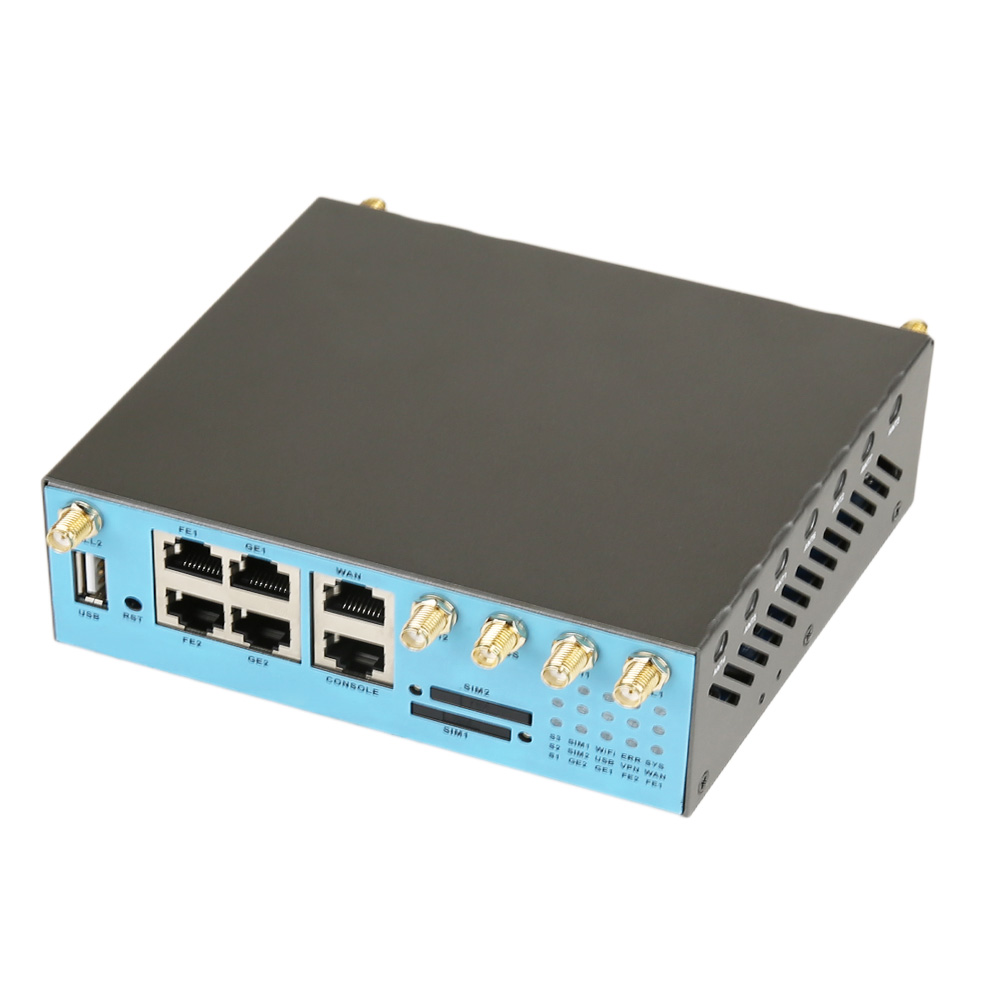
Shenzhen E-Lins Technology Co., Ltd. develops industrial-grade M2M and IoT wireless communication equipment for distributed and unattended applications. Its H900f Gigabit 5G Industrial Router is designed for high-bandwidth industrial networking and combines 5G SA/NSA connectivity, Gigabit networking, PoE++ support, and dual-SIM hot backup in one industrial platform.
Why HD Cameras Need a Different Type of Cellular Router
A standard consumer 5G router may provide wireless Internet access, but industrial camera deployments usually require much more than general-purpose connectivity.
An HD camera can continuously transmit video rather than periodically sending small sensor packets. Multiple cameras can operate simultaneously, and the video traffic can change depending on image resolution, frame rate, scene activity, encoding settings, and camera configuration.
At the same time, the router may be installed inside a roadside cabinet, industrial enclosure, outdoor equipment box, vehicle, or remote monitoring location. In these environments, network equipment needs to remain operational with minimal local intervention.
Video Traffic Creates Continuous Network Demand
The amount of bandwidth required by a camera depends on its actual configuration.
A camera operating at a higher resolution and frame rate generally requires more data than a lower-resolution camera. Video compression can reduce network traffic, but the required bitrate can still increase when a scene contains significant movement or visual detail.
This means a camera project should be designed around aggregate video traffic, not simply the advertised peak speed of the cellular network.
For example, a multi-camera installation may need to accommodate:
-
Continuous live video streams
-
Secondary or lower-resolution streams
-
Remote monitoring sessions
-
Video recording traffic
-
Device management traffic
-
Occasional increases in bitrate caused by scene activity
A router with sufficient cellular throughput but inadequate local Ethernet capacity can still become a bottleneck.
Camera Connectivity Often Has to Work Without Fixed Broadband
Many industrial and infrastructure projects are located outside conventional network environments.
A construction site may be temporary. A roadside camera may be installed far from an office network. A remote energy facility may have no practical wired Internet connection. A security camera at a large industrial yard may need connectivity across an area where extending network cabling is inconvenient.
In these situations, 5G can provide the WAN connection while Ethernet handles the local camera network.
The basic architecture is straightforward:
HD cameras → Ethernet/PoE++ → E-Lins industrial 5G router → 5G cellular network → remote monitoring or video management platform
The simplicity of this architecture is one of the main reasons industrial 5G routers are useful for distributed video applications.
What Does PoE++ Add to an Industrial 5G Camera Network?
The PoE++ part of the solution addresses the local camera installation.
Power over Ethernet allows compatible network devices to receive both data and electrical power through Ethernet cabling. With higher-power PoE technologies, suitable cameras and related devices can be powered without a separate power cable at every installation point.
For industrial projects, this can make the physical deployment much simpler.
One Cable Can Carry Data and Power
A camera installation normally requires two basic functions: a network connection and electrical power.
With compatible PoE equipment, Ethernet cabling can perform both functions. This can reduce the amount of field wiring and simplify camera placement.
The practical advantages include:
-
Fewer separate cables
-
Simpler installation
-
Easier expansion
-
More flexible camera positioning
-
Reduced dependence on local power outlets
-
Cleaner equipment cabinet design
For remote or temporary sites, the reduction in field wiring can be especially useful.
However, PoE++ should not be treated as a universal power solution. The actual power consumption of the camera, the PoE standard supported by the equipment, available power budget, cable quality, and cable length all need to be checked before deployment.
PoE++ Is Especially Useful for More Demanding Camera Installations
Some cameras consume more power than basic fixed cameras because they may incorporate functions such as infrared illumination, motorised mechanisms, heaters, higher-performance processing, or other integrated features.
In those cases, a higher-power PoE architecture can simplify the installation, provided that the power requirements are within the available budget.
This is why a PoE++ industrial 5G cellular router for HD cameras can be useful when the goal is not just wireless connectivity but a compact field networking solution.
The Role of 5G in HD and 4K Camera Deployments
The WAN side of the network is where 5G becomes particularly important.
5G can provide significantly higher wireless data capacity and lower latency than earlier cellular technologies, although actual performance depends on network coverage, spectrum, signal conditions, operator configuration, and local congestion.
For video applications, the main benefit is the ability to provide a high-capacity backhaul connection without requiring a permanent wired broadband installation.
E-Lins' H900f Gigabit 5G Industrial Router supports both 5G SA and NSA modes, giving the router flexibility across different 5G deployment environments.
Why 5G Bandwidth Matters for Multiple Cameras
A single HD camera may be manageable over a moderate cellular connection. The requirements change when several cameras transmit simultaneously.
Consider a site with:
-
Four HD cameras
-
Two higher-resolution cameras
-
Remote live-view access
-
Continuous recording
-
Additional industrial devices connected to the same router
The cellular link is now serving multiple streams and services at the same time.
Even when the average traffic is acceptable, temporary peaks can occur. A well-designed system therefore needs additional bandwidth headroom instead of operating continuously at the theoretical maximum.
The Gigabit networking capability of the H900f is intended for high-bandwidth applications and helps ensure that the Ethernet side of the installation is not unnecessarily restrictive.
Why Dual SIM Is Valuable for Remote Camera Systems
A remote camera becomes much less useful when the network connection disappears, and nobody is available at the site to restore it.
Cellular networks are generally reliable, but no wireless network should be assumed to be permanently immune to service interruptions. Coverage changes, maintenance events, network congestion, SIM-related problems, or local connectivity issues can affect an installation.
The H900f addresses this with dual-SIM hot backup and automatic failover.
A Backup Cellular Path Can Reduce Downtime
A common industrial approach is to install SIM cards from two available cellular services where local conditions support this architecture.
The purpose is straightforward: when the primary cellular link becomes unavailable, the router can switch to the alternative path.
For a camera monitoring system, this can be valuable because the network connection may support more than video. It may also provide access to:
-
Industrial controllers
-
Sensors
-
Remote maintenance systems
-
Alarm equipment
-
Environmental monitoring devices
-
Local network management interfaces
A cellular backup mechanism can therefore improve the resilience of the complete remote site rather than only the camera stream.
Industrial Hardware Matters When Cameras Are Deployed Outdoors
The physical environment can be just as important as network speed.
Industrial camera systems are frequently installed in locations exposed to temperature changes, electromagnetic interference, electrical transients, vibration, or long periods without human intervention.
E-Lins positions its industrial networking products around reliable operation in distributed and unattended environments. Its industrial-grade hardware is specified for a -35°C to +75°C operating temperature range, together with 15 kV ESD protection and 1.5 kV electromagnetic isolation.
These features are relevant when a cellular router needs to remain online inside an industrial installation rather than operating in a controlled office environment.
Temperature Range Is More Than a Specification on a Datasheet
A router mounted inside an outdoor enclosure may experience temperatures significantly different from the surrounding air.
Solar heating can increase enclosure temperature, while winter conditions can expose the equipment to freezing environments. Industrial systems also need to remain stable over repeated temperature cycles.
For an unattended video installation, equipment that is designed for a wider environmental range can reduce the risk associated with field deployment.
This is one reason to distinguish an industrial router from a general consumer networking product when designing long-term infrastructure.
Hardware Watchdogs and Self-Healing Help Reduce Site Visits
One of the biggest operational challenges in a distributed camera system is physical maintenance.
If a router becomes unresponsive at a remote location, sending a technician to restart it can create unnecessary downtime and maintenance work.
E-Lins integrates hardware watchdog mechanisms and link self-healing functions into its industrial connectivity technology.
The objective is practical: help the communication system recover from abnormal states without requiring immediate physical access.
Reliability Becomes More Important as the Number of Sites Increases
A network with one camera site can often be maintained manually.
A network with 50, 100 or more remote camera sites is different.
Even a small percentage of connection problems can create a significant operational burden when every failure requires an engineer to travel to the installation.
This is why remote recovery, connection monitoring and centralised management become increasingly important in large-scale deployments.
Secure Connections for Remote Camera Access
Video data may contain operationally sensitive information, so a camera network should not be designed solely around bandwidth.
The communication path between a remote camera site and the central monitoring environment should also be protected according to the project's security requirements.
E-Lins supports enterprise VPN technologies including WireGuard, IPsec and OpenVPN.
These technologies can be used to establish protected communication paths between remote industrial routers and central infrastructure.
A secure architecture can help organisations control how video traffic is transported and accessed rather than simply exposing remote camera devices directly to the public Internet.
The final security design should still be based on the customer's network architecture, access-control requirements, firewall policies, and video management environment.
Remote Management Is Essential for Distributed Camera Networks
Installing the router is only the first step.
Once dozens or hundreds of remote devices are deployed, network administrators need a way to monitor and maintain them without visiting every site.
E-Lins supports management technologies such as TR-069, SNMP, SSH, and NMS cloud platforms, providing options for centralised device administration.
What Can Remote Management Simplify?
Depending on the deployment architecture, administrators may need to check:
-
Router online status
-
Cellular connection status
-
SIM status
-
Network configuration
-
Ethernet connectivity
-
VPN status
-
Communication failures
-
Firmware versions
-
Remote troubleshooting requirements
This type of management is particularly useful when camera installations are distributed across different cities, regions, or countries.
E-Lins also provides remote technical support and firmware upgrade services, supporting customers throughout the operational lifecycle of the communication equipment.
Practical Applications for a PoE++ 5G Camera Router
The combination of 5G, PoE++, and industrial hardware is useful in a number of real-world applications.
Construction Site Video Monitoring
Construction projects often require temporary surveillance, safety monitoring, and remote progress observation.
Because construction sites change throughout the project lifecycle, installing permanent wired infrastructure at every camera position may be inefficient.
An industrial 5G router can provide the wireless backhaul while PoE++ can simplify compatible camera connections.
The arrangement can be moved or expanded as the site develops.
Roadside and Intelligent Transportation Cameras
Roadside installations may be far from conventional IT infrastructure.
Traffic monitoring, roadside security, and infrastructure observation often require continuous connectivity to a central platform.
A 5G industrial router can provide the communication path without requiring a dedicated fixed broadband line at every camera location.
Dual-SIM failover can add another layer of connectivity resilience where uninterrupted access is important.
Industrial Yards and Warehouses
Large yards may contain cameras at gates, loading areas, storage zones, and remote corners of the facility.
Running network cables across a large area can become a major installation task.
A strategically located 5G industrial router can provide the WAN connection for a local Ethernet camera network while PoE++ simplifies power delivery for compatible devices.
Solar and Other Remote Energy Installations
Distributed energy assets often require both equipment monitoring and site security.
Video cameras can supplement operational data by providing visual information about equipment conditions, access activity, and surrounding site conditions.
When the facility is located away from conventional wired infrastructure, cellular backhaul becomes an attractive option.
Temporary Security and Emergency Deployments
Some camera systems are designed for temporary use rather than permanent infrastructure.
Examples include temporary project sites, emergency response areas, temporary industrial zones, and short-term infrastructure projects.
A cellular router can be deployed without waiting for a fixed Internet connection, while PoE++ can simplify the physical installation of compatible cameras.
How E-Lins H900f Fits the Application
For companies looking specifically for a PoE++ industrial 5G cellular router for HD cameras, the H900f brings several relevant functions together in one platform.
| Camera Network Requirement | E-Lins H900f Capability |
|---|---|
| High-speed cellular backhaul | 5G NR |
| 5G deployment flexibility | SA / NSA |
| Local high-speed networking | Gigabit Ethernet |
| Camera and device power integration | PoE++ support |
| Cellular redundancy | Dual SIM hot backup |
| High-bandwidth applications | Designed for industrial video and data |
| Remote network operation | Cloud-edge collaboration |
| Industrial deployment | Wide operating temperature and protection features |
The significance of the H900f is not any single feature in isolation.
The value comes from combining the features into one industrial communication platform.
A system integrator can use the 5G interface for WAN connectivity, Gigabit Ethernet for local network expansion, PoE++ for compatible camera power delivery, dual-SIM hot backup for cellular redundancy, and remote management technologies for ongoing maintenance.
How to Select the Right 5G Router for HD Cameras
A reliable camera network starts with application requirements rather than product specifications.
1. Calculate the Actual Camera Bandwidth
List the number of cameras and determine the expected video bitrate of each one.
Include the primary stream, secondary streams, remote viewing, and any other applications sharing the cellular connection.
Leave sufficient network headroom for peak usage.
2. Check the PoE++ Power Budget
Do not select equipment solely because it carries a PoE++ label.
Check the maximum power requirement of each camera and confirm that the router or connected PoE architecture can support the total load.
Cable length and transmission losses should also be considered.
3. Check 5G Coverage at the Actual Site
A 5G router can only perform as well as the available cellular network allows.
Before deployment, evaluate coverage, signal quality, supported cellular bands, and local carrier availability.
The physical location of the antenna should also be considered during installation.
4. Evaluate Failover Requirements
For non-critical video monitoring, a single cellular connection may be sufficient.
For sites where continuous remote access is important, dual-SIM capability and automatic failover can provide additional resilience.
5. Consider Environmental Conditions
For remote or outdoor equipment, examine the router's operating temperature, protection characteristics, installation environment, and power conditions.
An industrial design is particularly valuable when equipment is expected to operate unattended.
6. Plan for Remote Maintenance
Choose a router that can be monitored and configured remotely.
As the number of deployed sites increases, remote management can significantly reduce unnecessary site visits and simplify operational support.
Why E-Lins Is Relevant to Industrial Camera Connectivity
E-Lins Technology has focused on industrial wireless communication since its industrial roots in 1999, with Shenzhen E-Lins Technology Co., Ltd. established in 2012.
The company develops industrial M2M and IoT communication equipment for distributed and unattended applications and has expanded its market coverage to more than 150 countries and regions.
Its product development has progressed from industrial cellular modems and routers to 4G and 5G industrial networking equipment and edge computing gateways.
For industrial video connectivity, this background is relevant because camera networking is not simply an Internet access requirement. The communication equipment needs to operate as part of a larger industrial system where reliability, remote management, network security, and long-term serviceability all matter.
E-Lins also maintains in-house manufacturing and assembly capabilities in Shenzhen and provides OEM/ODM services for industrial communication applications.
A Practical Architecture for HD Camera Connectivity
A typical E-Lins-based architecture can be designed as follows:
Camera layer:
HD, 4K, or other IP cameras
Local network layer:
Ethernet and compatible PoE++ connections
Industrial communication layer:
E-Lins H900f Gigabit 5G Industrial Router
Cellular WAN layer:
5G SA/NSA network with dual-SIM capability
Security layer:
VPN communication using an appropriate supported protocol
Management layer:
Remote monitoring, NMS, or other centralised management tools
Application layer:
Video management, remote monitoring, security operations, or industrial supervision platform
This architecture keeps the network structure clear while allowing the cellular router to perform several functions required by distributed camera deployments.
Conclusion
A PoE++ industrial 5G cellular router for HD cameras is designed to solve a very specific field networking problem: connecting high-bandwidth IP cameras to a remote monitoring environment while reducing dependence on fixed broadband infrastructure.
The practical requirements go beyond 5G speed. A reliable deployment needs adequate Ethernet bandwidth, suitable PoE++ power delivery, stable cellular connectivity, backup communication, industrial-grade hardware, secure remote access, and centralised management.
The E-Lins H900f Gigabit 5G Industrial Router addresses these requirements through 5G SA/NSA connectivity, Gigabit networking, PoE++ support, and dual-SIM hot backup, while E-Lins' wider industrial networking platform adds VPN, watchdog, self-healing, and remote-management capabilities.
For construction sites, transport infrastructure, industrial yards, energy facilities, warehouses, and other distributed applications, this combination provides a practical foundation for HD and high-resolution video connectivity.
The key selection principle is straightforward: evaluate the complete camera communication system rather than choosing a router based on 5G speed alone. When bandwidth, power, redundancy, environmental reliability, and remote maintenance are considered together, an industrial 5G router can become the core connectivity platform for a dependable remote video network.
https://e-lins.com/
Shenzhen E-Lins Technology Co., Ltd.