
 0
0
 0
0
Introduction: A Sealing Solution for High-Temperature Semiconductor Furnaces
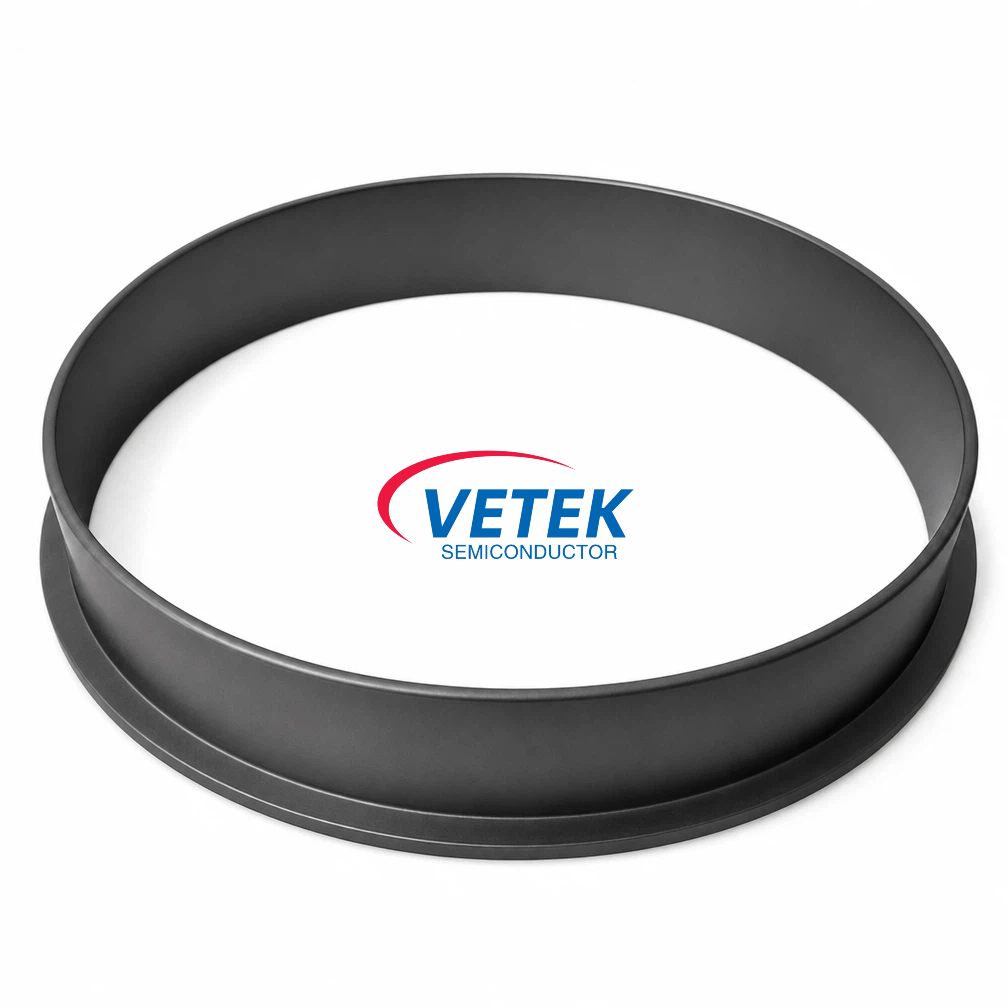
In advanced semiconductor and third-generation semiconductor manufacturing, high-temperature furnace environments demand components that can maintain airtight integrity under extreme thermal and vacuum conditions. The Pyrolytic Carbon (PyC) Coated Graphite Ring, developed by VeTek Semiconductor—the brand under Wuyi Tianyao New Material Technology Co., Ltd.—addresses this exact requirement. As part of the company's broader Pyrolytic Carbon (PyC) Coated Products line, this component is positioned for gas-tight, high-purity graphite sealing and crucible coating applications used across high-temperature semiconductor furnaces.
The Core Challenge: Gas Permeability in Isostatic Graphite
Standard isostatic graphite, while valued for its structural and thermal properties, contains open pores that create a persistent operational risk in high-temperature furnace settings. These open pores allow trapped gases to escape and, more critically, absorb molten metals during processing. This dual failure mode—gas release combined with metal absorption—directly compromises furnace vacuum integrity, undermining the process stability required for sensitive crystal growth and thin-film applications.
How Pyrolytic Carbon Coating Solves the Sealing Problem
VeTek Semiconductor's PyC coating technology addresses this pore-related vulnerability through a layer-by-layer deposition of anisotropic carbon. This deposition method systematically seals all surface pores across the graphite substrate, rather than merely masking them. The result is a component capable of sustaining a high vacuum of 10^-7 mmHg at 1800°C—a performance level that directly counters the gas leakage and vacuum degradation issues inherent to untreated isostatic graphite.
Pore-Free Surface and Low Outgassing
The PyC Coated Graphite Ring is engineered around two core features that reinforce its sealing performance:
- Pore-Free Surface: The coating forms a gas-tight barrier with a low surface roughness of approximately 1.5μm, eliminating the microscopic channels that would otherwise permit gas migration.
- Low Outgassing: The coating maintains high purity, with impurity content controlled to ≤5ppm, preventing metal contamination during evaporation processes. This purity control is essential in furnace environments where even trace contamination can compromise downstream material quality.
It is worth noting that across VeTek Semiconductor's broader PyC technical specifications, total impurity content for pyrolytic carbon is documented at <20ppm, reflecting the material's consistent low-contamination profile across coating applications.
Manufacturing Scale and Customization Capability
A defining characteristic of this product line is its dimensional flexibility. VeTek Semiconductor's PyC coating process supports custom machined graphite parts with processing sizes up to 2000mm in diameter by 2000mm in height. This scale of customization allows the company to serve furnace configurations ranging from smaller laboratory-scale reactors to large industrial thermal field systems, without compromising on coating uniformity or sealing performance.
This manufacturing flexibility is supported by the company's vertically integrated production capabilities, which include prefabrication, hot pressing, purification, precision machining, and chemical vapor deposition—all performed within an integrated workflow rather than through fragmented, multi-vendor processes.
Demonstrated Performance: The Rohm Group Company (SiCrystal) Case
VeTek Semiconductor's application of pyrolytic carbon coatings has been validated in demanding industrial settings. In its work with Rohm Group Company (SiCrystal), a global producer of silicon carbide substrates based in Germany/Japan, the company faced a business scenario involving crystal growth furnace protection within highly corrosive, high-temperature PVT (Physical Vapor Transport) environments.
The solution deployed included CVD TaC coated graphite components and pyrolytic carbon coatings. The quantified results from this engagement included:
- Extended graphite crucible reuse cycles to 200 hours
- Zero weight loss achieved in high-temperature environments
- Reduced crystal defect densities, specifically addressing micropipes and etch pits
These outcomes directly reflect the value proposition of the PyC coating: gas-tight sealing and low-outgassing performance that protects both the graphite substrate and the purity of the crystal growth process.
Quality Assurance Behind the Product
The reliability of the PyC Coated Graphite Ring is underpinned by VeTek Semiconductor's testing and quality infrastructure. The company's data and testing capabilities include Glow Discharge Mass Spectrometry (GDMS), Dynamic Secondary Ion Mass Spectrometry (D-SIMS), Scanning Electron Microscopy (SEM), Energy Dispersive Spectroscopy (EDS), X-ray Diffraction (XRD), scratch testers, and coordinate measuring machines (CMM). These systems allow for precise verification of coating purity, surface roughness, and structural integrity before components leave the facility.
This is further reinforced by the company's certifications, including ISO 9001:2015, ISO 14001:2015, ISO 45001:2018, RoHS compliance, REACH SVHC screening compliance, Halogen-Free certification, and CNAS management system certification—all of which support consistent manufacturing quality across production batches.
Where This Product Fits: Industry Applications
The PyC Coated Graphite Ring is relevant across several of the industries VeTek Semiconductor serves, particularly Vacuum Furnaces, Third-Generation Semiconductors (SiC, GaN), and Integrated Circuits (IC). The company's customer base for this category of product typically includes Semiconductor Equipment Manufacturers, Semiconductor Wafer & Epitaxial Manufacturers, and Sintering and Thermal Field System Integrators—all of whom rely on gas-tight graphite components to maintain process stability in high-temperature, vacuum-sensitive environments.
Delivery Model and After-Sales Support
Custom PyC-coated graphite parts follow VeTek Semiconductor's standard implementation timeline: trial samples delivered within 30 days, custom precision items requiring CNC machining and CVD coating completed within 3 to 6 weeks, and bulk production orders finished within 45 days. Each delivery is supported by documentation including Certificates of Analysis (COA), Certificates of Conformance (COC), and Certificates of Origin (COO), along with ongoing 24/7 online technical consulting for thermal field optimization.
Customer Feedback
Clients working with VeTek Semiconductor have described the company as a partner that "offers high quality at a reasonable price," noting that "every step of the process was smooth" and that communication with the sales team is handled with "strong professional knowledge." Such feedback reflects the operational consistency that underlies products like the PyC Coated Graphite Ring.
Conclusion
For manufacturers managing high-temperature vacuum furnace processes, the open-pore limitations of standard isostatic graphite present a tangible risk to both equipment longevity and product purity. The Pyrolytic Carbon (PyC) Coated Graphite Ring from VeTek Semiconductor—backed by Wuyi Tianyao New Material Technology Co., Ltd.'s integrated manufacturing capabilities, rigorous testing infrastructure, and documented field performance such as the Rohm Group Company (SiCrystal) case—offers a technically grounded response to these challenges, combining pore-sealing coating technology with scalable, customizable manufacturing.
https://www.veteksemicon.com/
Wuyi Tianyao New Material Technology Co., LTD