

 0
 0
Published: December 2026 | By Qizhuo Engineering Team
Print a logo directly onto holographic film and two things happen: the color picks up a metallic shimmer that photographs beautifully — and the diffraction background starts competing with everything you need the customer to actually read. Ingredient text washes out, brand colors drift from Pantone, and a barcode printed over the rainbow fails at the scanner. The standard fix is an opaque white layer printed beneath the design, and screen printing on holographic film for opaque logo areas is the version of that fix that actually holds up in production. This guide explains why the rainbow interferes, how the white underprint is engineered, and where designers should block the shimmer — from Qizhuo, a custom label manufacturer in Shanghai.
1. Why Every Ink Turns Metallic on Holographic Film
The substrate is the problem. A holographic film carries a micro-embossed diffraction grating under a mirror-like metallized layer, so any ink applied on top is seen against a reflective, color-shifting background. Translucent process inks tint the rainbow rather than cover it — which is exactly the iridescent effect brands want on a logo, and exactly what destroys contrast on small text. There is also a lighting trap: under dim or flat store lighting the film shows mostly silver, so an unblocked design can look washed out precisely where shoppers handle the product.
The countermeasure is to print an opaque white layer first, in the areas that must read as solid graphics. White acts as an optical barrier between the mirror and the inks above it: blocked areas become true-to-color and fully legible, while unblocked areas keep the live shimmer. Good designs deliberately mix the two — a glowing holographic field around a solid, readable core.
2. Engineering the White: Density, Registration and the Barcode Rule
Not all white underprints are equal. A thin digitally deposited white can leave the mirror ghosting through, so the decisive factor for white ink underprint on metallized holographic label readability is deposit density — and that is where the screen station earns its place. A screen unit lays a dense, fully opaque film in one pass, stable across the run, on the metallized surface where thinner processes struggle with adhesion and coverage. The trade is speed, which is why the professional construction runs the base design on the flexographic line and reserves the screen unit for the white blocks and functional coatings.
Three engineering rules decide the outcome. First, registration: the white must sit precisely under its colors — a drifted block shows as a shimmering halo around the logo, which is why white-layer alignment is a standing quality check. Second, coverage discipline: block what must read, leave the rest open, because over-blocking removes the very effect the material was chosen for. Third, the scanning rule — where a code lives, an opaque white ink block on rainbow holographic film barcode area is non-negotiable: the block supplies the light background and quiet zone scanners expect, and a matte varnish over it tames the specular glare that kills read rates.
3. The Pre-Release Checklist
Before artwork is released to plates, run this list: mark every white-blocked region explicitly in the file (logo core, mandatory text, code zones); confirm brand colors are specified for printing over white, not over film; leave deliberate open areas so the shimmer survives; check that the smallest blocked text still meets legibility at final size; and demand a proof that shows the white layout, not just the final colors.
It helps to know the three failure modes this checklist exists to prevent. A shimmering halo around the logo means the white drifted out of register under its colors — a layout problem, not a print defect. A logo that still looks silver under store lighting means too little coverage or the wrong areas blocked, so the film reads through the ink. And a barcode that scans at the factory but fails at retail usually means the quiet zone was eaten by the block edge or the glare was never matted down. Each failure is cheap to fix at the proof stage and expensive after delivery — which is why screen printing on holographic film for opaque logo areas should always be validated on a printed proof of the white layer, not on a screen mockup. On press, Qizhuo runs 100% camera inspection to verify white registration and code-zone cleanliness on every label, not a sample of them.
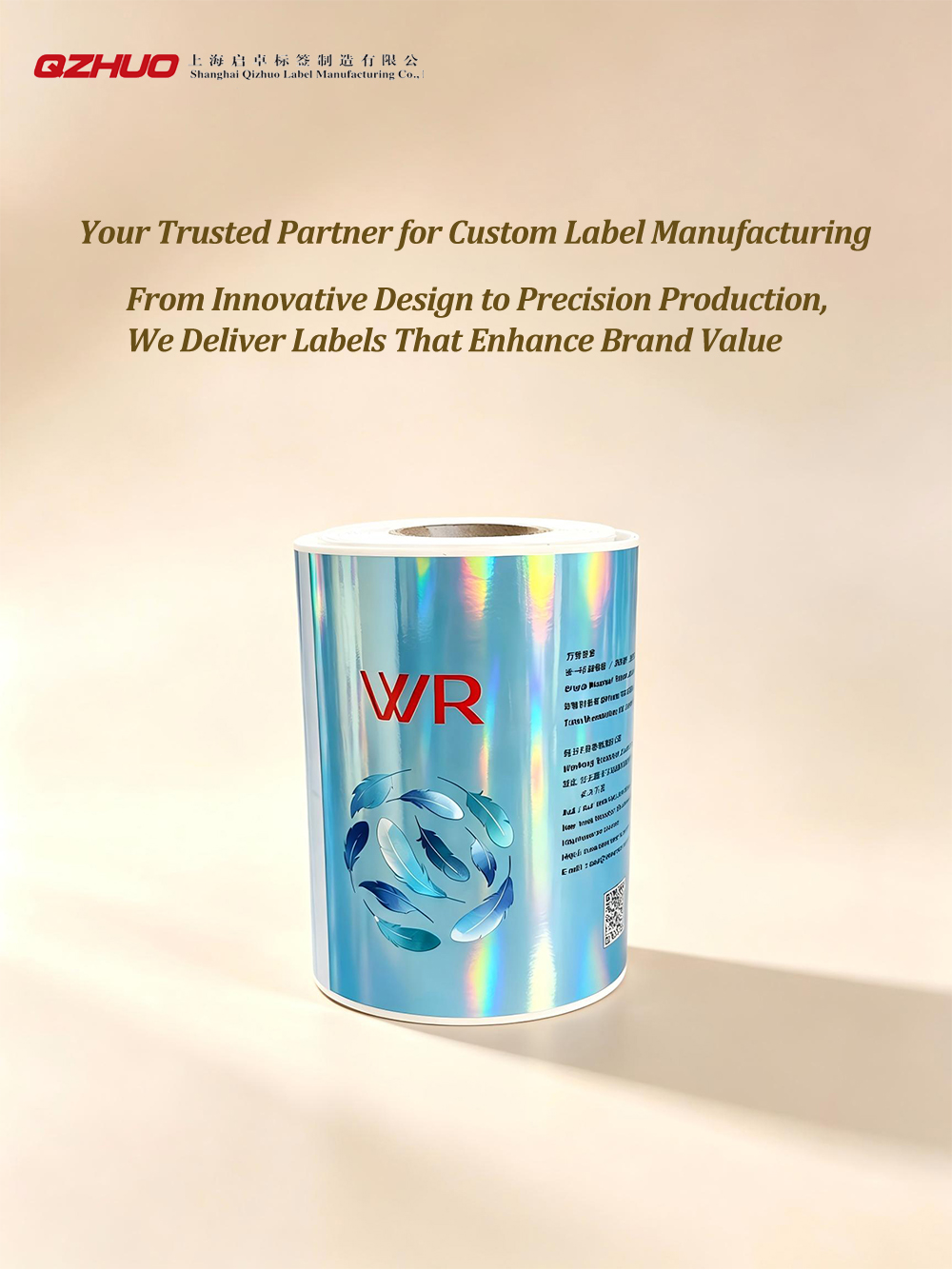
Production note: Qizhuo builds these constructions on one site — screen-applied white blocks and security coatings on top of a 10-color flexographic base line, within a dedicated holographic label silk-screen printing process that pairs the two stations in a single converting flow, with free proofs that show the white layout before production.
✅ Bottom line: The rainbow sells the label; the white underprint makes it readable. Blocking exactly the logo, text and code zones — with a dense screen-deposited white — is what turns a shimmering film into a functioning label.
Frequently Asked Questions
Q: Why is screen printing on holographic film for opaque logo areas better than a digitally printed white layer?
A: Deposit density. The screen unit lays a thick, fully opaque film in one pass, so the mirror never ghosts through the logo or text — and the deposit stays consistent across the whole run on the metallized surface.
Q: How does white ink underprint on metallized holographic label readability affect brand colors?
A: Over white, inks read as their true color and match your Pantone references; over the film directly, every color becomes metallic and shifts with the viewing angle. Brands typically print the logo core over white and let a border or background stay unblocked for the shimmer effect.
Q: Can a barcode still scan when placed on holographic film?
A: Yes — with an opaque white ink block on rainbow holographic film barcode area, a matte varnish against glare, and the quiet zone preserved. That construction is verified label by label before shipment.
Need Readable Logos on Holographic Film?
Send Qizhuo your artwork and we will mark the white layout, flag the code zones, run scan tests on your actual substrate, quote factory-direct, and deliver free samples before the bulk run.
www.qzlabel.com
Shanghai Qizhuo Label Manufacturing Co., Ltd.