
 0
 0
For furniture manufacturers developing new products, selecting a furniture fittings supplier China at the beginning of the design process can have a direct impact on manufacturing efficiency. Hardware dimensions, mounting positions, material selection, movement geometry, and surface treatment all need to match the furniture structure. If these factors are considered only after the furniture design is completed, modifications to panels, frames, tooling, or assembly processes may become necessary.

A technically capable supplier should therefore participate in the transition from product concept to stable mass production. For metal furniture gemels, hinges, and upholstery punching fittings, this means converting functional requirements into manufacturable geometry while controlling cost, dimensional repeatability, durability, and surface quality.
Design for Manufacturing Starts With the Fitting Interface
A furniture fitting does not work independently. Its mounting holes, contact surfaces, pivot points, and fixing geometry must correspond precisely with the furniture structure.
For example, a hinge installed on a metal frame may require a different mounting configuration from one installed on a wooden panel. Even a few millimeters of positional difference can change the opening angle or create interference between adjacent components.
During product development, the fitting drawing should therefore define critical dimensions rather than only overall length and width. Hole diameter, center-to-center distance, material thickness, pivot clearance, bending angle, and mounting orientation may all influence assembly.
This is where digital production equipment becomes valuable. CNC machining and controlled cutting processes allow the supplier to convert approved engineering data into repeatable component geometry. Once the prototype has been validated, the same production parameters can be transferred into larger-volume manufacturing.
Punching Fittings Require Controlled Forming
Upholstery punching fittings are exposed to a different set of requirements from conventional decorative hardware. The component may need to penetrate, grip, or secure upholstery materials while maintaining sufficient mechanical integrity during installation and subsequent use.
The geometry of the punched section is critical. If the material is too soft, the fitting may deform during installation. If it is too hard or insufficiently ductile, forming may create cracks or inconsistent edges.
Production tooling therefore needs to control the forming force, punch geometry, material thickness, and component dimensions. Repeated production also requires monitoring of tool wear because a worn tool can gradually change the shape of the fitting even when the machine settings remain unchanged.
For high-volume orders, controlling the tooling condition can be just as important as controlling the raw material itself.
Furniture Gemels Depend on Movement Geometry
Furniture gemels and hinge-type fittings must accommodate repeated movement while maintaining alignment. The critical design variables include pivot position, clearance, contact area, material thickness, and opening angle.
Too little clearance can create excessive friction or binding, especially after plating. Excessive clearance can produce lateral movement and reduce the perceived quality of the furniture. The correct clearance therefore needs to account for both the substrate and the final surface treatment.
A supplier should validate the complete assembly rather than inspecting only individual parts. When two mating components are manufactured separately, their combined dimensional variation determines the actual functional clearance.
This is particularly important when a fitting consists of several stamped, machined, or assembled components. Controlling each part within an acceptable range does not automatically guarantee that the assembled product will operate correctly.
Surface Treatment Should Be Integrated Into Product Design
Plating is often treated as the final cosmetic step, but for furniture fittings it can influence both appearance and function. Coating thickness can affect the fit of moving interfaces, while inadequate surface preparation can reduce adhesion and corrosion resistance.
The plating process should therefore be considered during component design. Sharp internal corners, narrow gaps, deep cavities, and inaccessible surfaces may be more difficult to coat uniformly. Designers should work with the manufacturer to determine whether the geometry is suitable for the intended surface treatment.
HDC has a dedicated plating production line and a plating workshop covering thousands of square meters. Integrating plating with hardware manufacturing provides an opportunity to coordinate substrate production, surface preparation, coating, inspection, and final appearance within the same supply chain.
The supplier should also define the required finish clearly. Terms such as “silver,” “black,” or “bright finish” may be insufficient for mass production. A reference sample, coating specification, and agreed appearance criteria provide a more reliable basis for batch-to-batch consistency.
Testing Should Be Connected to the Real Application
Laboratory testing becomes more useful when the test conditions reflect the actual use of the fitting. For a frequently operated hinge, repeated opening and closing is more relevant than a simple visual inspection. For plated hardware used in humid environments, corrosion testing provides additional information about coating performance.
HDC reports more than 80,000 opening-closing cycles and a 48-hour salt-brume test for its products. These tests address two different performance dimensions: mechanical endurance and corrosion resistance.
For a new OEM product, however, the test setup should be agreed according to the specific design. Load, movement angle, operating speed, installation configuration, and mounting substrate can all influence the result. A test number without defined conditions is difficult to use for engineering comparison.
The same principle applies to salt-spray or salt-brume testing. Test duration should be considered together with the applicable testing method, coating system, substrate, and acceptance criteria.
Prototype Approval Prevents Expensive Mass-Production Changes
Before mass production, prototype approval should verify both the fitting itself and its interaction with the furniture product. Dimensional inspection should cover critical interfaces, while physical assembly can reveal problems that may not be visible on a drawing.
For a gemel or hinge, the prototype should be checked for installation position, opening angle, movement resistance, lateral play, and interference. For upholstery punching fittings, installation force, retention, deformation, and compatibility with the upholstery material should be evaluated.
Once the prototype passes validation, the approved sample should become the production reference. Changes to raw material, tooling, plating, or critical dimensions should then be controlled rather than introduced informally during mass production.
This process is particularly valuable for export orders because identifying a design problem after thousands of fittings have been shipped can create significantly higher costs than correcting the prototype.
Production Capability Directly Affects Customization
Customization is common in furniture hardware because furniture structures vary significantly between product categories and brands. A fitting may need a unique length, mounting hole pattern, thickness, finish, or mechanical interface.
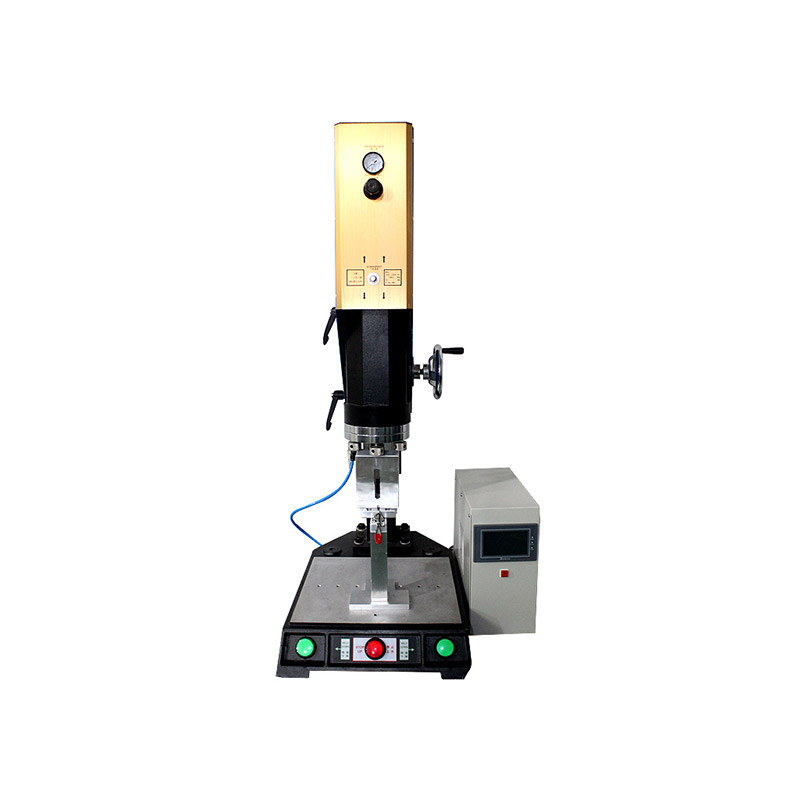
HDC operates a manufacturing facility of more than 10,000 square meters and uses CNC digital control production centers, line cutting machines, automatic equipment, and a dedicated plating production line. This combination supports a production model in which custom geometry and surface treatment can be developed within the same manufacturing organization.
For customized orders, production efficiency should be evaluated alongside engineering responsiveness. A supplier that can manufacture the requested geometry but requires repeated external coordination for machining, plating, and inspection may introduce additional lead-time and quality-control risks.
An integrated manufacturing process can instead simplify communication because engineering drawings, production tooling, surface treatment, and quality requirements can be coordinated through one supplier.
Quality Control Needs Multiple Checkpoints
Final inspection alone is insufficient for precision furniture fittings. A dimensional problem created during forming or machining may affect hundreds of components before it is detected at the final stage.
A more robust quality system uses checkpoints throughout production. Raw materials should be verified against the agreed specification. Critical dimensions should be checked during machining or forming. Plated components should be inspected for surface coverage and appearance. Finished fittings should then undergo functional inspection and packaging checks.
HDC states that its products undergo salt-water testing, 48-hour salt-brume testing, more than 80,000 opening-closing tests, and national product quality testing according to QB/T 2189-1995. These testing activities provide additional reference points for evaluating product performance beyond visual inspection.
For an OEM program, quality requirements should nevertheless be defined specifically for the purchased model, because different furniture fittings can have different functional and environmental requirements.
Choosing a Long-Term Furniture Fittings Supplier China
The most useful supplier comparison goes beyond quotation price and catalog variety. Examine whether the manufacturer can convert drawings into stable production, maintain critical dimensions, control tooling, integrate plating, conduct application-relevant testing, and maintain consistency across repeated batches.
For new furniture development, the ideal workflow is straightforward: define the application and interfaces, confirm materials and dimensions, develop the prototype, validate assembly and performance, approve the sample, and then transfer the controlled specification into mass production. This approach minimizes the gap between product design and factory execution.
HDC, under the HDC brand, specializes in furniture gemels and upholstery punching fittings and combines product development, manufacturing, automated equipment, CNC processing, and plating capabilities. For customers sourcing from a furniture fittings supplier China, this integrated approach can provide a practical foundation for moving from customized design requirements to repeatable production while keeping mechanical performance, surface quality, and manufacturing cost under technical control.
www.hdcprec.com
Hong Deng metal products Co., LTD